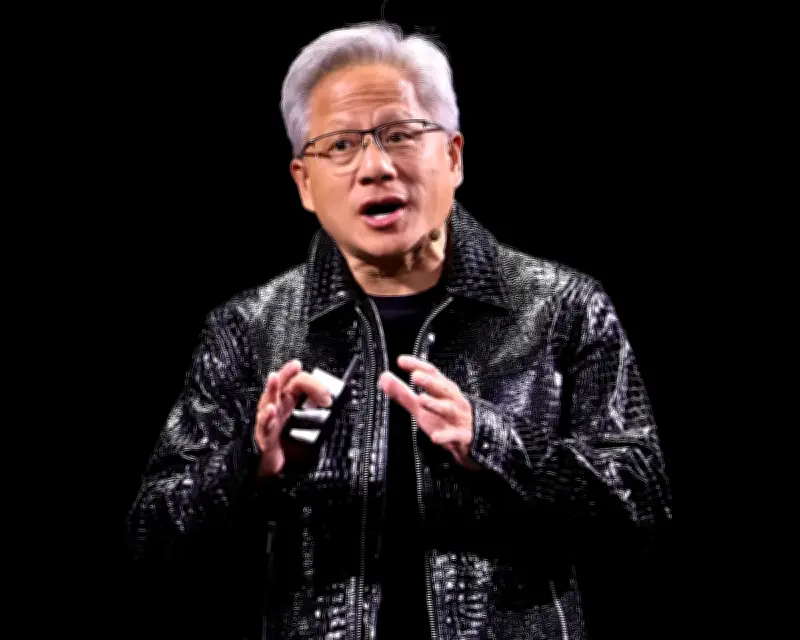
Nvidia's dominance is being tested by a scandal involving CEO Jensen Huang, who admitted to an affair with a Chinese datacenter executive suspected of being a spy for Beijing. The admission came in a letter to employees on Sunday, prompting Nvidia's board to launch an independent investigation into national security concerns.
The news broke less than 24 hours before Huang's keynote at Web Summit in Lisbon, where the reaction was surprising. Matthew Prince, CEO of Cloudflare, broadened the implications from Huang's personal life to Nvidia's market position, questioning whether the company's efforts to cement its market dominance were just financial engineering.
Reactions from Silicon Valley
Prince credited Huang for doing "a lot to cement the AI ecosystem," but also noted the scrutiny ahead. Richard Socher, CEO of the AI startup Recursive Superintelligence, said he was "grateful to have Jensen in my corner," a remark that drew immediate attention given Nvidia's participation in Recursive's $500m investment round.
Nvidia has faced criticism over its circular financing deals, but the superiority of its hardware has long allowed it to maintain strong alliances within Silicon Valley. US intelligence agencies are already scrutinizing Huang, and Silicon Valley may soon do the same.
Family Business Under Scrutiny
Huang co-founded Nvidia in 1993 and has been its public face for over 30 years. His children, Madison and Spencer, have taken leadership roles, and his wife, Lori Mills Huang, leads the family foundation, which controls over 60 million Nvidia shares worth billions.
In his letter, Huang wrote: "Throughout my life, my family has given me love and support. They deserve my honesty and loyalty. Instead, I let them down and damaged the life we built together. I take full responsibility for what I did and the hurt I caused, and I accept the criticism that comes with it."
The affair is not just a matter of morals or ethics, as there are potential national security concerns. Huang is core to Nvidia's DNA, which is the bedrock of the entire AI industry, upon which the US economy relies greatly. Investors are doubting what was once seen as an unstoppable juggernaut; Nvidia shares fell 7.5% as soon as the stock market opened, wiping over $330bn off the company's value.
Tech Tycoons Seek Reconciliation
In the wake of Tuesday's blue wave, Silicon Valley is attempting to reconcile with the new power brokers in the US. Tech tycoons spent the last two years cozying up to Donald Trump, but now they are singing a different tune. Elon Musk responded kindly to a compliment from Texas Democrat James Talarico, and venture capitalist Chamath Palihapitiya tweeted, "When I'm wrong, I'm wrong … This was a complete and total repudiation about the state of the economy. The economy is broken."
Democratic lawmakers are putting out statements that any reconciliation by the tech oligarchy remains largely one-sided and transactional. Members of Congress are eager to haul in tech CEOs for grillings and pass AI safety laws, while newly elected governors campaigned on promises of moratoria on datacenter construction.
The path forward for Democrats is unclear as they assume power. The US stock market relies heavily on the AI industry's growth, and hamstringing it with bans on new datacenters and legislation that cracks down on AI model development risks sending the economy into a backslide. However, the voting public wants to make a public example of AI CEOs, who are despised on both sides of the aisle despite their alliance with Trump and the Republican elite.