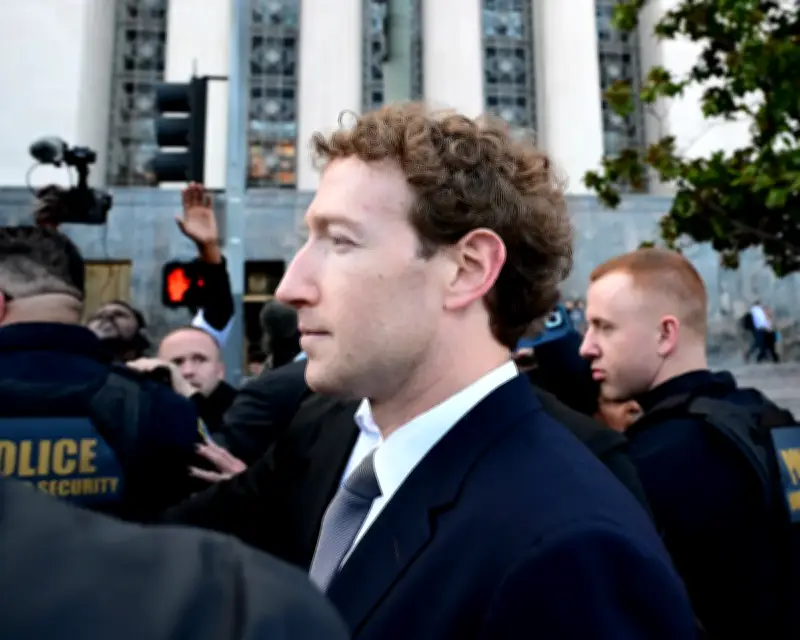
Meta's $18bn settlement to end a landmark lawsuit over harm to children was widely hailed as a victory for campaigners, but the tech giant's ability to gouge profits and cause harm is barely diminished, according to Guardian columnist Jonathan Freedland.
When Meta agreed to settle with 29 US states that had argued its Facebook and Instagram platforms harmed children, its share price did not fall. Instead, Meta stock initially surged by 5% before levelling out at a gain of just over 1.25%.
Settlement details and limits
The $18bn sum is less than a month's revenue for Meta, and the company has 10 years to pay it out. Nearly a third of the sum is contingent on rivals YouTube and TikTok agreeing to the same restrictions. The financial penalty is less than a tenth of the $200bn the 29 states were seeking, and a tiny fraction of the $1.4tn the company told the court it feared it would have to pay.

Meta has agreed to a series of changes in how young people use its platforms, including a two-hour daily cap on use, restricted access during the night and the school day, and likes will not be shown automatically. Safety and parental supervision measures will become the default standard rather than opt-in extras.
No admission of liability
Meta has not made an admission of liability under the settlement. The trial was halted abruptly after its first week, during which jurors heard from former Meta safety engineer Arturo Béjar. He spoke of his own teenage daughter's experience on Instagram, including unwanted sexual advances, crude misogynistic insults and photos of male genitalia. A survey he conducted found 51% of teen users had had bad or harmful experiences on Instagram within the previous seven days, and that content was taken down only 0.02% of the time.
Béjar reported his findings to Mark Zuckerberg directly but got no reply. As Béjar told Freedland: “They knew that harm to kids was happening, but they were telling the world it wasn't.”
Global reach and business model
The new terms apply inside the US only, despite Meta's global reach. As former Facebook employee Sarah Wynn-Williams described in her book Careless People, the company was assiduous in hunting for new users in overseas territories with few legal safeguards. Freedland draws a parallel with the tobacco industry, which sold into developing countries after the US and Europe cracked down on cigarettes.
The settlement addresses only the safety of children, despite evidence of danger to adults, whether in the form of addiction or exposure to toxic misinformation. The danger lies in the fundamental business model of social media: tracking and surveilling individuals online, using the data to construct a profile, which is then sold to advertisers.
As Ravi Naik, the lawyer who acts for Wynn-Williams and others, told Freedland: “The algorithm preys on you.” He explained that the settlement “reaches the features of Meta's platforms but not the engine that drives them. The recommendation algorithm is untouched.”
Calls for action and break-up
Béjar argues for approaching social media as a public health crisis, akin to road traffic accidents that led to mandatory safety belts in cars. He says governments need to say that any company involved in this crisis has to be involved in tackling it. As Béjar puts it: “A song has more protection than a kid.”
Damian Collins, a former chair of the UK parliamentary committee that oversees the digital realm, told Freedland: “Meta knowingly exploit this and refuse to make changes to their platforms that they know would deliver safer user experiences.” If users could move their data and contacts over to new services, giving them more options, “break-up would work”.
Freedland concludes that this week's settlement has been a disappointment to those longing to see the tech giants finally brought to heel, found guilty by courts and made to pay for it with costs too big to ignore. For now, Meta has swerved judgment day, but that day must surely come.