A Manchester Family editor was turned away from a Cancer Research shop after staff refused to accept her donation of clothing, including a fleece Spider-Man blanket and leggings that were mistaken for pyjamas. The incident highlights how charities are tightening their donation rules in response to rising volumes of unsellable items.
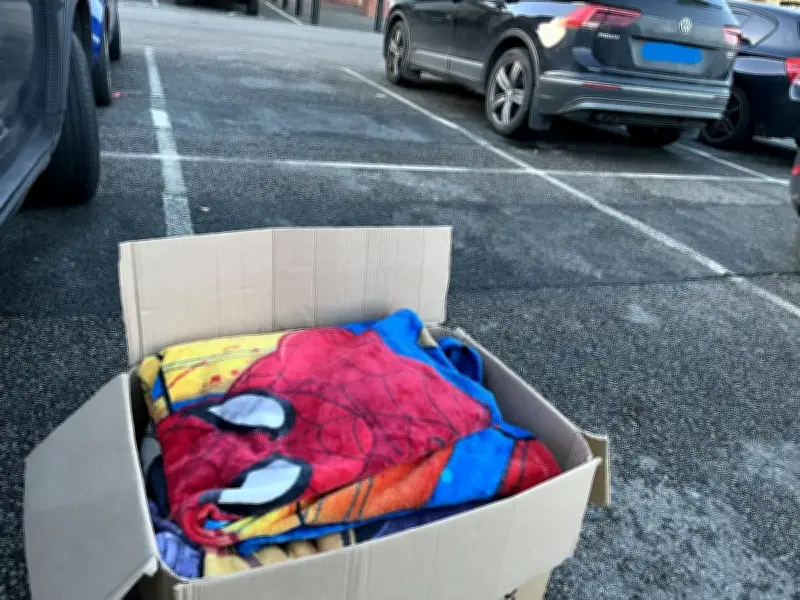
The editor arrived at the shop with two large boxes of preloved items. After placing the first box on the counter, she was asked what was inside. Before she could fully respond, staff pulled out the contents and told her they could not be accepted. She was told 'we don't accept jim jams', and although she explained the items were leggings, the same response was repeated.
The rejected items included a barely used fleece Spider-Man blanket, a similar Star Wars blanket, a bag and some other clothing. She did not return to her car for the second box. A colleague later reported a similar experience at another charity shop, where donations were not accepted after 3pm despite the shop being open until 5pm.
Why Charities Are Rejecting More Donations
Cancer Research has a full list of items it will not accept. Blankets do not appear on the list, but pillows, duvets, mattresses, nightwear, handmade or handknitted clothing, bikes, used sports equipment, used cots and used children's shoes are among the excluded items. The charity did not respond to a request for comment beyond sharing the list, which states: 'We appreciate all donations, but we are unable to accept items which we cannot sell and would require us to pay for disposal. This includes anything dirty, damaged or with missing parts'.
Oxfam told the Manchester Evening News that resale sites and the popularity of fast fashion have both had an impact. A spokeswoman said: "With the rise of fast-fashion, alongside the popularity of online resale platforms, receiving increasing amounts of unsuitable, unsellable, or poor-quality items is a growing challenge for charity shops. This adds to the time and resources needed to sort donations and can reduce both the volume and value of what we’re able to sell."
She said Oxfam takes a huge range of items, including clothing, footwear, books, homewares, toys, jewellery, vinyl and more, but 'if something is stained, broken or past its best, it's best left out'. She advised donors to focus on pieces that are clean and in good shape, with no stains, tears or excessive wear.
Emmaus Bolton's Approach to Donations
Emmaus Bolton, a charity that helps people overcome homelessness, says it isn't about making it difficult for people to donate. CEO Tony Stephenson said the organisation must consider whether an item is safe, meets health and safety or legal requirements, and whether there is a realistic opportunity to reuse or sell it. He noted that upholstered furniture needs appropriate fire-safety labels, and badly damaged or stained items may not be accepted.
Stephenson said the cost of living crisis and cash pressures have 'definitely had an effect' on donations, as have sites like Vinted. He explained that people are holding off replacing things that still have some life in them, which naturally impacts the amount of good quality donated stock coming through. He also noted that some people now sell their most valuable pieces themselves and donate what remains.
He stressed that charities incur costs for accepting items they cannot sell on. "We're a reuse organisation, not a waste disposal service, so we have to be responsible about what we accept," he said. "Every useful donation can generate income that supports our community and helps us provide a home, support and opportunities for people who have experienced homelessness."
Emmaus Bolton, based at Derby Barracks near Bolton town centre, accommodates up to 22 formerly homeless individuals, referred to as 'companions', many of whom support the social enterprise for up to 40 hours a week. The charity upcycles or repurposes some items, and customers can buy pieces to upcycle themselves or commission the workshop team to do it for them.
Stephenson encouraged people to think differently about second-hand goods, noting that older doesn't necessarily mean poorer quality. "Reusing something rather than automatically replacing it with something new makes sense both financially and environmentally," he said. The charity accepts a broad range of furniture, household goods, clothing and other items, and provides a collection service for larger reusable items, bookable over the phone or via the website.