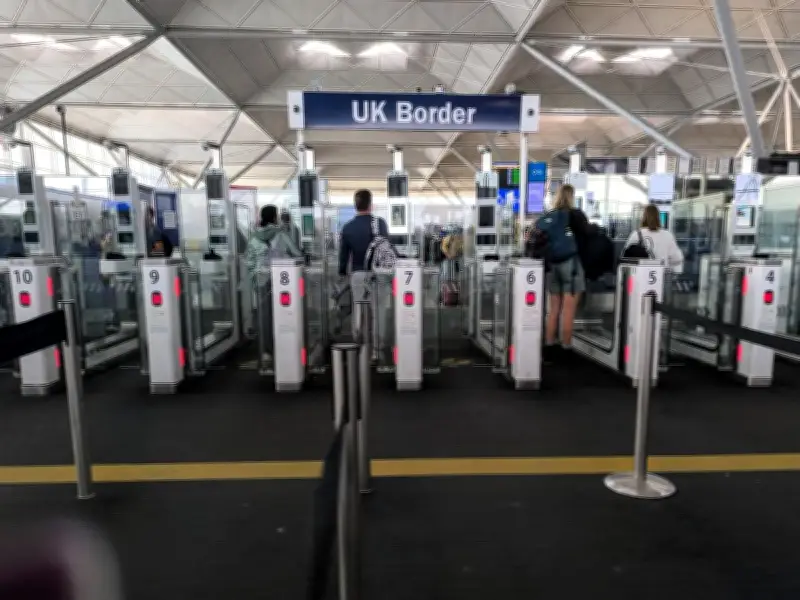
UK officials have updated guidance on a ban on bringing meat and dairy products into Great Britain from 29 EU and EEA countries, with offenders facing fines of up to £5,000. The restrictions, enforced by border officers, cover items such as sandwiches, cheese, cured meats, raw meats and milk.
Ban details and affected countries
The Department for Environment, Food and Rural Affairs (DEFRA) has warned that it is against the law for travellers entering Great Britain from any EU country to carry these products. The ban applies to popular holiday destinations including Spain, Greece, Turkey and France, and extends to goods bought at duty free.
Border officers will search bags and can seize illegal food products. Offenders may either hand over the items or have them seized and disposed of. Officials warn that "In serious cases, those found with these items run the risk of incurring fines of up to £5,000 in England."
The 29 countries affected are: Austria, Belgium, Bulgaria, Croatia, Czechia, Denmark, Estonia, Finland, France, Germany, Greece, Hungary, Iceland, Italy, Latvia, Liechtenstein, Lithuania, Luxembourg, Malta, Netherlands, Norway, Poland, Portugal, Romania, Slovakia, Slovenia, Spain, Sweden and Switzerland.
Reason for the restrictions
The ban is in response to a foot and mouth disease (FMD) outbreak in Europe. Confirmed cases have been reported in Greece (March 2026), Cyprus (February 2026), Slovakia (March 2025), Hungary (March 2025) and Germany (January 2025). The last outbreak in the UK was in 2007.
FMD poses no danger to humans, and there are currently no recorded cases within the UK. However, it is a highly contagious viral illness affecting cattle, sheep, pigs and other cloven-hoofed animals, including wild boar, deer, llamas and alpacas. The disease can cause significant economic losses through reduced production in affected animals and restricted access to overseas markets for livestock, meat and dairy products.
Following confirmed outbreaks in Germany, Hungary, Slovakia and Austria earlier this year, the Government has already prohibited personal imports of cattle, sheep and other ruminants, pig meat and dairy products from those nations.
Exemptions and official statements
Certain products can still be brought into Great Britain from any country without restrictions, including bread (but not sandwiches filled with meat or dairy), cakes without fresh cream, biscuits, chocolate and confectionery (unless made with a lot of unprocessed dairy), pasta and noodles (unless mixed or filled with meat), packaged soup, stocks and flavourings, processed plant products, and food supplements containing small amounts of animal products such as fish oil capsules.
Dr Jorge Martin-Almagro, UK Deputy Chief Veterinary Officer for international and trade affairs, said: "Following the detection of foot and mouth disease in EU countries resulting in a rising risk of introduction into Great Britain, we have extended restrictions on the personal imports of food products that pose a risk in FMD transmission."
He added: "A limited set of exemptions from these rules in place. For example, a limited amount of infant milk, medical foods and certain composite products like chocolate, confectionery, bread, cakes, biscuits and pasta continue to be allowed."
The new measures apply exclusively to travellers entering Great Britain and will not be enforced on personal imports arriving from Northern Ireland, Jersey, Guernsey or the Isle of Man.