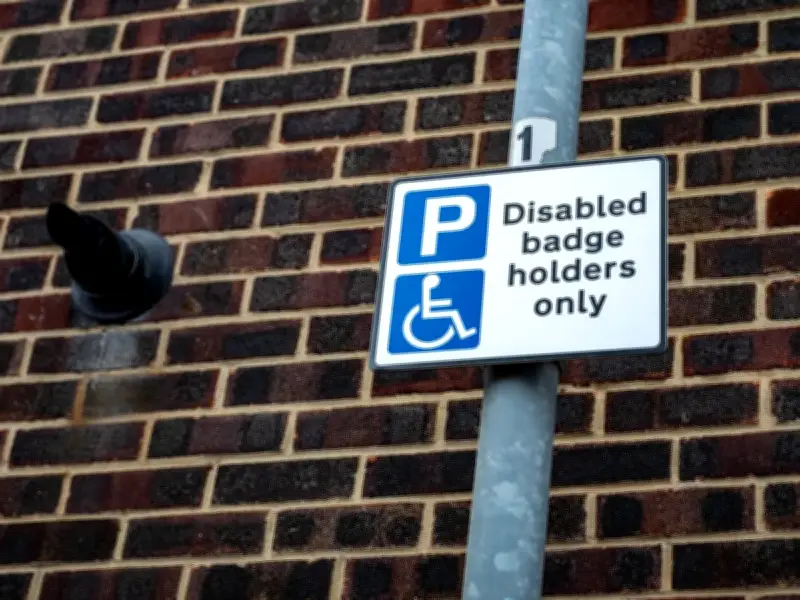
Blue Badge holders can be fined up to £1,000 for breaking important conditions of use. To avoid penalties, those concerned are advised to hand the badge back as soon as possible, where applicable. But that's not the only reason.
According to Citizens Advice, the advice, which applies only to England, is aimed at people whose circumstances have changed and they no longer need a Blue Badge. A statement on Gov.uk further explains: "The badge remains the property of the issuing local council. They can ask for the badge to be returned if it is being misused."
Who can apply and how to renew
If you’re disabled or have a health condition that affects your mobility, you may be able to apply for a Blue Badge. You can also apply if you look after a disabled child, or a child whose condition makes it difficult for them to get around. Your council may charge a fee, but it cannot exceed £10.
Citizens Advice says Blue Badges must be renewed every three years. You’ll also need to reapply if you stop getting the benefit your badge is linked to. Renewals can usually be done online via Gov.uk, although some councils also offer a paper application form.
Misuse can lead to fines
That isn’t the only way you could be fined. If you deliberately misuse your badge, you could face a penalty of up to £1,000. For example, if you use your badge to park if you’re just waiting and don't plan to leave your car, or give it to someone else to use.
Citizens Advice reminds holders: "If someone else is driving you, you must let them know the rules. If they don’t follow them, the council can take your badge away."
Eligibility and application process
You’re automatically eligible for a Blue Badge if you care for a child who is blind and aged over 2, are registered as blind, received a lump sum payment as part of the Armed Forces Compensation scheme (tariffs 1 to 8) and have been certified as having a permanent and substantial disability, get War Pensioners’ Mobility Supplement, or get the higher rate of the mobility component of Disability Living Allowance (DLA).
You’re automatically eligible if you scored 8 points or more in the ‘moving around’ area of your PIP assessment, or scored 10 points in the ‘planning and following journeys’ area and were put in category ‘E’ - meaning stress, anxiety or other mental health issues stop you leaving the house.
You can still get a badge if you have severe problems using both your arms, or long-term problems walking or going to places - including problems caused by stress, anxiety or other mental health issues. For a child, they can get a badge if aged over 2 with long-term problems walking or going to places, or aged under 3 and needs to be close to a vehicle because of a health condition.
You can apply for or renew your Blue Badge online on GOV.UK. Some councils also let you apply on a paper form - contact your local council to check. You need to apply through your local council - your GP or doctor can’t arrange one for you. If necessary, the council may set up a visit or appointment.
If you’re not automatically eligible, you’ll need to complete an extra section of the form explaining why you need a badge. You can contact your nearest Citizens Advice for support.
Before applying, make sure you have your National Insurance number or child reference number, and the number, expiry date and local council on your current blue badge. You’ll also need details of your medical condition, a recent digital photograph, proof of address from the last 12 months, proof of identification, and your original decision letter from the Department for Work and Pensions if automatically eligible.
If applying by post, Citizens Advice recommends sending photocopies rather than original documents, in case your application gets lost. You’ll also need a professional - such as a solicitor - to certify your ID copy by checking it and signing to confirm it’s genuine. Some professionals may charge a fee. They should sign the copy and write on it: ‘This copy is a true likeness of the original’, their name, address and occupation, and the date.