Plans to build a series of tower blocks in Romford have been approved, despite opposition from local residents and a councillor who argued the development was too large for the area.
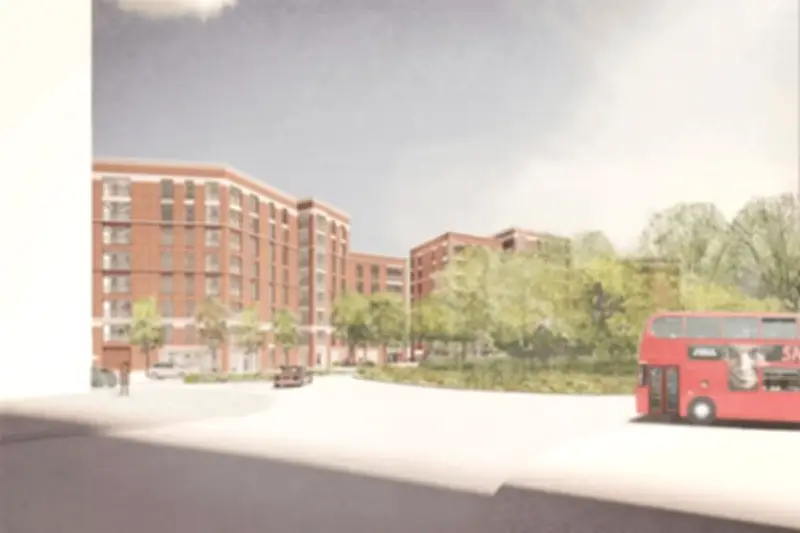
The scheme will see 138 new flats built on the Como Street car park, a location Havering Council first earmarked for development in 2024. The flats will be spread across three towers between four and nine storeys tall, along with three three-storey terrace homes.
Council Approves Mercury Land Scheme
The proposals, developed by the council-owned homebuilder Mercury Land Holdings (MLH), were approved unanimously by all five Reform councillors on the planning committee at a meeting on 26th November.
In a statement issued after the meeting, Councillor Robert Whitton, cabinet member for regeneration, said the plans “represented a positive step forward in achieving our vision for Havering’s future we were elected to deliver”.
“This development supports our wider commitment to creating thriving neighbourhoods, delivering much-needed homes and investment, and the revival of Romford,” he said. “The Mercury Land scheme contributes to the ambitions set out in the Havering 2040 Plan, the borough’s long-term vision for shaping places, supporting economic growth, enhancing opportunities for residents and creating sustainable communities.”
Objections Over Scale and Design
The proposal was opposed by Reform councillor Terry Brown, who also serves as the cabinet member for planning. Speaking in his capacity as a local councillor, he said the development was not in-keeping with the existing Edwardian aesthetic of the area and expressed concern it would cause harm to a nearby listed building.
“The design for this development doesn’t contribute to or protect local character,” he said. The development is “quite simply too big, in terms of mass and scale,” for Romford and would create “issues of privacy and overlooking” for residents in nearby Linden Street, he said.
He also attacked the plans for offering zero flats on the ‘affordable housing’ scheme, which is aimed at helping first-time buyers on lower incomes get on the property ladder, saying the flats on offer “did not match Havering’s needs”.
“This is not what Romford needs and it isn’t what Havering needs,” he said, in an unsuccessful plea to his colleagues to reject the plans.
Resident Concerns and Response
Ahead of the May elections, which saw Reform wrestle control of the council from the former Havering Residents Association, prospective councillors said they would fight against the “overdevelopment” of Romford.
Resident Ryan Chidwick told councillors that MLH had been “dodging meetings” since the summer, leading to a breakdown in communications, having organised a protest outside the town hall in 2025. He also advised councillors to vote against the application “if you wish to contest future elections,” warning that Reform would push voters further right, to parties such as Restore Britain, if they approved “these bad applications”.
Cllr Whitton added: “Although some opponents will naturally be disappointed, I believe the scheme is much more in keeping with the character of Romford town centre than any likely alternative scheme that a private developer would bring forward, which under the London Plan would be considerably higher and denser.”
Christopher Hobbs, MLH’s managing director, said it had been “carefully designed to suit its location, with the scale, layout and appearance of the development shaped through extensive review and consultation”.