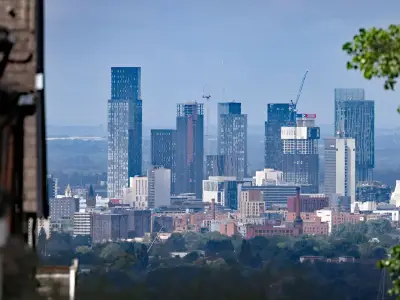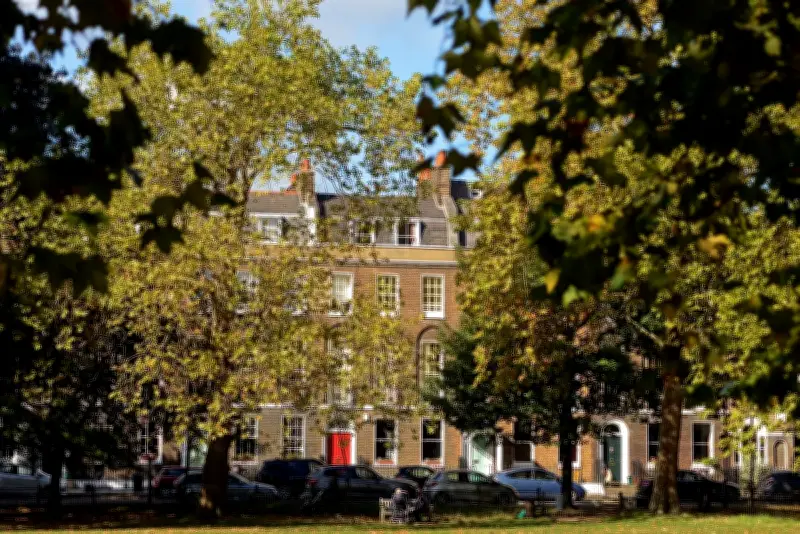
London's average property price has risen by more than 500 per cent since 1996, from £84,600 to £554,400, according to Savills, transforming the capital's housing market and its neighbourhoods.
Homes & Property, a section of the Evening Standard, was launched in 1996, the same month Newsweek named London the coolest city in the world. At the time, the capital was "bubbling over with creativity and verve," according to Stryker McGuire, then UK editor of the magazine. The Oxo Tower restaurant was the hottest table in town, and new luxury flats were attracting international money, largely from Eastern Europe and Hong Kong on the eve of handover, according to Ed Lewis, director of super prime residential sales at Savills.
House Prices Then and Now
In 1996, London was leading the rest of the country out of a housing slump, with prices "catapulting back to their 1992 levels," according to an Evening Standard splash in July 1996. The average property in the capital cost £84,600, according to Savills, which puts today's average at £554,400, a more than 500 per cent increase. Wages have not kept pace: figures from 1995 show the average London salary was £19,000, with people spending about 4.4 times their income to buy a home. Now the ratio is closer to 10.3 times, as reported by Lloyds, with Londoners earning an average of £51,800.
One colleague who bought at the time "because others in my office were and I thought I might as well" secured a new mortgage product that offered a 95 per cent home loan with five per cent cash back to cover the cost of the deposit. "I was looking at two-bedroom flats but then I thought I quite fancied a house so I moved to East Ham," he says. It cost £95,000, about four times his salary at the time, and he bought it solo. Within six years, the price had risen enough for him to re-mortgage and buy a second property.
As Savills puts it, Britain experienced "an unprecedented period of price growth from the middle of the 1990s until the credit crunch of 2007, which fundamentally changed our relationship with housing."
Mortgage rates were higher in 1996, with the Standard reporting they had hit their lowest point in 25 years at 7.24 per cent with Bradford & Bingley. But after November's interest rate rise and amid rampant inflation caused by wars in Iran and Ukraine, it is plausible that rates, currently 5.55 per cent on average according to Rightmove, could soon rise to meet them. In 1996, the Standard reported that a mortgage of £60,000 cost about £410 a month, compared to £440 six months prior. By comparison, the average monthly mortgage payment in London nowadays is £2,068, or 48 per cent of incomes.
Where to Live
In 1996, Kate Moss had become a "Bush babe," relocating to W12 as her modelling career took off and she was dating Johnny Depp. She lived on Stanlake Villas, a quiet street of large Victorian houses. Notting Hill was the real place to be in west London, with everyone from Damon Albarn to Jeremy Paxman, Mariella Frostrup and Damien Hirst calling the area home. But it was in Islington that house prices were shooting up at a quite unbelievable pace. Figures from Halifax showed the average price in the borough went from £96,500 at the end of 1995 to £155,500 in July 1996.
Creative consultant Francesca bought her first flat in Islington aged 25 for £47,000 with a £2,000 deposit she had saved herself living at home. "My mum wouldn't let me move out to rent so I had to buy a place. I was a freelancer earning about £100 a day here and there but the bank didn't really understand so they gave me the mortgage. About a year and a half later I sold up, doubled my money and bought a two-bed in a different part of Islington for £110,000."
The then-Labour leader Tony Blair was one headline-grabbing Islington attraction. The Blairs had bought their house on Richmond Crescent for £375,000 in 1993 and sold in 1997 for £615,000 when they moved into Downing Street following his landslide General Election win. Jake Perkins, a director at Hotblack Desiato, who has worked in the area for more than 30 years, estimates it would fetch around £5 million today.
"Back then Islington was very popular with lawyers and media types. Nowadays there are a lot more City workers, people who work for the big tech firms at King's Cross, and people who might be moving from south-west London and want to live in east London but find it a bit far from their friends," he says. "In the 1990s it was literally Angel, Barnsbury and Canonbury where people would look," he adds. "I remember as a young negotiator saying to people, 'I've got this really lovely property just north of Highbury Fields' and people would refuse to look in N5. There were still burnt-out cars there. Now that's a really fashionable area. Same with Newington Green and De Beauvoir straddling the border with Hackney."
Hackney, "where more shootings take place than anywhere else in Britain," according to the Standard in 1996, has been the major house price success story of the past three decades, with prices rising 738 per cent to £619,400. At first people may have been buying there out of necessity, priced out of neighbouring Islington, but over the years it has become aspirational in its own right. Waltham Forest, also in east London, has been the other resounding boom borough, with 30-year house price growth of 725 per cent to £532,200.
Interiors Evolution
Changing Rooms hit our screens for the first time in 1996, coinciding with the recovery from the recession and people inspired to take on a lot of DIY on their rapidly appreciating period houses. "Today, there's a preference for turnkey presentation and those homeowners who embark on a project will often work with interior designers to produce an exceptional end product," says Robin Chatwin, head of south west London sales at Savills.
Back in the 1990s, hiring an interior designer was a more secretive affair, according to Kelly Hoppen. "In those days a lot of people didn't say they had decorators or interior designers because people wanted to be seen to be doing it themselves," she says. "Today it's like an accessory, people are happy to talk about it." Hoppen won the inaugural Andrew Martin Interior Design Awards in 1996 for her "East meets West" style, and the accompanying Interior Design Review book featured a large Buddha on the cover. Also featured was Ivana Trump's leopard-print filled Knightsbridge apartment, designed by Robin Anderson.
Back in those pre-smartphone days, interiors inspiration would come from travel and visiting exhibitions, archives and shops. "Shopping was much more of a thing than it is today," says Martin Waller, founder of Andrew Martin. "Now everybody's shopping online but in the 1990s the shop was incredibly busy on a weekend, lots of people would know each other, it was like a party." Sloane Street, the Conran Shop and Christie's in South Ken were all part of the Saturday morning circuit. "Everyone was just chatting in the street, it was wonderful," says Hoppen.
Nowadays, Pimlico Road is a major IRL hub for interiors shopping, but inevitably a lot of sourcing and ideas trawling takes place online. "It was a very different era then," says Hoppen. "As much as I use the internet, everything that I design, I do from my imagination and what I've seen and read, and music and dance and fashion and everything else, and that's how I feel comfortable designing. Today everything is so transparent, it's very, very different."