
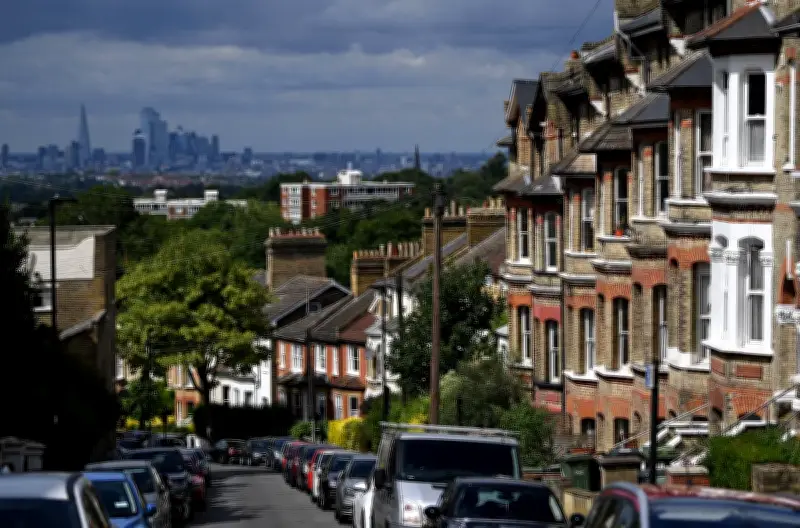
London house prices recorded their steepest annual fall in three years, according to a new index by Lloyds Bank. Property prices in the capital dropped by 3.1% in the 12 months to October, the largest decrease since November 2023, when the lender recorded an annual decline of 3.4%. The average property price in London now stands at £524,892.
Although homes in London are valued significantly higher than in other UK regions, the capital has experienced the biggest drop in value. Across the UK, property values fell by 1.2% annually on average, with the average property price at £296,285. Since September, UK property values have declined by 0.6%, equivalent to £1,882.
Regional Variations in Property Prices
The East Midlands and West Midlands saw the smallest drops in property prices, falling just 0.3%, while some areas recorded increases. Properties in Scotland, Northern Ireland, the North West, and the North East all appreciated in value. In Northern Ireland, property values rose by an average of 4.4% annually, while homes in the North West of England saw an annual increase of 2.2%.
The decline across the UK has partly been attributed to conflict in the Middle East, which is taking its toll on household finances. However, Andrew Asaam, mortgages director at Lloyds, said it was important to contextualise the fall in property value. He explained: "House prices have changed relatively little over the past couple of years, as the market has gradually adjusted to higher interest rates."
Market Outlook and Expert Views
Asaam added: "The recent rise in energy and other household costs has added to the pressure on buyers, so some adjustment in prices is not surprising. Looking ahead, conditions are likely to remain subdued in the near term, but we don't expect this to lead to a sustained period of falling house prices." He noted that with wages continuing to rise faster than property prices, the gap between earnings and house prices should gradually narrow, helping affordability to improve over time.
On Thursday, the Bank of England increased interest rates by 0.25 percentage points to 4% in the first rise in more than three years. Based on typical outstanding mortgage balances, UK Finance said the increase for homeowners on tracker deals would be £30.72 on average. Around nine in ten (87%) outstanding homeowner mortgages are fixed rates, but some 2.3 million fixed-rate deals are due to expire in 2027, according to the analysis by UK Finance. The average two-year fixed mortgage runs at 5.97%, while the average five-year rate averages 5.99%, according to Moneyfacts.
Karen Noye, a mortgage expert at wealth manager Quilter, said: "The housing market increasingly feels like it is running up the down escalator. Buyers are still moving forward, but every step is becoming harder work." She added: "That helps explain why activity remains subdued despite a resilient labour market and rising wages. Buyers are being asked to make one of the biggest financial decisions of their lives at a time when the outlook for borrowing costs remains uncertain."
However, the fall could be good news for first-time buyers who might find they have less competition. David Hollingworth, associate director at L&C Mortgages, explained: "[First-time buyers] will have time to consider their options and potentially negotiate a little harder." Iain McKenzie, chief executive of The Guild of Property Professionals, said: "The latest figures should serve as a wake-up call for sellers who are still pricing their homes based on what they might have achieved at the height of the market. Buyers have more choice, borrowing costs are squeezing budgets and overpriced properties are finding it increasingly difficult to attract serious interest."




