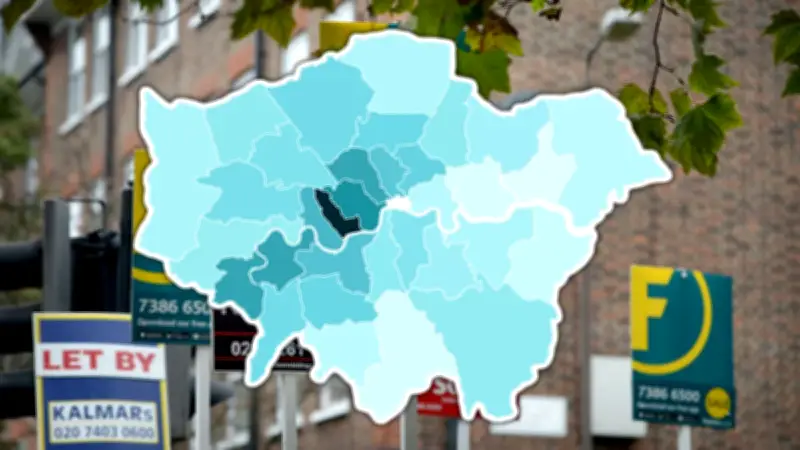
Inner London house prices have fallen at their fastest annual rate in 17 years, with the average home losing around £48,000 in value in the 12 months to September 2026. Prices in the heart of the capital dropped 7.2%, from roughly £670,000 in September 2025 to £621,000 a year later, according to the latest UK House Price Index figures from the Office for National Statistics.
In outer London, the average property lost around £20,000 in value over the same period, with prices slipping 3.5% from £566,000 to £546,000. While prices are also falling in outer London, inner London house prices are dropping at more than twice the rate seen in the capital's outer boroughs.
Borough-Level Declines and Increases
Westminster, Tower Hamlets, Kensington and Chelsea, Camden, Lambeth and Hammersmith and Fulham recorded the steepest house price falls in the 12 months to September. Meanwhile, prices remained unchanged in Lewisham, Havering, Croydon, Enfield, Waltham Forest and Sutton, while Barking and Dagenham, Bexley, Brent, Bromley, Ealing, Hillingdon and Kingston upon Thames saw modest increases.
The figures paint a bleak picture for London's property market. Flats played a major part in the overall decline, with average flat prices falling by 6.3% in the year to September, marking the 14th consecutive month of annual price decreases for this type of property. Flats account for around half of all property sales in London compared with around one-fifth across the UK, meaning they have more of an influence on the capital's overall house price figures.
Warnings and Regional Contrast
The Royal Institution of Chartered Surveyors (RICS) warned in its September 2026 Residential Market Survey that house prices across the UK were still facing downward pressure, with London performing notably worse than the national average.
But the picture is very different elsewhere in the UK. House prices are continuing to rise in Northern Ireland, while Scotland is also seeing modest growth, highlighting the growing divide between London's struggling market and other parts of the country.
Commenting on fears that the UK could be heading towards a market crash in 2026, Paula Higgins, CEO of the HomeOwners Alliance previously said: “If people hear the phrase house price crash being bandied around it can understandably cause anxiety. For many, a house price crash means something like the 2008 global financial crisis, when UK house prices fell by around 20% between 2007 and 2009. But that isn’t what’s happening today.”
“There isn’t a set definition of a house price crash but generally speaking, it means a sudden and significant drop in house prices in a particular market or region. According to current data, some may argue that certain markets and parts of London are undergoing a house price crash. But it’s important to understand the distinction between a house price crash that is relatively localised vs the 2008 house price crash. Although, that will be little comfort for people trying to sell property, especially flats, in desirable parts of London.”