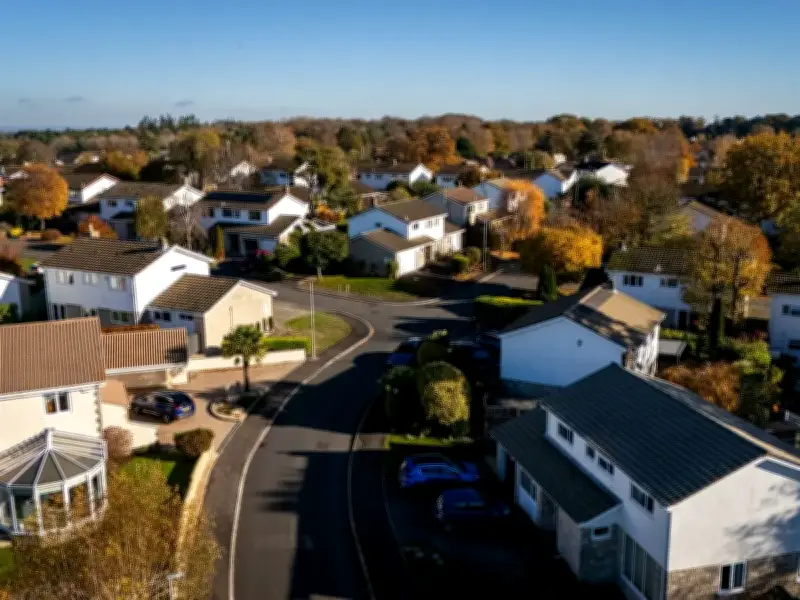
Residents of Failand in Somerset are opposing plans for 200 new homes that they say would destroy the distinctive triangular shape of their village near Bristol. The application, submitted by Hill Residential in December last year, has been appealed to the government planning inspectorate, with a six-day inquiry listed for April next year.
The 'Failand Triangle' under threat
The village, known as the 'Failand Triangle' due to its triangular road layout and plot boundaries, currently consists of 350 homes between Clevedon Road, Weston Road, and Flax Bourton Road. The triangle was originally known as the Sixty Acre Plantation, with development around the edges beginning in the postwar period and the interior being filled out from the 1970s onwards. The triangle has remained intact as it is surrounded by green belt.
More than 250 locals have pleaded with the council to reject the plans, but the decision will now be made at the inquiry. Maria Payne, councillor for Wraxall and Failand Parish Council, said: "The triangle is what defines the settlement of the village of Failand. You are completely breaking the boundary off the triangle. The local plan is very clear that the boundary shouldn't be broken."
Residents voice concerns
Payne, who is part of The Hands Off Failand Green Belt group, said they are campaigning in the village to raise funds to help fight their case and appeal the plans. She added: "All roads in and out are very fast and very steep. The only way in and out is by car from a sustainable point of view there's nowhere in walking distance. Nobody is going to invest in building a supermarket."
Another villager objecting said: "Failand is a unique and special village. A perfect triangle, this development will destroy that uniqueness rarely seen anywhere else and it must be protected. The village has a leafy character all of its own - which is commented on by visitors. The Settlement Boundary fits the 'Triangle'."
Sandra Roberts, 61, said: "I was brought up here and it's been known as the triangle. When I was in the village school we used to go on runs and it used to be how many times we used to go around the triangle and that's how it's always been. You get a lot of wildlife and see deer there. It just doesn't feel the right fit for here. The traffic is so much now and Flax Bourton is a rat run."
Developer and council blame each other
Both the council and the developer are blaming each other for failing to respond to each other's messages. Lodging their appeal, the developers said: "The appellant has been required to repeatedly chase the council for responses - without which the application would have progressed at a far slower pace."
But North Somerset Council said they had verbally agreed to extend the application deadline until the end of July. It said: "However, despite several requests, the appellant refused to confirm the agreed extension of time in writing."
Hill Residential is set to argue at the planning inquiry that the land it wants to build on is "grey belt" and it will deliver much needed housing. Their statement of case states: "It will deliver substantial benefits and the need for the scheme is compelling."
Although North Somerset Council accepts that the greenfield site is technically "grey belt," its lawyers will propose that it is not in a sustainable location and so should still be turned down. Its statement of case argued: "The proposal, due to its position in open countryside and poorly connected to essential services, facilities and infrastructure, would be in an unsustainable location and constitute inappropriate development in the green belt."