
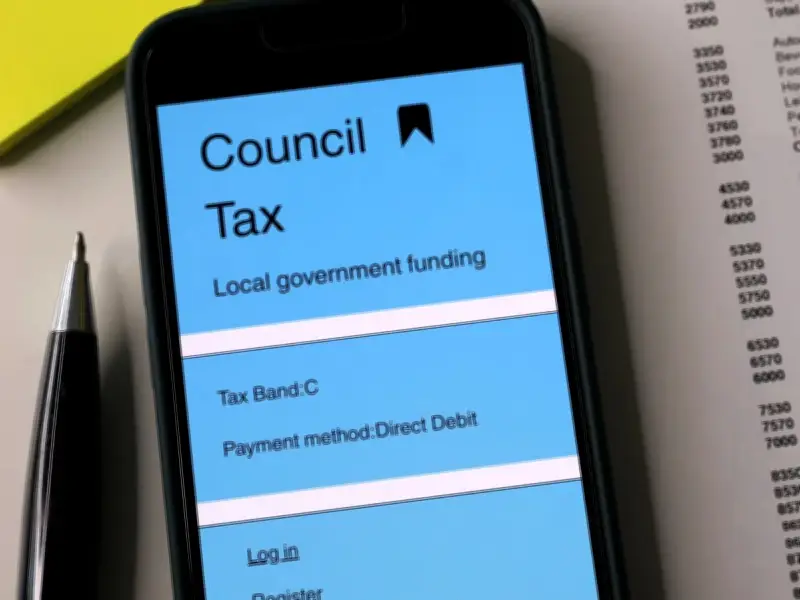
People in England have been alerted to a situation that could leave them being charged double the normal rate of council tax. Homeowners trapped in a collapsed house chain have been cautioned against depending on a bridging loan to salvage the sale, with an expert warning that it "cannot make an unsold home sell", with one warning of knock-on consequences of a broken chain such as council tax liabilities.
Bridging finance can provide buyers with breathing room to secure their next property without having to pull out of a purchase. Nevertheless, experts have cautioned that bridging represents costly debt, secured against the property, with no guarantee of when the current home will be sold.
What action should you take when a property chain collapses?
One bridging loan specialist explains why homeowners confronting a broken property chain should thoroughly evaluate their options before resorting to bridging finance. Tony Sanchez, founder of Bridging Loan Directory, said: "A broken chain creates pressure to act quickly, but first establish what has failed and whether there is a realistic way to get the sale moving again. A bridging loan can buy time to complete an onward purchase.
"It cannot make an unsold home sell. If the repayment plan depends on achieving an asking price that has attracted little interest, extra borrowing could leave the owner with a growing bill and the same problem."
Delayed exits have brought additional interest and extension costs. Before committing, compare the full borrowing cost with alternatives such as reducing the sale price or renegotiating the onward purchase and timetable. "Ask an independent broker to test what happens if the sale takes longer or achieves less. An extension should never be assumed," Sanchez added.
Expert advice on avoiding bridging loans
Craig Fish, director of London-based Lodestone Mortgages, advised: "When a chain breaks, don't panic and don't throw money at the problem. Find out exactly why it collapsed, because the cause decides the fix.
"If your home is sitting unsold, the issue is usually the price rather than the market and too many agents win instructions by overvaluing homes they know won't sell at that figure. Get two or three independent valuations and be ready to adjust. If you've found a home you love, consider breaking the chain yourself by selling first and renting for a while, or favouring chain-free buyers even at a slightly lower price."
As for bridging, Fish said: "Typical rates of around 0.8% a month work out at nearly 10% a year before arrangement, valuation and legal fees, on a loan secured against your home, with no idea when you'll sell. A bridging loan is only as safe as its exit, and a house that won't sell is not an exit. For the few with substantial equity and a realistic price it can work, but get whole-of-market advice first."
Michelle Lawson, director of Fareham-based Lawson Financial, said: "We are seeing more chains fail where things are taking so long. There are also a lot of properties stagnant on the market. This could be pricing, appeal or something else. A good agent should give honest feedback but also not over-price at the outset, as this is the worst thing to do."
Is a bridging loan the right move?
Nouran Moustafa, practice principal and Independent Financial Adviser at Roxton Wealth, said: "A broken chain is stressful, but bridging should not be used to turn panic into expensive debt. It can work brilliantly where the problem is genuinely timing: you have found the next property, your existing home is realistically saleable and there is enough equity and headroom to repay the bridge even if the sale takes longer or completes at a lower price."
"What worries me is using bridging to avoid admitting the current home is overpriced. If the exit strategy is simply 'someone will eventually pay what I want', that is not an exit strategy," she added. "Before borrowing, review the asking price, agent, buyer feedback and whether another mortgage structure could work. A bridge can solve a broken chain. It cannot fix a broken valuation."
Chris Barry, director of London-based Thomas Legal, said: "Bridging is very much a sticky plaster. In most scenarios, chains break for a reason and fixing these should be number one priority. A vendor should get their lawyer on board at the marketing stage to highlight any legal issues early and speed up the process once a buyer is found."
When double council tax could be charged
Homeowners trapped in a collapsed property chain may encounter extra council tax charges if they relocate to a new property before their existing home is sold. Harvey Dhillon, founder and CEO at Zmartly, said: "If your chain breaks, work out what each month of waiting for a new buyer costs you, because that's the number to weigh against a price cut. If the house still won't sell, I wouldn't take a bridging loan and the interest isn't the only new bill.
"Once you've moved into the next home, the furnished house you've left usually counts as a second home in England. Where the council charges the second homes premium, that can mean up to twice the normal bill and unlike an empty home there's no year's wait before the premium can start."
"So, tell the council it's on the market. You may not have to pay the premium while it's actively marketed for sale, but only until it's been on the market a year, counting any months before you moved out," Dhillon added. "The normal bill still applies and councils can look at whether the asking price is fair. Leave it furnished and skip that call and you could be paying up to double on a house you're trying to sell."




