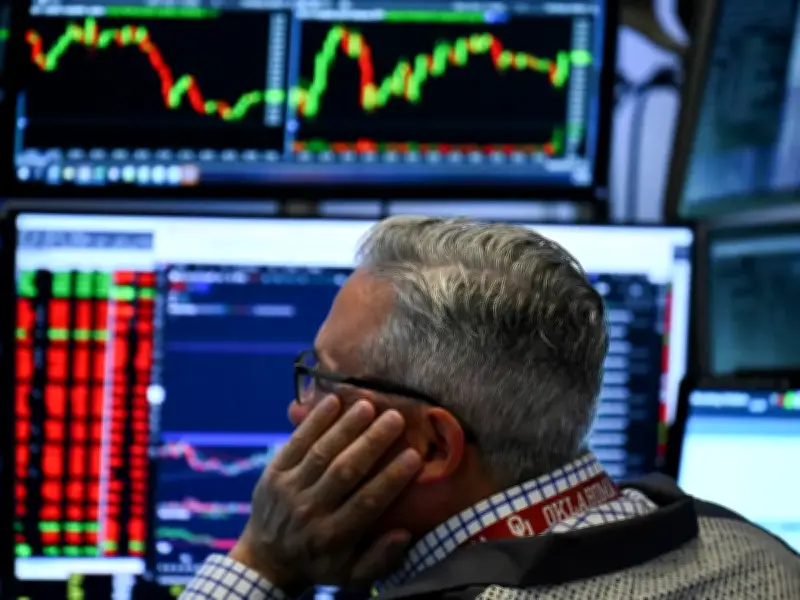
Around £1.9 trillion was wiped off New York's Nasdaq when it closed 5.5 percent down on Thursday (November 5), part of a global sell-off that followed the US midterm election results.
Other US markets also saw heavy losses, with the S&P 500 falling 4.36 percent and the Dow Jones losing 3.44 percent on the same day.
Asian markets hit hard
Japan's Nikkei 225 fell by 5.92 percent during trading on Friday afternoon local time. In South Korea, the Kospi dropped 5.44 percent in the same trading window, while Taiwan's Taiex fell by more than 8 percent.
London's FTSE 100, by contrast, only fell by 0.43 percent on Thursday. Experts believe the markets bearing the heaviest losses are those packed with tech stocks, a sign that investors may be cooling on AI firms.
AI infrastructure concerns
AI businesses, and consequently the firms that produce the microchips they need such as TSMC, which saw its stock fall by 4.69 percent, require data centres to be constructed to grow the technology's capabilities and keep investors happy.
Investment strategist Susannah Streeter told the BBC: "Fears that the vast sums poured into AI infrastructure may not deliver the returns investors have been banking on are now colliding with the prospect of a sharp slowdown in data centre construction."
Political pressure on AI
Investors are wary of the Democrats' stance on AI in the US now the party has secured a stunning midterm election win. The Democrats now control Congress and several important state governors' offices after the 'blue Tsunami' washed over the US earlier this week.
Several high-profile Democrats have called for more regulation over data centre construction, including the new governor-elect of Texas, Gina Hinojosa. She has pledged a moratorium on building new data centres in the state. Hinojosa is far from the only member of her party to rally against AI, leading to fears among investors that Democrats in power could at the very least slow the technology's progress.
Bank of England rate rise
In the UK, the FTSE 100 reached its highest level for two weeks shortly before the Bank of England confirmed it was raising interest rates from 3.75 percent to 4 percent on Thursday. The Bank said it had to act to control inflation.
Governor Andrew Bailey said: "There is now enough inflationary pressure in the pipeline caused by the rise in energy prices that an increase in Bank Rate is warranted."
He also sounded a warning that more pain for borrowers could be on the way: "Today's increase shouldn't be seen as the first in an inevitable long sequence of hikes. But, unless the conflict in the Middle East is resolved, neither does it seem likely to be the last increase."
It comes just days after Oxford Economics warned the UK would be at "substantial" risk of recession if the AI bubble burst. Adam Slater, the lead economist at Oxford Economics, said that removing the AI boom leaves advanced economies with sluggish growth, which leaves them potentially exposed.