
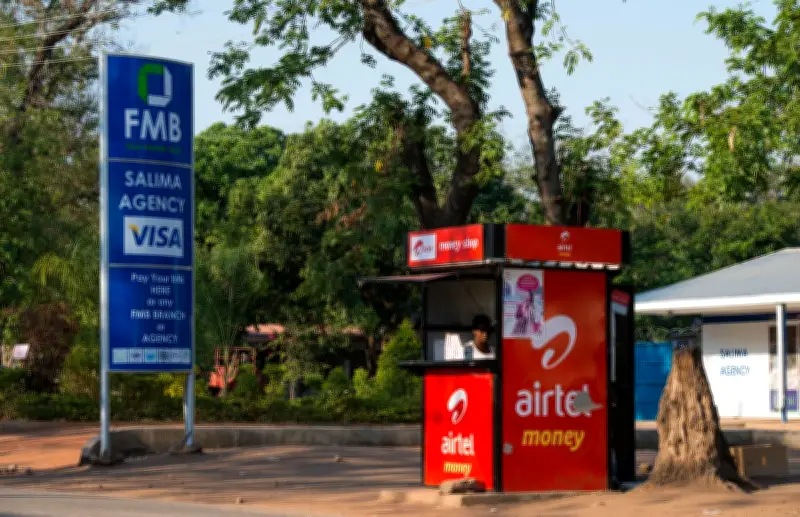
Airtel Money, the African mobile payments business, saw its shares slip below their float price on the first day of unconditional trading on the London Stock Exchange.
The company launched its Initial Public Offering earlier this month at a valuation of roughly £5.3 billion, marking London’s biggest stock market float since 2021. Shares were initially valued at £1.96 each, though the price dipped slightly during conditional trading for investors originally allocated shares in the IPO.
Shares open lower
On Wednesday, all traders and investors were able to begin buying and selling the stock. Shares traded at around 181.3p after the London Stock Exchange opened, approximately 7.5% below the float price.
The stock later recovered some ground but remained below the float level, with shares sitting at around 186p later in the morning. That would represent a roughly 5% decline on the IPO price and value the company at slightly more than £5 billion.
Spin-off from Airtel Africa
Airtel Money has been spun off from separately listed FTSE 100 firm Airtel Africa, a leading telecoms provider that is part of Indian conglomerate Bharti Enterprises. The firm is thought to be the first large African fintech to list on a global stock exchange.
The IPO adds to Bharti’s long-term investments in the UK, including the strategic stake in BT announced in 2024, a shareholding in Eutelsat (previously OneWeb) alongside the UK Government, and Scottish resort Gleneagles, according to the group.
Business scale
Airtel Money is used by around 53 million people across Africa to make payments, pay bills, withdraw cash and access other money services. Its biggest business is offering digital wallets, which enable people to store and transfer money, and access to loans and savings accounts.
Operating through a network of branches and kiosks, it generated revenues of around 1.4 billion US dollars (£1.1 billion) in the last financial year.




