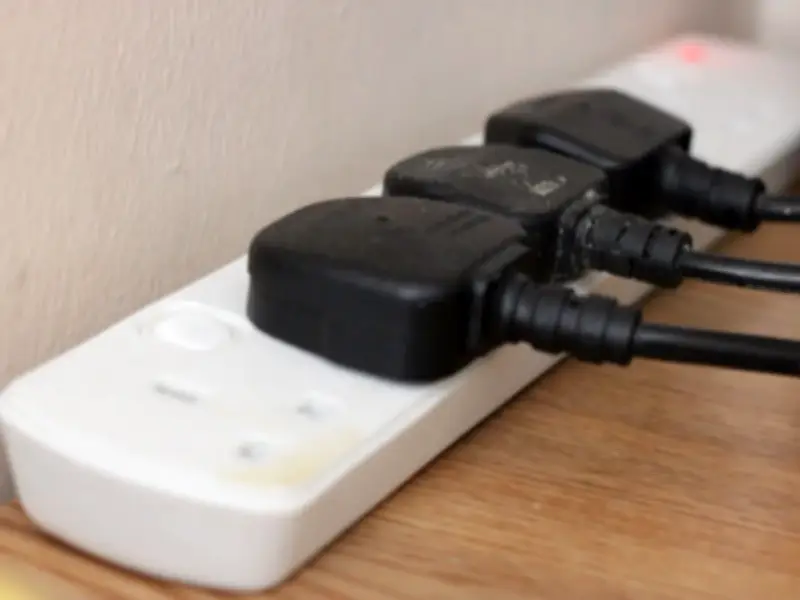
Homeowners who regularly use extension leads are being urged to rethink their habits, as unsafe electrical practices could invalidate their home insurance. A survey by Quotezone.co.uk found that 32% of Britons were unaware that unsafe electrical practices could affect a claim for damage or fire.
Risk of Overloaded Sockets
According to the London Fire Brigade, overloaded sockets are one of the most common causes of electrical fires. Overloaded sockets and faulty electrical appliances are believed to account for around 7,000 house fires across the country each year.
The survey also showed that 53% of Brits admitted to plugging one extension lead or adaptor into another to create more sockets. In some instances, insurers may refuse to pay out for fires caused by overloaded sockets if they believe the homeowner was negligent or didn't take reasonable steps to prevent the fire.
Autumn and Winter Electrical Strain
As autumn approaches, households use more electrical appliances at the same time, especially as the weather gets colder and the evenings get darker. Many homes will be plugging in portable heaters, electric blankets, dehumidifiers, lamps and fairy lights, but using too many appliances at once can put extra strain on plug sockets and increase the risk of overheating, electrical faults and even fires.
Homeowners should be mindful that the average plug socket isn't loaded with more than 3,000 watts. The wattage of an appliance is usually listed on its label or plug, but as a general rule, homeowners should avoid plugging multiple high-powered appliances into a single extension lead. These include items such as kettles, irons, hair dryers, and portable heaters.
Signs of Overheating and Expert Advice
If the socket or plug feels unusually hot to the touch, there is discolouration around the socket, a melted-plastic smell emerging, or there are crackling and sizzling sounds, it's likely the plug socket is overheating, and appliances should be turned off and unplugged straight away.
Helen Rolph, home insurance expert at Quotezone, urges people with extension leads at home to make an urgent decision and change how they are using them if they are currently overloaded. "A lot of people aren't aware of how dangerous it can be to overload your plug sockets and the consequences that come along with it," she said.
"As the weather starts to take a turn, households will automatically be using more electrical appliances like portable heaters, heated blankets, tumble dryers, and hair dryers just to name a few. If you're plugging loads of high-powered electricals into one extension cord, there is a very high chance it could overheat.
"A fire that breaks out from this isn't automatically covered on your home insurance either. Once investigated, if your insurer feels like there was negligence involved, it could invalidate your insurance and you may not be able to make a claim. We want everyone to take care this autumn and winter and be mindful of what items they're plugging into a single electrical lead."
Average wattage of common household appliances includes mobile phone chargers up to 140W, electric blankets up to 120W, hair dryers up to 2200W, games consoles at 200W, irons at 3000W, air fryers up to 2600W, dehumidifiers up to 650W, and heated clothes airers up to 2300W.