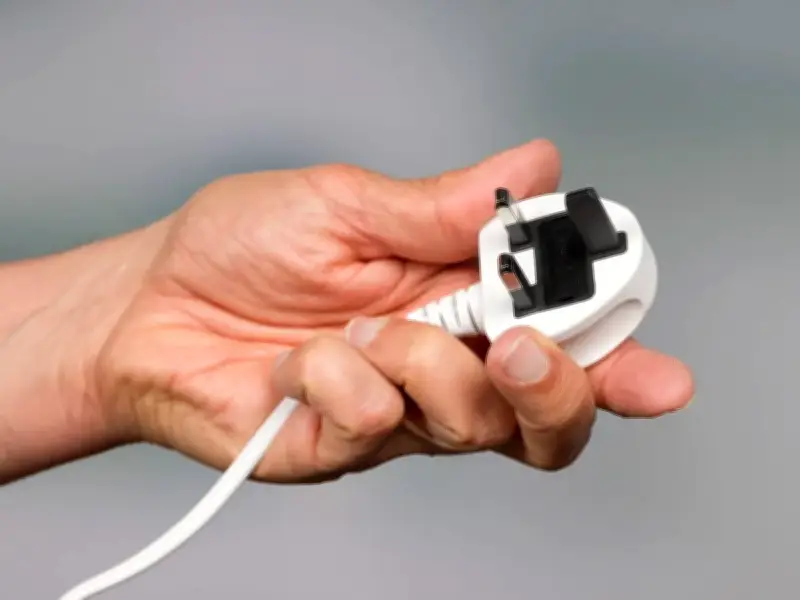
More than half of British households are plugging one extension lead or adaptor into another to create extra sockets, a habit that could overheat plugs and leave home insurance claims void. The warning comes from Quotezone.co.uk, whose survey found 53% of Brits confessed to the practice, while 32% were unaware that unsafe electrical practices could affect a claim for damage or fire.
Overloaded sockets behind thousands of fires
According to the London Fire Brigade, overloaded sockets are among the most frequent causes of electrical fires. It is thought that overloaded sockets and faulty appliances are responsible for roughly 7,000 house fires across the UK each year.
In some cases, insurers may decline to pay out for fires caused by overloaded sockets if they consider the homeowner was negligent or failed to take reasonable measures to prevent the fire. As temperatures drop and evenings draw in, households are switching on portable heaters, electric blankets, dehumidifiers, lamps and fairy lights, often at the same time.
3,000-watt limit and warning signs
Homeowners should not load a typical plug socket with more than 3,000 watts. The wattage of a device is usually shown on its label or plug, but as a rule of thumb, several high-powered appliances such as kettles, irons, hair dryers and portable heaters should not be plugged into a single extension lead.
If a socket or plug feels abnormally hot, shows discolouration, emits a melted-plastic odour, or produces crackling and sizzling noises, it is likely overheating. All appliances should be switched off and unplugged immediately.
Expert urges immediate action
Helen Rolph, home insurance expert at Quotezone, is urging households with extension leads to take immediate action and reassess how they use them if they are overloaded.
"A lot of people aren't aware of how dangerous it can be to overload your plug sockets and the consequences that come along with it," she said. "As the weather starts to take a turn, households will automatically be using more electrical appliances like portable heaters, heated blankets, tumble dryers, and hair dryers just to name a few.
"If you're plugging loads of high-powered electricals into one extension cord, there is a very high chance it could overheat. A fire that breaks out from this isn't automatically covered on your home insurance either.
"Once investigated, if your insurer feels like there was negligence involved, it could invalidate your insurance and you may not be able to make a claim. We want everyone to take care this autumn and winter and be mindful of what items they're plugging into a single electrical lead."
Households are also advised to check they are using the correct fuse for each plug. A 3A fuse suits items such as table lamps, televisions, computers and fridges, while a 13A fuse is for washing machines, dishwashers, microwaves, kettles, toasters and irons. Common appliance wattages include hair dryers at up to 2,200W, irons at 3,000W, air fryers up to 2,600W, and heated clothes airers up to 2,300W.