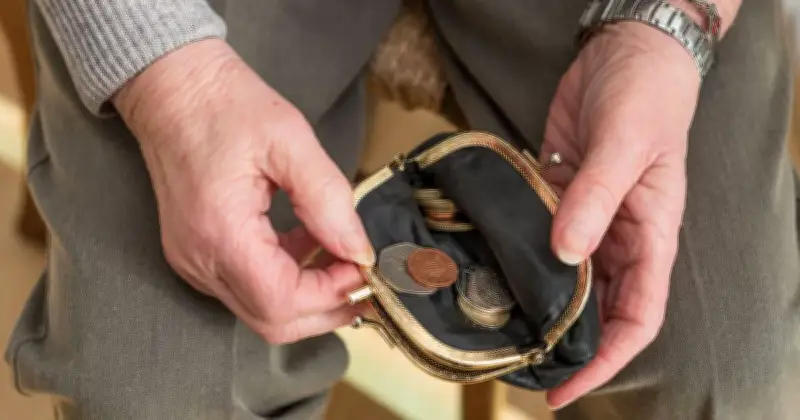
Older state pensioners across the UK will receive up to £3,047 less per year in basic State Pension payments from the Department for Work and Pensions (DWP) next year compared with younger retirees. A 3.9% increase to the State Pension was confirmed on October 28 in Chancellor John Healey's Budget, after the Chancellor re-confirmed that the state pension triple lock will remain in place until 2030.
The rise is in line with average wage growth, the highest of the three triple lock measures used to set rates at the start of each new tax year in April. Prime Minister Andy Burnham has announced plans to scrap the triple lock in 2030 in favour of a new "double lock" system, but the current method of calculating State Pension rises will remain until then.
New State Pension rates from April 2027
A 3.9% boost will take the full new State Pension to £250.70 per week from April 2027, up from £241.30 currently. Over a full year, this will give pensioners a maximum of £13,036.40 in State Pension payments if they are eligible for the full rate, an extra £488.80 annually on current amounts.
Pensioners on the old basic State Pension are paid at a lower rate, and a 3.9% boost will take the full weekly rate to £192.10 from April 2027, up from £184.90 per week currently. Over a full year, this amounts to a maximum of £9,989.20 in State Pension payments for those eligible for the maximum amount.
Widening gap between pension rates
While the uplift will give older pensioners an annual boost of up to £374.40 on current rates, overall it is still £3,047.20 less from the DWP per year compared with younger retirees who get the full new State Pension, comparing only the basic payment rates and not including increments like Pension Credit or Additional Pension.
You will get the basic State Pension if you are a man born before April 6, 1951, or a woman born before April 6, 1953, but anyone born after these dates gets the new State Pension instead, which is paid at a higher rate.
Who is affected by the lower rate
According to figures published by UK Parliament in September, in the quarter ending March 2026, around 7.9 million people (59%) were receiving the basic State Pension in the UK, while around 5.4 million (41%) were receiving the new State Pension. As the vast majority of pensioners get the old basic State Pension, it means around 7.9 million people are set to miss out on up to £3,047.20 annually under the uplifted rates from April 2027.
Age is not the only factor in determining which State Pension you get, with everyone who is eligible for the basic State Pension having already reached State Pension age, as how much money you get also depends on your National Insurance record. To get the full basic State Pension, a man born between 1945 and 1951 usually requires 30 qualifying National Insurance years, while men born before 1945 require 44 qualifying years. For women, 30 qualifying years are needed if born between 1950 and 1953, or 39 qualifying years if born before 1950.
Some older pensioners also qualify for an "additional" State Pension which can give them extra amounts on top of the basic rate. Additional Pension is the umbrella term for a range of extra pension schemes which older pensioners could use before the 'old' pension was phased out and replaced in 2016. This included the Second State Pension and the State Earnings-Related Pension Scheme (SERPS), which operated from 1978 until 2002 and was designed to give pensioners extra money on top of the basic State Pension based on earnings and how many years they contributed.
This has now been replaced by the new State Pension, and people who were in SERPS before April 2002 continue to receive benefits as part of their State Pension, while those who were contracted out can access the money in a separate workplace or private pension. UK Parliament explains: "The old State Pension has two tiers: The basic State Pension (BSP) – a contributory flat-rate benefit to which people built entitlement on the basis of their national insurance (NI) record. The additional State Pension – this depended on the earnings or deemed earnings during a person’s working life since 1978. People built up entitlement through the State Earnings Related Pension Scheme (SERPS) between 1978 and 2002, and the State Second Pension (S2P) from 2002 onwards. It was possible to contract out into a private pension scheme that met set requirements, in return for which the employee (and their employer) paid a lower rate of NI."
Although the schemes can no longer be claimed by state pensioners retiring now, those who took part in them can still get additional pension payments every week. According to analysis by Money Mail in 2024, some older retirees in their 80s and 90s can receive up to £20,176 annually, which is much higher than the new State Pension rate.