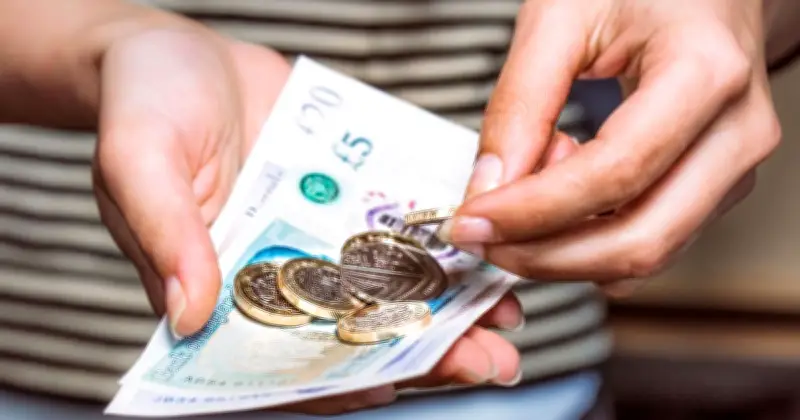
HM Revenue and Customs (HMRC) has confirmed that Child Benefit rates will rise by 3.5% from April, taking the weekly payment for the eldest or only child to £28.
New rates confirmed
The increase, in line with Consumer Price Index (CPI) inflation for the year to September 2026, will apply from April 2027. The rate for the eldest or only child will rise from £27.05 to £28 per week, while the rate for additional children will increase from £17.90 to £18.55 per week.
This means parents can receive up to £1,456 per year for their eldest or only child, an extra £49.40 annually on current rates. For additional children, the annual amount will be £964.60, an increase of £33.80.
Budget confirmation
The new rates were confirmed by HMRC after Chancellor John Healey delivered the Autumn Budget on October 28. Guardian's Allowance will also increase by 3.5% from April.
Emma Reynolds, Chief Secretary to the Treasury, said: "The Tax Credits Act 2002 and the Social Security Administration Act 1992 place a statutory duty on His Majesty's Treasury to review the rates of tax credits and child benefit each year in line with the general level of prices.
"There is a further statutory duty on the Treasury to increase guardian's allowance in line with price growth. I have now concluded the review for the tax year 2027-28.
"I have decided to increase child benefit rates in line with the consumer price index for the year to September 2026, which is 3.5%. Guardian's allowance will also increase by the same rate. This means that, from 12 April 2027:
- the Child Benefit rate for the eldest child will increase from £27.05 to £28.00 per week;
- the Child Benefit rate for other children will increase from £17.90 to £18.55 per week;
- Guardian's Allowance will increase from £22.95 to £23.75 per week."
Overpayment offset plans
The Budget 2026 document published by the Treasury also sets out plans for HMRC to automatically offset Child Benefit overpayments against the High Income Child Benefit Charge (HICBC). The Treasury said: "HMRC will automatically offset Child Benefit overpayments against the High Income Child Benefit Charge (HICBC), simplifying administration for affected customers by reducing unnecessary payment and repayment transactions."
This will be introduced through legislation in Finance Bill 2026-27 with retrospective effect from HICBC's introduction in January 2013.
Under current rules, where a Child Benefit claimant or their partner has an individual adjusted net income of more than £60,000, the higher earner may be subject to pay the HICBC. The charge sees claimants pay back 1% of their Child Benefit for every £200 earned over £60,000, and those earning more than £80,000 must pay it all back. Claimants can pay the charge through their PAYE tax code using the HICBC digital service or through Self Assessment.