A Cardiff-based company developing an innovative bi-directional turbine has secured support from the team behind proposals for a huge tidal lagoon in Somerset.
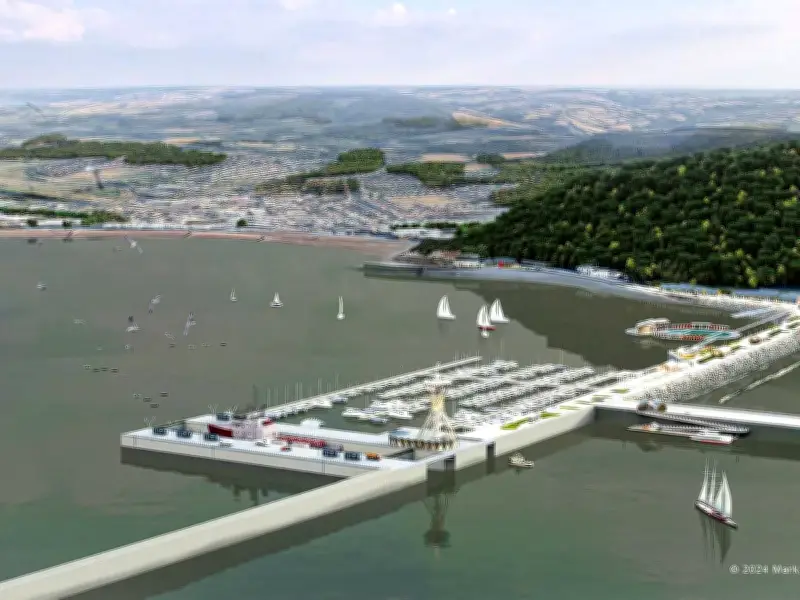
SETB, which has created and tested a turbine designed to make tidal range electricity generation more economically viable, has received a letter of intent for 250 turbines with a generating capacity of 2.5 gigawatts (GW) from the proposed £10bn West Somerset Lagoon scheme.
Letter of intent and demonstrator plans
The letter of intent comes from the directors of West Somerset Lagoon Ltd, the company behind the project that would stretch nine miles from Minehead to Watchet. The turbines, each nine metres in diameter and rated at 10 megawatts (MW), are conditional upon successful validation of SETB's technology through a proposed demonstrator at Barry Dock.
SETB, previously known as Severn Estuary Tidal Bar, is currently looking to secure £5m to establish its groundbreaking demonstrator in partnership with Associated British Ports (ABP).
The proposed demonstrator would incorporate a 2.5m turbine system with an anticipated generating capacity of approximately 640kW, offering an opportunity to validate the technology in a live operational setting before broader commercial deployment.
Technology and wider context
SETB has created a new generation of contra-rotating, bi-directional turbine technology capable of generating electricity efficiently at considerably smaller differences in water level than conventional tidal turbines.
The West Somerset Lagoon proposal was amongst the tidal range schemes assessed by the Western Gateway Severn Estuary Commission, which scrutinised the potential for harnessing tidal energy in the Severn Estuary and called for further measures to bolster its commercial development.
The West Somerset Lagoon project is currently seeking development funding, and SETB believes the letter of intent represents a significant indicator of potential commercial appetite for its technology.
SETB's announcement arrives amidst a resurgence of interest in tidal range energy, including proposals for a tidal lagoon at Aberthaw worth up to £3.6bn from the Cardiff Capital Region. The lagoon is intended to be a 600 megawatt scheme, generating sufficient electricity to power half a million homes, though its design and precise location have yet to be finalised.
Investment and leadership
While large-scale tidal lagoon projects demand considerable investment alongside lengthy planning and construction programmes, SETB believes its smaller Barry Dock demonstrator could offer a comparatively swift pathway to proving technology capable of underpinning future developments along the UK coastline.
SETB has announced a validated projected levelised cost of electricity of £114 per megawatt-hour (MWh), which it claims demonstrates tidal range energy's potential to compete economically with other low-carbon technologies, including wind and solar power.
The company also maintains its technology could make a substantial contribution to the UK's future energy mix, bolstering long-term energy security while creating opportunities for British manufacturing, skilled employment, coastal regeneration and infrastructure investment.
SETB's chairman, Steve Prendergast, is an infrastructure engineer who has overseen global projects across sectors including oil and gas, power, water and transport. The board also features Professor Brian Morgan of Cardiff Metropolitan University and former chief economist at the Welsh Development Agency, Cardiff-based energy consultant Don Snow and Nigel Goldworth, a former company secretary at Rolls-Royce plc.
SETB is collaborating with international engineering and infrastructure firms Jacobs and Amentum, alongside Cardiff University, Lancaster University and Liverpool John Moores University. Considerable investment has already been committed to the technology, backed by a £1m Innovate UK Smart Grant, to design, construct and successfully test the turbine.
Next steps
Mr Prendergast said: "For decades Britain has understood the enormous potential of its tides. The challenge has always been creating technology that makes tidal range energy commercially viable. SETB's work changes that conversation.
"At a time when energy security is such an important national issue, we have an opportunity to develop a home-grown, predictable source of low-carbon electricity that could serve Britain for generations.
"The interest from West Somerset Lagoon demonstrates the potential scale of the opportunity. We have a letter of intent covering turbines with a combined generating capacity of 2.5GW, subject to successful validation of our technology at Barry Dock.
"That underlines why the proposed £5m demonstrator is so important. It could provide the evidence needed to move from successful research and testing towards commercial deployment.
"We believe government backing could help attract private investment and allow the Barry Dock project to move forward quickly.
"Successful demonstration would be an important step towards deploying this technology on a much larger scale, creating opportunities for British engineering and manufacturing while strengthening our long-term energy security."
The company is also looking to engage with government, investors and delivery partners to advance the Barry Dock demonstrator and establish a pathway towards broader commercial deployment.