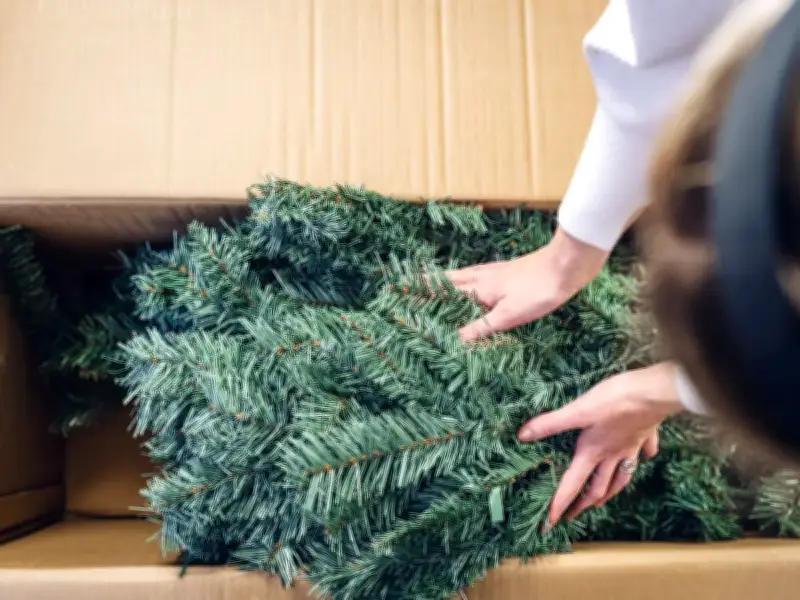
UK households are being urged to check one thing when putting their Christmas tree up, as energy bills are set to jump by 26 per cent in January. Energy regulator Ofgem has announced that the energy price cap will increase by £443 annually – equivalent to an additional £36.91 monthly – bringing the typical household bill in England, Scotland and Wales to £2,166. The new quarterly cap, which aligns with industry analysts' forecasts, will be the steepest since the second quarter of 2023.
Check that radiators aren't blocked
"If you are moving furniture around to accommodate Christmas trees and presents, avoid placing any large furniture directly in front of radiators," recommends John Lawless, SEO manager and heating expert at BestHeating. "If you're blocking radiators it will affect the convection flow of heat."
Use timers and zone heating
"Use a timer so that your heating comes on for around 30 minutes when you wake up and for another 30 minutes to an hour before you go to bed," recommends John. Ben Rawson, heating expert at Electric Radiators Direct, adds: "You certainly don't want to heat rooms that you're not using, so zoned heating can be a better way of monitoring and using heating. Thermostats are very good in terms of their control usage nowadays."
Draught-proof and insulate
"Doors and windows are notorious for letting cold air in, and draught excluders can prevent those gusts from sneaking in," says John. "Check around your windows, doors and even your letterbox for draughts. You can use sealants or weather stripping to block any draughts." Ben adds: "Spend some time checking your floorboards, especially around the skirting boards, and make sure that they're all sealed properly to stop draughts from coming in. Small things like this will go a long way."
Radiator reflector panels are also recommended. "They sit behind the radiator and bounce the heat almost back into the room, as opposed to losing it behind the radiator," clarifies Ben. Getting a rug can help insulate laminate or hardwood flooring, notes John. Electric blankets are another option: "They're cost-effective because they're very low wattage," explains Ben. "The body heat that you generate as well tends to keep the blanket warm. So, I think they can be a great addition to any household, particularly through the very coldest winter months."
Curtains and ventilation
"Heavy lined curtains or thermal curtains can act as an extra barrier between your room and the world outside," says John. Ben agrees, noting that thermal curtains "can really range in price but you can get very cost-effective ones from household shops such as B&M and Dunelm." Be strategic about opening and closing them: "If it's a sunny day, open your curtains to let the sunlight in," recommends John. "The temperature tends to drop as soon as the sun is no longer in the sky, so make sure you keep the curtains closed in the evenings when it gets dark," advises Ben.
Keep your home ventilated when cooking, as steam can lead to condensation that makes the home feel colder, advises John. After cooking, "leave the oven door open so the heat dissipates out into the room," he suggests. Finally, consider switching to thermostatic radiator valves (TRVs): "If you have manual valves on your radiators you can only turn them on and off. Whereas, with thermostatic radiator valves (TRVs) you can usually adjust the dial from one to five," explains John. "I would recommend turning the TRVs down in your bedroom during the day, and keep the bedroom door closed to stop heat from escaping."