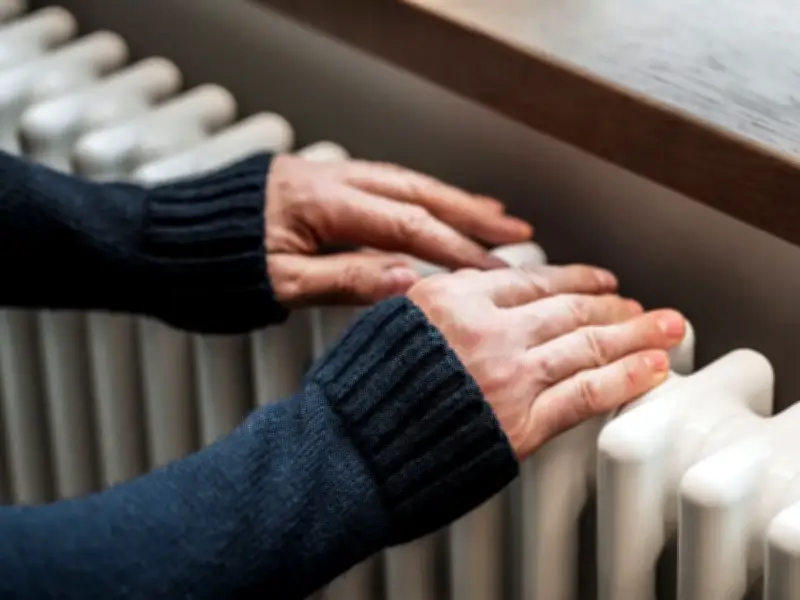
A heating expert has outlined three exceptions to the common suggestion that it is cheaper to leave heating on low all day. The advice comes as households face a significant rise in energy costs, with experts predicting a typical bill could jump by more than £400 in January.
The debate over heating all day
The discussion follows comments from Martin Lewis on his ITV Money Show Live, where he and two energy specialists debated whether it is more efficient to leave heating on low all day or only turn it up at specific times. Many homeowners are questioning the best way to heat their properties as large parts of the UK record sub-zero temperatures.
This week it was revealed that household energy costs are set to soar by more than a quarter to the highest level in four years in January. Experts at Cornwall Insight have predicted Ofgem's energy price cap will rise by 26% to £2,166 a year on January 1, up £443 on the level between October and December, to hit the highest since 2023.
Expert's view on efficiency
Ryan Willdig, heating expert from Heatforce, said: "There has been a lot of misinformation over the years... In reality, it's far more efficient and cost-effective to only use the heating when required."
He explained that keeping the heating on all day means the boiler works to maintain a temperature even when it is not needed, using more gas over 24 hours than heating only when required. He added that modern condensing boilers are efficient at quickly heating a space, especially when combined with a programmer or smart thermostat.
Three exceptions to the rule
Mr Willdig identified three exceptions where keeping heating on longer may be more appropriate. Underfloor heating has a slow response time due to the thermal mass of the floor, and can take hours to heat up and cool down. Heat pumps, especially air-source or ground-source, work most efficiently at lower flow temperatures over longer periods. And highly-insulated homes with minimal heat loss may require less energy to maintain a steady temperature than to re-heat from a colder baseline.
Mr Lewis informed viewers that guidance is available from the Energy Savings Trust. He said: "The Energy Savings Trust default setting is that you have your heating on from 7am to 9am in the morning. This is for people who go out to work during the day, not people who are staying at home all day."
He added that the recommended pattern is heating from 7am to 9am and then from 4pm to 11pm, which should keep the fabric of the house going. He noted that the rule is to only pump heat into the house when it is needed, but that this depends on factors such as the weather and the type of building. A heavyweight house with lots of thermal mass, such as a solid brick Victorian terrace, will store heat and act as a battery, while a lightweight modern house made of timber frame will heat up quickly but not necessarily store the heat.