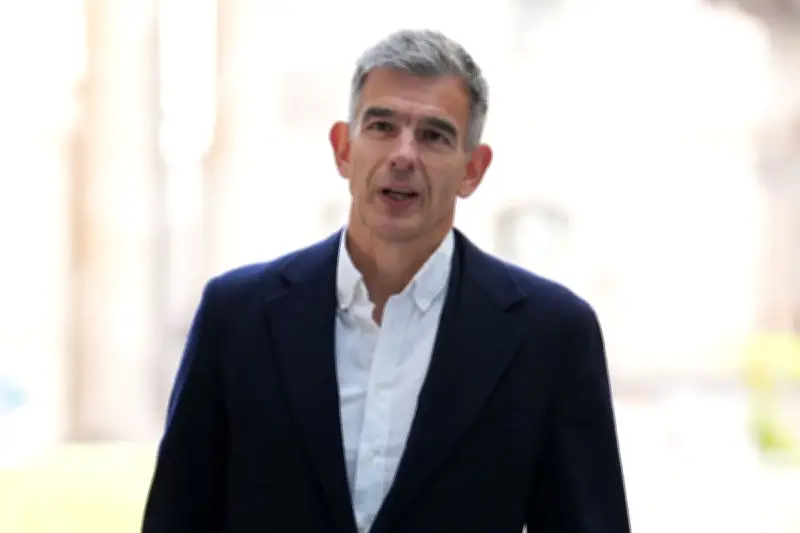
BBC director-general Matt Brittin has admitted he was not aware of the “severity” of the cuts the organisation must make.
The BBC in June announced plans for savings across the news, nations and content divisions, which is set to deliver £160 million of £500 million in savings needed by 2028/29. Around 2,000 jobs are expected to be cut as part of the process.
First major appearance
After taking over the top job at the national broadcaster in May, Brittin made his first major industry appearance at the Edinburgh TV Festival on Thursday. He was interviewed by Kirsty Wark, who asked about the challenges he faced stepping into the highly scrutinised job.

“On the financial side, I knew that cuts had been announced and that savings had been announced, but I hadn’t really understood the severity,” he said.
Brittin said when he began the role, he was “impressed by the magic of the creativity and the talent”, but was also “concerned by the financial situation”. He added that “every media organisation is struggling with rapidly changing consumer behaviour and the power of the AI revolution”.
Risk aversion and the future
However he conceded he saw the BBC as being “inward looking”. He said: “You’re publicly funded, and the charter rightly requires a level of quality and responsibility that’s higher than others. I completely get that.
“What that can lead to is an aversion to risk. You’ve got very loud critics, many of whom are the commercial rivals of the corporation, and you’ve got political pressure on everything that you do journalistically.
“You’ve also got, when you make a mistake, you’ve got a lot to deal with on the opinion side. I think that leads to a bit of risk aversion and a bit of caution.
“At the moment, the world’s more uncertain than ever before for our audiences, for our industry, and for all of us as business as well as citizens.
“In that context we need to be experimenting and finding what works and getting behind it, and don’t believe in move fast and break things. I think that’s crazy. You know, that’s irresponsible.
“But we need to move faster through experimenting and learning, and that’s one of the things I want to bring to the BBC: is a sense of openness and partnership to find a way to the future together.”
Brittin also said he had “signed up to the job because I believe in the mission” and is “conscious of the responsibility” leading the organisation. He said the BBC is the “envy of the world” and “worth fighting for”.
Funding concerns
The former Google executive, who succeeded Tim Davie, is the first director-general since Greg Dyke in 2000 to take on the role without working at the BBC beforehand. Brittin has previously said the corporation is “held back” by its TV licence fee which is “no longer fit for purpose”, and he has suggested a household levy as a potential funding option.
The standard TV licence costs £180 per year and is legally required to watch or record television on any channel or service, watch live on streaming services or to use BBC iPlayer.
Adjusted to today’s prices, the BBC’s licence fee income for the 2016/17 financial year was £5.22 billion, but for the financial year 2025/2026 it sat at £3.88 billion – a loss of £1.34 billion, or 26%. The BBC’s latest annual report detailed how the corporation’s financial outlook “deteriorated” in the second half of 2025.