Labour has been accused of increasing the nation's annual tax bill by more than £100billion. The hike is partly due to higher National Insurance bills imposed on employers. Working people are also paying more, thanks to frozen tax thresholds, which effectively increase income tax.
Tories published tax figures based on reports from the Office for Budget Responsibility (OBR), the official spending watchdog. An OBR analysis published in March 2024, the final months of the last Conservative government, showed British people and businesses would be paying £1,322billion in taxes in 2028-29. But the most recent report, published earlier this year, shows the total tax bill is now forecast to be £1,427billion by 2028-29. That's an increase of £105billion per year.
Conservatives demand Budget tax ruling
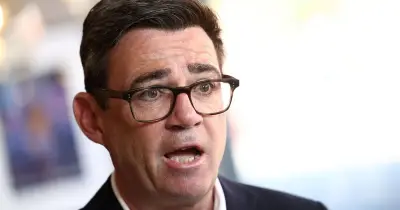
Conservatives demanded that Prime Minister Andy Burnham and Chancellor John Healey rule out imposing even more taxes in the Budget, due on October 28.

Shadow Chancellor Sir Mel Stride said: “This analysis reveals the true extent of the burden being placed on ordinary families, working people, and our businesses to prop up Labour’s profligate spending and welfare addiction.
“At the election, Labour swore not to raise your taxes. By squeezing another £100billion out of the economy, Labour have driven up the cost of living and placed a drag anchor on growth. Working people and the businesses that drive our economy are buckling under the strain Labour is putting on them.
“John Healey must rule out hiking taxes on families and businesses yet again at the Budget, and back the Conservatives’ five-point plan to back business and cut spending, taxes, regulation and bills, to build a stronger economy and a stronger economy.”
The Office for Budget Responsibility forecast shows that inheritance tax payments are set to reach £12.8 billion by 2028-29.
Treasury defends spending approach
The Prime Minister and Chancellor have warned Cabinet colleagues that they cannot expect funding increases, and must make better use of the funding departments already receive.
Emma Reynolds, Chief Secretary to the Treasury, said: “We cannot ignore the challenges we have with the public finances, with government debt still far too high. The interest we pay on that debt is another burden, too vulnerable to global events.
“So we must get debt down – as we promise to do in our fiscal rules – and are delivering the fastest budget deficit reduction in the G7.
“And we must control spending. That’s why the Prime Minister and the Chancellor have told all ministers that they will need to reprioritise their budgets on the things that they think will really make a difference, rather than simply asking for more money.”
She said: "It has been a busy summer since the new Prime Minister started."
"Top of Andy's list when he became Prime Minister was getting some breathing space for people and businesses who have been feeling the strain. And then we also got going on moving power out of Westminster – the biggest shift in a generation that puts power in the hands of local communities.
“At its heart, this work is about restoring hope to Britain. About building a new economy that delivers good growth in every postcode.
“That won’t happen overnight. It will take us being an active Government that is determined to do what we can to make life easier for people. And we’ve started as we mean to go on."
Think tank warns on ageing population
A leading think tank has warned the public purse would come under increasing pressure as the population ages, with more than a quarter of the population expected to be over 65 by 2075, up from fewer than one in five in 2024.
But the IPPR argued that wealthy pensioners should pay higher taxes, to prevent younger workers from shouldering the burden. It said the impact of student tuition fees already meant young working graduates pay higher tax rates than older workers, or retirees with large private pensions.

Ben Ansell, professor at the University of Oxford and author of the paper, said: "Ageing is going to become by far the biggest source of pressure on the public finances. Yet our tax system has increasingly shifted responsibility towards younger workers while protecting many of those who have benefited most from decades of rising property and asset wealth."