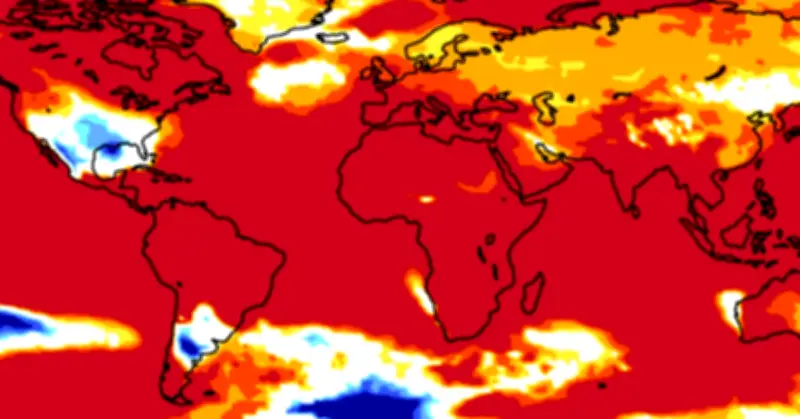
The Bank of England has warned that extreme weather linked to El Niño is threatening to push up food prices in Britain. The cost of fruit and vegetables is likely to increase first, according to the bank, which raised interest rates on Thursday from 3.75% to 4%.
El Niño-linked price rises could start to appear in supermarkets, convenience stores, other food outlets and restaurants from early next year. The increases could last for many months, the Bank of England (BoE) believes.
Impact on Households
Combined with the more modest impact of recent heatwaves which hit the UK and other countries, El Niño could push up the cost of food by two percentage points, it added. Millions of households in London and across the UK are already struggling with the cost of living, and some could see their mortgage bill rise by £600-a-year after the latest interest rate rise by the bank's Monetary Policy Committee.
Laying out the economic background for the interest rate increase, which aims to control inflation, the bank published its Monetary Policy Report which detailed a range of factors, including weather.
Bank's Analysis
"The current El Niño event is expected to place upward pressure on UK food price inflation," it said, explaining how extreme weather can hit crop yields in some regions while increasing them elsewhere. "Overall, the current El Niño is expected to place upward pressure on global agricultural commodity prices and, in turn, UK food prices," it added. "Around a quarter of UK food imports, equivalent to around 10% of total food supply, comes from El Niño-exposed regions."
The bank's in-depth analysis also stressed that El Niño could add to pressures in global energy markets by reducing biofuel production, constraining hydroelectric and nuclear power generation, and increasing demand for cooling and energy-intensive irrigation. Lower water levels in inland waterways could also disrupt transport networks.
Timeline of Effects
"The effects on UK food price inflation are likely to emerge gradually," it added. "Intelligence from contacts of the Bank's Agents suggests that the current event could begin affecting UK food price inflation from early 2027, initially through prices of fresh products, such as fruit and vegetables, with broader effects then building over several quarters."
The bank said that this summer's European droughts and heatwaves were expected to have a "modest impact" on UK food prices, despite around 60% of UK food imports coming from the region. "The timing of the extreme weather limited the damage to winter cereals such as wheat and barley, although yields of some summer crops have been more significantly affected," it explained.
Forecast
Modelling estimated the combined effects of this summer's European droughts and heatwaves and the current El Niño event could increase UK food price "potentially by around 2 percentage points at its peak in 2028". This could amount to a 0.3 percentage points rise in CPI inflation, reflecting the weight of food in the inflation basket.