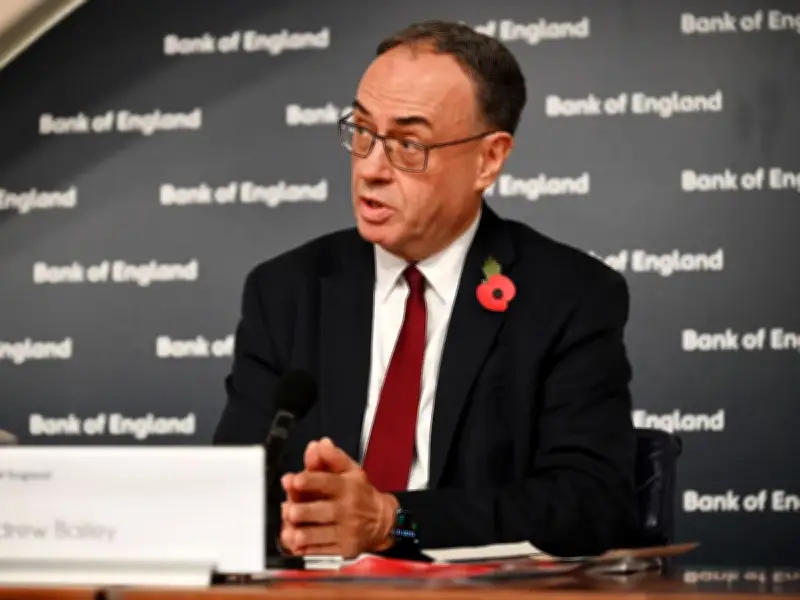
The Bank of England has increased interest rates from 3.75% to 4%, the first increase in more than three years. It warned that further hikes are likely if the Iran war is not resolved.
Why the Rate Was Raised
Governor of the Bank of England Andrew Bailey said: “There is now enough inflationary pressure in the pipeline caused by the rise in energy prices, that an increase in Bank rate is warranted.
“Today’s increase shouldn’t be seen as the first in an inevitable long sequence of hikes. But, unless the conflict in the Middle East is resolved, neither does it seem likely to be the last increase.”
The Monetary Policy Committee (MPC) decided to increase the Bank’s base rate, a move described as “precautionary”. Nicholas Mendes, mortgage manager at John Charcol, said: "The Bank's decision to raise the Bank Rate by 0.25 percentage points to 4% was a precautionary move rather than a sign the economy was overheating.
"With inflation rising and expected to climb further early next year, the MPC chose to act before higher energy costs could feed into wages and wider prices."
Impact on Prices and Households
The MPC said many companies had so far been absorbing higher energy costs into their profit margins or had hedged against large spikes since the war began around nine months ago. But it warned that such “buffers would only prove temporary and these cost pressures would eventually pass through into higher consumer prices if the energy shock persisted”.
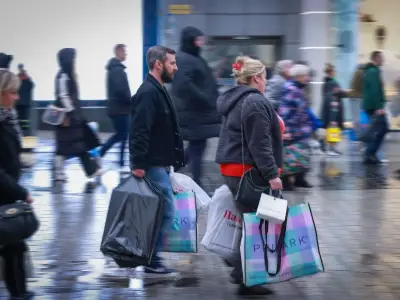
This means that households could face price rises in shops for things like food, drink and other goods and services.
What It Means for Mortgages
If you're already on a fixed mortgage rate, there won't be a change until your fix ends. Martin Lewis Money Saving Expert said: "If that's within the next three to six months, you might want to search for a new mortgage now – and don't forget to check product transfer offers from your existing lender. In some cases you can even lock in a rate and ditch it later if cheaper deals emerge."
Ian Futcher, financial planner at Quilter, said: "This is clearly a period of higher interest rates once again, so consumers may be in for a prolonged period of elevated borrowing costs and thus need to make sure they shield themselves as best they can. The base rate sat at just 0.1% in 2021, so those moving off five-year fixes will need to consider their options carefully."
Borrowers coming to the end of a fixed deal or looking to secure a new one should therefore consider securing a deal sooner rather than later. Many mortgage offers can be secured several months in advance, and you can usually switch to a cheaper option if one becomes available before completion. Martin Lewis also suggested new fixed deals could be cheaper as the base rate rises.
If you're on a tracker, your rate will rise by 0.25 percentage points. The increase is equivalent to roughly £15 a month more per £100,000 of mortgage debt. If you're on a variable rate, this will likely rise by up to 0.25 percentage points. It could be a bit less depending on the lender and the exact mortgage you have.
Savings Accounts
The Bank rate has a significant impact on the interest rates on savings products. Therefore savers are being encouraged to regularly review their accounts to make sure they are getting the best value from their cash.
Katie Horne, banks relationship manager at Flagstone, said: “Banks have been building an anticipated hike into the rates they offer on fixed term savings accounts for several months now, which explains why the average one-year fixed term rate has risen seven months in a row. A single 0.25 per cent base rate increase isn’t expected to move fixed rates much further.
“However, average instant access savings rates have barely moved since July, and we can expect variable rates to reprice first when the interest rate environment shifts. Today’s leading rates may not lead for long. With lots of repricing expected around the decision, best buy rankings will shift quickly.
“This means that any base rate change serves as a handy reminder to all savers that ‘setting and forgetting’ their savings doesn’t yield the best results. Instead, savvy savers will review their accounts regularly to ensure they’re getting the best value from their cash as market mood and rates move.”
Businesses and Government Response
Businesses could be impacted by the rise in interest rates, as many have variable rate loans. People tempted to spend less combined with higher borrowing costs may have negative effects on independent companies. Consumers will have less disposable income, which could see a drop in non-essential purchases during the cost of living crisis. It could also lead to reduced employment.
Experts have predicted a jump in household energy prices, but Chancellor John Healey announced some "breathing space" for households across the UK amid the cost of living crisis. In his Budget, Mr Healey confirmed millions of households are set to receive a one-off £100 payment to help with energy bills.
Responding to the Bank of England’s decision on interest rates, the Chancellor said: “The Iran conflict is reaching deep into the pockets of families and businesses here at home.
“In my Budget I acted to give some breathing space to families and businesses. Twenty million households will get a £100 energy payment, I extended the tax cut on electricity bills and froze fuel duty.
“I also set out the course ahead to get costs down for good. That includes big changes to our energy system so Britain is better protected from global shocks in the future.”