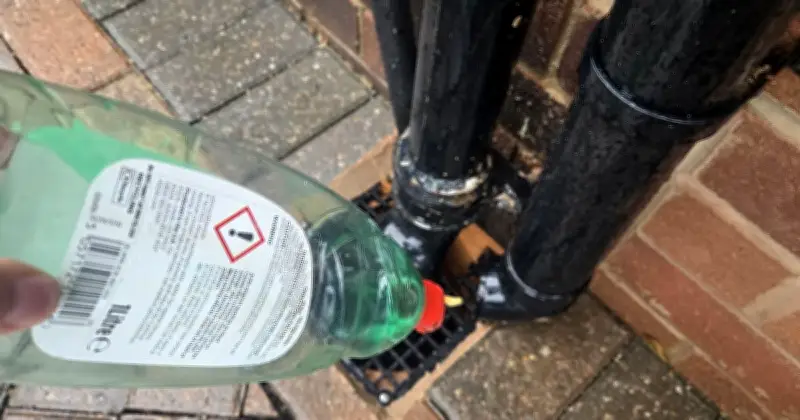
Households can clear blocked kitchen drains using a common household item they may already own, according to plumbing and home maintenance company Maintracts. The method involves pouring a mixture of washing up liquid and hot water into outdoor drains that connect to the kitchen sink.
With autumn bringing wet weather, outdoor drains can quickly clog with leaves, dirt, twigs and other debris. Food waste such as fat, grease, rice and bits of food grime can also contribute to blockages in outdoor drains connected to kitchen sinks.
Why FOG causes blockages
Maintracts says: “Fat, oil and grease (commonly known as FOG) are among the biggest culprits behind blocked gullies and outside drains.
“When hot grease is poured down the sink, it may seem harmless. But as it cools in your foul water drain, it hardens and sticks to the pipe walls. Eventually, this sticky mess collects other debris, such as food scraps, soap scum and dirt, creating a solid, immovable blockage.
“This is especially problematic in outdoor drains, which are more exposed to the elements and can easily become a magnet for garden debris, mud and litter, thereby exacerbating the blockage.”
How to unblock drains safely
To tackle the problem, Maintracts recommends pouring boiling water mixed with a generous amount of washing-up liquid into the drain. “The boiling water helps melt the fat, while the soap breaks it down, making it easier to flush away. Ensure to do this slowly to allow the heat and detergent time to work. Repeat the process several times for optimal results.”
The tip applies only to drains connected to the kitchen sink. It should not be used on rainwater drains from the roof, as chemical-based washing up liquid is harmful to watercourses and can kill wildlife. For a lower environmental impact, a plant-based washing up liquid with more biodegradable ingredients is advised.
Preventing future blockages
If the blockage clears, Maintracts suggests measures to keep drains flowing: never pour fat or grease down the sink, wipe plates and pans before washing, use strainers in sinks to catch solid particles, install a grease trap for frequent cooking, and keep gullies and drain covers clear of leaves, litter and other outdoor debris.
Professional help may be needed if hard objects are lodged in the drain or if there is uncertainty about whether the pipes can handle boiling water.