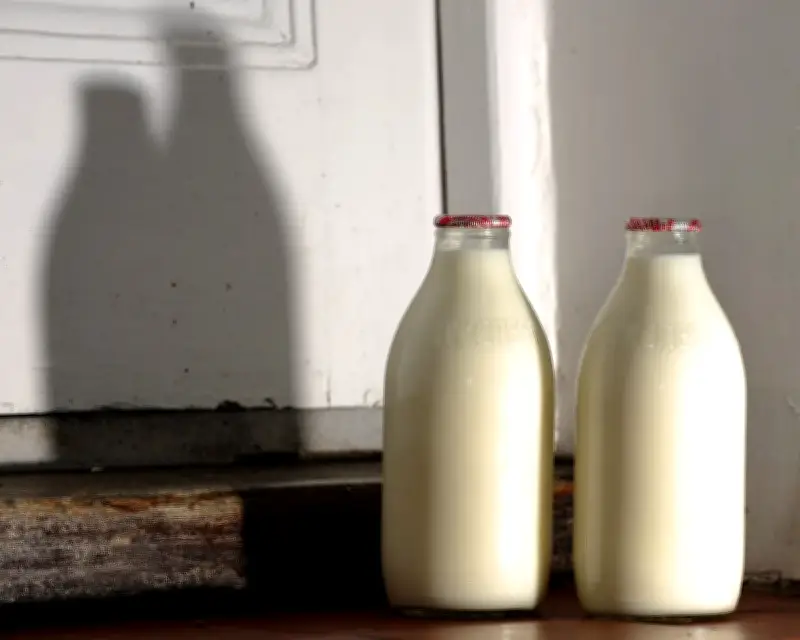
Cow's milk sales in Britain have fallen to their lowest level since records began, with the average person buying just 1.8 pints (1,024ml) a week in 2024/25. That figure, from a Guardian analysis of the government's family food survey, is less than half the amount purchased in 1974 and marks the lowest point in the record's 52-year history.
Why milk purchases are falling
Experts point to the growing availability of plant-based milks as a key factor, with even meat eaters changing their habits. Rosie Green, a professor of environment, food and health at the London School of Hygiene & Tropical Medicine, said: "You can get plant-based milk in a lot of different places now and the taste isn't that different. People might be worried about animal welfare as well – and then the environmental problems are the icing on the cake."
Mass-produced dairy has a significant climate impact. Cows emit methane through digestion and manure, a gas the government has called a "super pollutant" because it is more potent than carbon dioxide and contributes to global heating. The agriculture sector accounts for 48% of the UK's methane emissions, with 78% of those produced by cattle.
Environmental and welfare concerns
Ruth Westcott, director of campaigns at Foodrise, highlighted the land use footprint of dairy farming: "But the thing people pay less attention to is [dairy's] land use footprint, because dairy cows require a lot of land for grazing." Cows also require feed, some grown on UK cropland and some imported. Westcott noted that the shift towards larger, more intensive dairy farms has increased reliance on imported feed.
Animal welfare is another driver, as consumers learn about practices such as the early removal of calves from mother cows. Sean Barrs, senior campaigner at Animal Justice Project, said: "People are just becoming more aware of what happens on dairy farming. They're seeing more images on the internet of what it looks like and they're becoming more educated."
Rise of plant-based alternatives
Purchases of plant-based alternatives have grown from an average of 37ml to 94ml a week since 2014. Food trends expert Morgaine Gaye said plant milks are no longer seen as a "vegan choice" but "an everybody choice". She noted that many meat eaters and non-vegetarians now choose non-dairy milk for taste, having been widely exposed to it.
High street venues have contributed to this exposure. The Canteen on Stokes Croft in Bristol stopped selling meat dishes in 2020 and this year began offering oat milk before cow's milk when serving hot drinks. General manager Liam Stocks said: "We word it like: 'Do you want oat milk or dairy?' That really changed habits. A lot of customers will go: 'Oh, I will have oats.' You're making them feel like it's the default."
Stocks described the decline in cow's milk purchases as an "easy win" for those seeking to be more environmentally friendly, noting that cutting dairy is often the first behaviour change people attempt.
Production and policy implications
The decline in liquid-milk purchases has not reduced overall production. UK milk production reached a record in 2025, with more milk going into cheese, yoghurt, butter and powders as demand for those products grew, according to the Agriculture and Horticulture Development Board. This may explain why the government, for the first time, targeted a 20% reduction in dairy consumption by 2035 in its latest carbon budget.
Westcott argued that reducing dairy consumption could free up land for nature recovery or growing food directly for human consumption, such as lentils, peas and beans, boosting food resilience and reducing imports. Green added: "We can't reach our environmental targets no matter how much we do in transport or energy generation or anything else – we have to change the food system as well. We need to still eat less meat as well – but switching the milk is a good start."
Dairy UK, the industry body, said its Dairy Roadmap, run with AHDB and the NFU, has cut greenhouse gas emissions associated with milk production by 24% since 2008. The organisation stated: "The dairy sector plays a significant role in the UK. Our processing members play a vital role in their communities employing 22,500 people at processing sites around the country. On top of that, dairy farms employ 50,000 more people, both directly and in supporting industries." It added: "British consumers show their love for dairy every day. If any evidence were needed to prove that, then the fact that 96% of adults buy milk should be proof enough."