UK households installing outdoor Christmas lights this festive season could face fines and compensation claims of up to £35,000, according to energy expert George Penny at The Solar Co. YouGov data indicates that three in ten households that decorate for Christmas typically put up outdoor lights, with an estimated 7.5 million UK homes expected to illuminate their properties.
Penny warns that overly extravagant displays could trigger disputes with neighbours, push up energy bills, and result in costly penalties. As Britain enters the most popular fortnight for installing festive lights, he has compiled a list of six Christmas lights errors that could result in fines, repair bills, and increased energy costs.
Neighbour Disputes and Fines Under the Environmental Protection Act
Under the Environmental Protection Act 1990, councils are obliged to investigate complaints regarding light nuisance. If lights are deemed a statutory nuisance and homeowners fail to comply with an abatement notice, they could face a fine of up to £5,000. Council records show complaints surge during November and January when displays are erected early or left up too long.
Penny advises: "To avoid a neighbourly dispute, angle lights onto your own home rather than into neighbours' windows, avoid floodlight-style projectors, and switch off flashing modes, which cause the most complaints and can affect people with photosensitive epilepsy. Aim to have everything switched off by 11pm, especially if your display plays music."
Listed Building Consent and Cable Hazards
For those in listed buildings, lighting, wiring, and new fixings may require listed building consent. Undertaking works that impact a listed building's character without consent is a criminal offence under section 9 of the Planning (Listed Buildings and Conservation Areas) Act 1990, potentially resulting in an unlimited fine or up to two years' imprisonment.
Running cables across a pavement or road in a manner that could endanger people is an offence under section 162 of the Highways Act 1980, carrying a fine of up to £1,000. Attaching lights to a lamppost without consent could also breach the law, with a fine of up to £2,500 under section 132. Penny warns of the bigger risk: "If a passer-by trips over your cables or a stray inflatable and breaks an ankle, a claim could be worth £18,000 to £35,000 under current court guidelines, before lost earnings and treatment costs are added."
LED Savings and Roof Repair Costs
Penny says illuminating a typical semi-detached property requires roughly 20 metres of lights, or four strings of 100 bulbs. Older incandescent sets consume around 160 watts, compared with just 32 watts for LEDs. Under the current price cap, running them eight hours a night for the average 38-day festive period costs approximately £12.97 with incandescent bulbs and £2.59 with LEDs, a saving of more than £10.
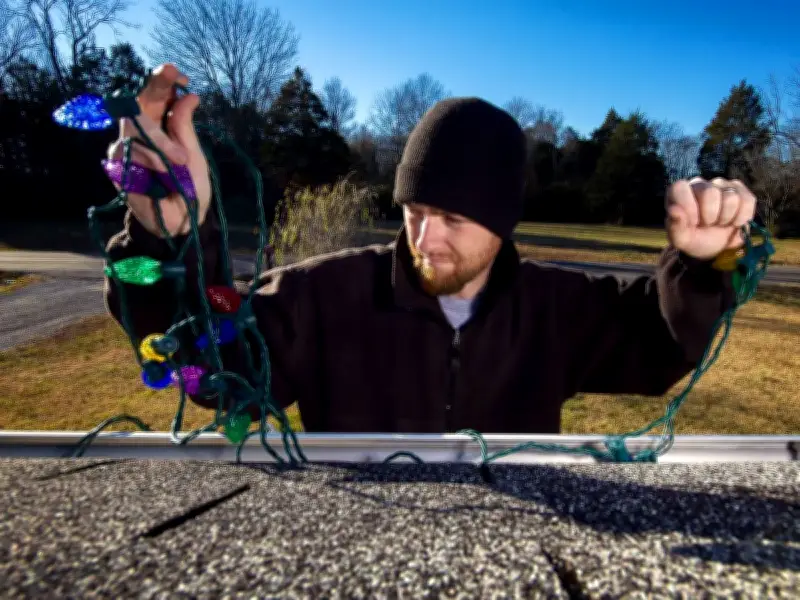
Nails, staples, and screws can create holes in fascias and gutters, allowing water to seep in. Hooking lights beneath roof tiles can crack them, while leaning a ladder against plastic guttering risks cracking it. "The average roof repair now costs around £650. Replacing five broken tiles costs about £215, a typical gutter repair is around £215 as well, and scaffolding adds £300 to £800 on top," Penny said.
Penny advises buying from reputable retailers and looking for the British Standard BS EN 60598, checking last year's lights for frayed wires or cracked bulbs, and avoiding overloading sockets or plugging extension leads into each other.