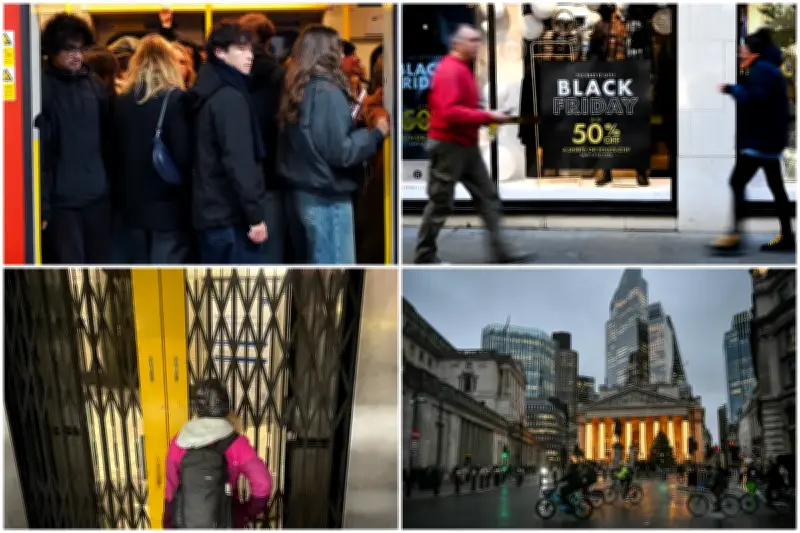
The first in a series of 24-hour Tube strikes has ended, and the full impact on London is emerging. Businesses across the capital suffered as thousands of commuters chose to stay at home rather than battle to work. Struggling shops, pubs and restaurants missed out on millions of pounds of vital revenue as a consequence. Many who had to travel faced delays, cancellations and overcrowded trains and platforms.
The RMT union action began at midday on Thursday after last-ditch talks failed to reach a breakthrough in the long-running dispute over a four-day week for Tube drivers. Several lines were shut down, including the Circle line and Waterloo and City line, while others suffered severe delays for the majority of the afternoon.
Further major disruption beset the network on Friday, with the strike ending at midday but services not expected to fully recover until much later in the day.
Tube chaos and driver turnout
Not a single line escaped disruption during the strike, with many either fully suspended or partially shut down. According to Transport for London (TfL), service on the Tube was down at around 85% of a normal day on Thursday morning, and by midday was just at around 82%. By 9pm, service levels were around 60%.
Overall, TfL reported that over 55% of the Tube network ran across the day on Thursday, which was more than in previous strike action on the ongoing dispute with the RMT. Contactless and Oyster card taps were recorded at 89% of normal across the transport network and at around 78% on the Tube as of 1.45pm on Thursday, considerably higher than during periods of previous strike action.
In all, usage across the transport network was at 90% of normal levels on Thursday, with the number of people taking London buses and the Elizabeth line both up 3%. Tube ridership was at around two thirds of normal levels.
On Friday morning, both the Jubilee and Victoria lines were able to start at the normal time, with all lines operating service before 6.30am, earlier than TfL said they had expected. Despite a limited Piccadilly service and no service on the Waterloo & City lowering the average, the network operated at just over 40% of service in the morning up to 9am.
TfL has revealed the number of drivers who booked on for work across every line as of 3pm on Thursday. The Metropolitan line had one of the highest percentages of drivers working, but still faced part suspension most of the afternoon due to the strike action. Meanwhile, 100% of Jubilee line workers clocked into work, but the line suffered delays due to a trackside fire. The Piccadilly line, the line that features the highest percentage of RMT members, still had 16% of drivers come in to work. A shuttle service was able to run during the strikes, which TfL said they are not usually able to run on the Piccadilly line during RMT action.
Roads, footfall and e-bikes
London’s roads were hit by the fallout of the industrial action on Thursday. Google Maps images show the difference in traffic compared with a typical Thursday evening. There was a backlog across the West End, while routes along the area usually served by the Metropolitan line appeared to be badly affected. Heavy traffic extended into east London, spanning from Blackfriars to Mile End.
According to data from Virgin Media, the Tube strike left the City of London and Soho noticeably quieter on Thursday. Worker numbers were down around 9%, while visitor footfall fell by up to 17% compared to a typical Thursday, according to the anonymised and aggregated O2 Motion data. Worker numbers were around 16% below the previous week on Thursday.
While the morning rush on Thursday, before the start of the strike, looked almost normal, the gap widened sharply once the walkout began at 12pm noon. By 5pm, worker numbers were running around 16% below the previous Thursday as people left early or avoided the journey altogether.
Previous strikes have seen a huge increase in e-bike usage, and the latest walkout was no exception. Forest, who operates e-bikes in London, said it experienced a 17% increase in rides on Thursday evening compared to the same time last week. Previous RMT walkouts in April saw Lime bike usage increase by around 23%, as well as a 20% increase in the average distance and length of trips compared to the week before. Lime also saw a 54% week-on-week increase in trips during the full-day strikes in September 2025.
A Lime spokesperson told The Standard: “During periods of significant Tube disruption, we see more Londoners turn to Lime to keep moving around the city. Demand increased by more than 50% week-on-week during previous strikes that affected every Tube line.”
Businesses and commuters hit
While it is too early to see the exact impact these strikes have had on businesses, analysis of Tube strikes in 2023 and 2024 saw a 32% drop in average sales for hospitality in Zone 1. Coffee and sandwich shops saw a 34% drop, and sales dropped 38% for pubs and bars and 29% for restaurants.
Paul Salter, managing director of Birley’s sandwich shops, said: “Our shops across the city and Canary Wharf have been hit with anywhere between 15% and 20% less footfall and sales accordingly. A huge hit for a chain our size again with this unnecessary strike action. It will cost us tens of thousands of pounds this week. Very frustrating and another hit to the hospitality sector, especially the retail sector. We can only hope that they solve this before next month’s planned strikes.”
Amelia, who works at The Flower Station bakery stall outside King's Cross station, told the BBC: "I think it affects a lot more people than they realise. I appreciate that they obviously have their reasons for striking, but it impacts a lot more people than they think - not just people getting to and from work, but businesses like us."
Karim Fatehi OBE, Chief Executive of the London Chamber of Commerce and Industry, said: “The RMT’s decision to press ahead with eight days of Tube strikes is deeply selfish and shows a complete disregard for the businesses, tourists, and commuters who depend on London’s transport network. The RMT has chosen disruption over resolution, despite the serious consequences for London businesses and the millions of people who rely on the Tube, particularly in the run-up to Christmas. Londoners and businesses should not be held to ransom over an internal dispute about working patterns. The RMT must recognise the damage it is causing and call off these strikes. Londoners deserve a reliable transport network, not repeated disruption at the expense of the people and businesses that make London the world’s leading city.”
Allen Simpson, Chief Executive of UKHospitality, said: “Tube strikes have a devastating impact on London’s hospitality businesses, with fewer people travelling into the capital, lost sales and staff struggling to get to work. We urge all parties to find a resolution and avoid further action that would put yet more pressure on hospitality businesses and workers across London.”
The Standard spoke to a number of people in central London stations on Thursday who were impacted by the strikes. Speaking at Liverpool Street station, May Brown told the Standard: “I came from Hackney Central. There were a lot of cancellations. I’m waiting for my brother here. We are going to Golders Green for our uncle’s funeral. I think we’re going to be very late. We’re going to get the Hammersmith and City and then take the Northern line to Golders Green so I think we’re going to miss a lot.” Asked what she thinks of the strikes, Ms Brown said: “For me it’s not fair. It’s just not fair for everyone.”
Marium also spoke to The Standard from Leicester Square station. She said that she wasn’t planning on using the Tube on Thursday, but that she couldn’t move some meetings around so had to come into work. She managed to get to her office at Battersea before the strike action begun, but said that she would struggle to get home to Epping. She said: “I was going to get a cab now but it’s £60. So I think I will have to stay at a friends overnight. If I’m being honest I’m not too supportive any more. I would be if we got more of a heads up. We got told on Monday so everyone’s plans were frozen. They happen quite frequently. I can understand the cause and why they need to do it but at least we should have more of a heads up. I think being told on the weekend is a joke. We’ve had to change a few plans at work and it’s near to Christmas - it’s really busy.”
However, many Londoners were still able to enjoy the best of what the city has to offer. The Barbican was flooded with attendees watching the London Symphony Orchestra, with photos shared on social media showing a jam-packed audience who refused to be deterred by the strike action.
What the two sides have said
Nick Dent, Director of Customer Operations for London Underground, said: “We apologise to customers and businesses for the disruption they are experiencing this morning due to the strike action by the RMT. We were able to offer more service than anticipated yesterday and that trend has continued into this morning despite this unnecessary action. The number of drivers who have come to work over the last few days shows that there is a clear appetite from drivers to have their say on our four-day week proposals. We urge the RMT to put the proposals to their members before they attempt to subject Londoners to more disruption.”
In a post on X, the RMT wrote: “We understand the frustration and disruption passengers have experienced as a result of the Tube strikes. But behind every strike are real people with genuine concerns about their working conditions, their families and the safety of the travelling public.”
The Standard has approached the RMT for further comment.