UK households putting up Christmas lights this year risk fines of up to £8,500 and potential payments of £35,000 if they make certain mistakes, according to energy expert George Penny at The Solar Co. YouGov data shows three in ten households that decorate for Christmas typically put up outdoor lights, with an estimated 7.5 million UK homes expected to light up the front of their homes this festive season.
Penny warns that excessive displays could result in fines and payments, trigger disputes with neighbours, and add more to energy bills than anticipated. As Britain enters the most common fortnight for putting up festive lights, he has compiled a list of six costly mistakes to avoid.
Neighbour complaints and listed building rules
Under the Environmental Protection Act 1990, councils must investigate complaints regarding light nuisance. If lights are deemed a statutory nuisance and an abatement notice is disregarded, homeowners could face a fine of up to £5,000. Council data reveals complaints peak in November and January, when lights go up early or stay up too long.
Penny advises angling lights onto your own home rather than into neighbours' windows, avoiding floodlight-style projectors, and switching off flashing modes, which cause the most complaints and can affect people with photosensitive epilepsy. He recommends having everything switched off by 11pm, especially if the display plays music.
For those in a listed building, consent may be required for lighting, wiring, and new fixings, both inside and out. Carrying out works that affect a listed building's character without consent is a criminal offence under section 9 of the Planning (Listed Buildings and Conservation Areas) Act 1990, which can result in an unlimited fine or a custodial sentence of up to two years.
Cable safety and compensation claims
Trailing lights or cables across a pavement or road in a manner that could endanger the public is an offence under section 162 of the Highways Act 1980, carrying a fine of up to £1,000. Attaching lights to a lamppost or street furniture without permission could lead to a penalty of up to £2,500 under section 132.
Penny highlights the risk of compensation claims, noting that if a passer-by trips over cables or an inflatable and breaks an ankle, a claim could be worth £18,000 to £35,000 under current court guidelines, before lost earnings and treatment costs are added. He advises keeping cables, plugs and inflatables within your own boundary, never running leads across a footpath, and checking that home insurance includes liability cover.
LED savings and roof repair costs
Illuminating the roofline, windows and front door of a typical semi-detached house requires approximately 20 metres of lights, or four strings of 100 bulbs. Older incandescent sets consume around 160 watts, compared with 32 watts for LEDs. Running them for eight hours a night throughout the average 38-day festive period costs roughly £12.97 with incandescent bulbs and £2.59 with LEDs, a saving of over £10. Penny says going all out across the front garden as well could top £20 in savings.
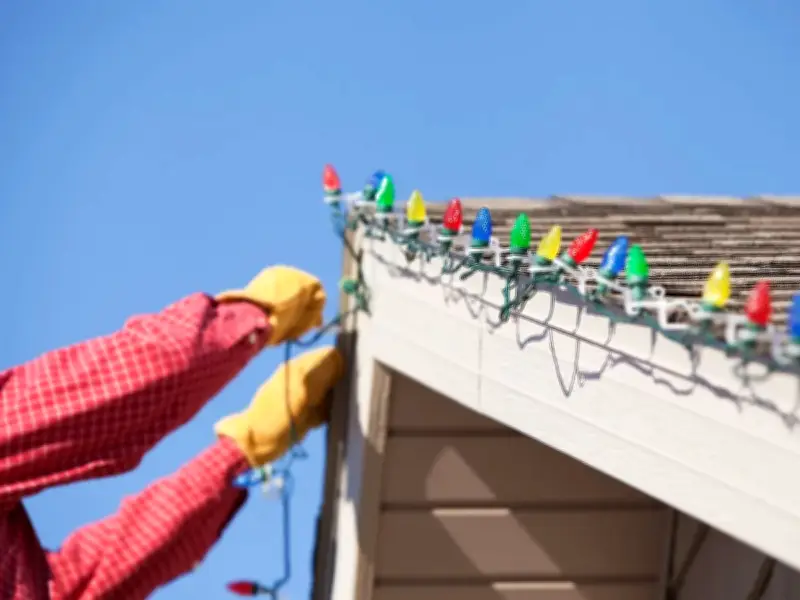
Using nails, staples and screws to pin lights to roofs or gutters can leave holes that allow water to seep in. Hooking lights beneath roof tiles can crack or dislodge them, while leaning a ladder against plastic guttering risks cracking it. The average roof repair now costs around £650, with replacing five broken tiles costing about £215 and a typical gutter repair around £215, plus scaffolding at £300 to £800.
Penny recommends using plastic gutter clips or outdoor adhesive hooks instead of nails or staples, never hooking lights under tiles, and fitting a ladder stand-off. When taking lights down, he advises unclipping them rather than pulling them free, then checking from the ground for slipped tiles, sagging gutters or leaking joints.
He also advises buying from reputable retailers and looking for the British Standard BS EN 60598, checking last year's lights for frayed wires, cracked bulbs or scorch marks, and replacing rather than repairing them. Only outdoor-rated lights should be used outside, plugs and connectors kept out of the rain, and sockets should not be overloaded or extension leads plugged into each other.