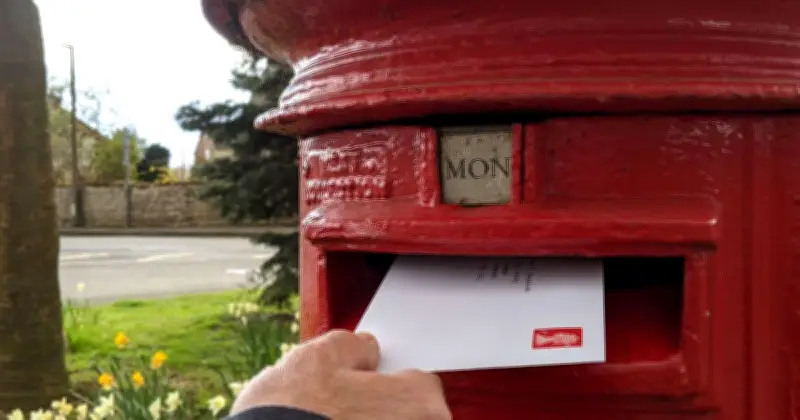
Anyone sending Christmas cards this year is being reminded to keep the barcode on Royal Mail stamps intact, because damaging or removing it could result in a £5 charge for the recipient.
Royal Mail introduced barcodes on its everyday stamps as part of efforts to improve the security of the postal system. Each barcode is unique and allows stamps to be identified and processed digitally.
Why the barcode matters
When sending a card, postage must be paid by buying a valid barcoded stamp, which should be stuck flat in the top-right corner of the front of the envelope. Royal Mail's guidance states that barcodes need to remain visible and scannable. Covering or damaging them could interfere with the scanning process.
This is particularly relevant to people who might mistake the barcode for an unnecessary extra and accidentally tear it off when separating stamps.
The £5 surcharge explained
Royal Mail can charge recipients £5 when an item arrives without valid postage or bears a counterfeit stamp. This means a mistake made by the person sending a Christmas card could potentially leave the recipient having to pay to receive it.
However, it is important to distinguish between a damaged barcode and a counterfeit stamp. Royal Mail's published guidance does not establish that accidentally removing a barcode automatically results in a £5 charge, although it specifically mentions counterfeit stamps.
Counterfeit stamp crackdown
Royal Mail introduced the £5 surcharge in late 2023, doubling the previous £2.50 fee for letters and large letters bearing counterfeit stamps or carrying no postage.
In 2024, an investigation by The Telegraph found four suppliers offering to print up to 1 million counterfeit Royal Mail stamps per week for as little as 4p each, delivering them to the UK within days.
Royal Mail said that overall counterfeit volumes had dropped by roughly 90% since introducing barcoded stamps. All non-barcoded stamps expired in 2023. Overall, the safest approach is to leave the barcode intact and ensure the entire stamp is securely attached to the envelope.