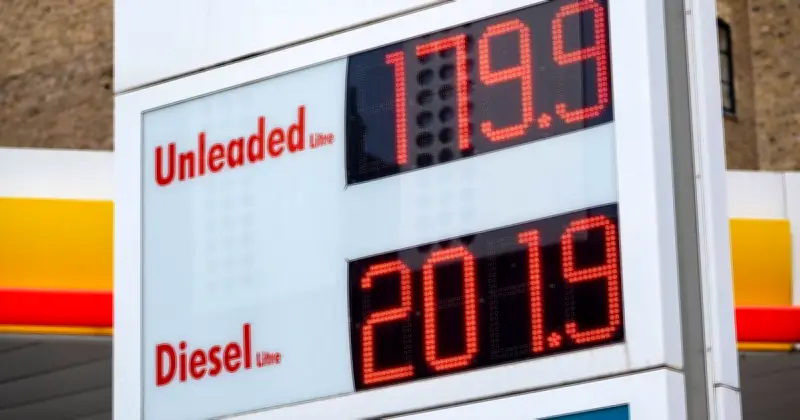
The RAC and AA have provided updates on UK petrol and diesel prices following a 25% drop in the cost of oil over the past week. The benchmark Brent Crude price stood at around $90 a barrel on Tuesday morning, briefly dipping below that threshold for the first time since August.
The falls began following the US midterm elections last week, which saw President Donald Trump's Republicans suffer heavy defeats. This, coupled with indications that some form of peace agreement may be on the horizon between the US and Iran, with President Trump suggesting that further strikes on the Middle Eastern nation were not presently anticipated, with "momentum toward the end of this conflict", has seen oil prices tumble by approximately 25% since reaching $117 in late October.
Current prices of petrol and diesel
On Tuesday, the RAC revealed that the current average UK petrol price stood at 168.45p, with diesel at 197.27p. It noted a 3.4p decline in the cost of unleaded since the beginning of the month, and a 6.5p reduction from the Iran war peak of 174.94p on October 5. Diesel has been slower to respond, with just a 1.3p decrease since the start of the month and a 3p drop from the Iran war high of 200.20p on October 5.
The AA stated that "the track of plummeting wholesale costs indicates that another 10p reduction should be on the way". It further noted that, since October 13, the wholesale price of unleaded had plummeted from 77p a litre to 68p by the close of October, and now sits below 62p. It also highlighted that diesel's average pump price across the UK had fallen by just 2p a litre to 197.9p a litre. Its wholesale cost has dropped around 4p a litre since mid-October, which "offers the possibility of a further small reduction at the pump".
Luke Bosdet, the AA's spokesperson on pump prices, said: "The chances of finding somewhere with petrol below 160p a litre are incredibly hit-and-miss but, clearly, there are forecourts able to slash their fuel prices and put the rest to shame. Most are in rural communities with much lower customer potential, although Bishop Auckland shows what happens when fuel stations get competitive with each other. Even the supermarkets are forced to lower their prices."
"London and the South East stand out for not showing any fuel stations with the bargain petrol prices of northern England, Wales and even Scotland. Some forecourts are still charging close to the peak prices of early October and, given how much wholesale costs have fallen since the middle of last month, that is unforgivable."
When UK drivers can expect petrol and diesel prices to fall
Financial specialists have outlined how the supply chain operates and why reductions in price take time to reach the pumps. Tony Redondo, founder at Newquay-based Cosmos Currency Exchange, said: "It's an age-old issue: forecourt prices go up like a rocket and come down like a parachute. Retail prices typically start reflecting a drop in crude within seven to 10 days, full pass-through can take up to three weeks."
"The industry's defence is that forecourts must clear stock bought at higher wholesale prices and that pump prices follow refined product margins, not raw crude alone. Oil is also traded in US dollars, so any Sterling weakness eats into the benefit of cheaper barrels."
"Then there's the Treasury's cut, fuel duty and 20% VAT account for over half the pump price. Overnight, Trump said the war in Iran could end "fairly soon", sending Brent below $91 a barrel, down over 15% in six days and its lowest since the end of August. If crude stays down, initial cuts of 2p to 5p a litre should reach supermarket pumps within days."
Nouran Moustafa, practice principal and Independent Financial Adviser at Roxton Wealth, said: "Funny how petrol prices seem to rise almost overnight when oil gets expensive, but take their sweet time coming down when it gets cheaper. Oil falling below $100 should be welcome news for motorists, but the savings don't reach forecourts immediately."
"Retailers buy fuel in advance, meaning lower wholesale costs typically take two to four weeks to filter through. I'd expect further reductions over the coming weeks if oil prices remain lower, although diesel may respond differently because its wholesale market has its own pressures."
"But consumers are right to question why price increases often appear faster than reductions. My view? Motorists shouldn't need a calculator and a detective's licence to work out whether they're getting a fair deal at the pump. If wholesale prices keep falling, retailers should pass those savings on rather than quietly enjoying healthier margins."
Diesel likely to 'lag behind'
Harvey Dhillon, founder and CEO at Zmartly, said: "I'd expect pump prices to start falling properly over the next few weeks if oil stays lower, with diesel likely to lag behind petrol. Forecourts buy fuel in advance, so what they sell today may have been bought when wholesale prices were higher."
"In August the competition watchdog used a gap of about two weeks between buying and selling as a rough guide and found pump cuts trailing wholesale falls, with diesel possibly slower. Tax won't speed this up or slow it down."
"Fuel duty is fixed at 52.95p a litre with no change due before January and VAT is added on top, so any cut must come from what retailers pay for fuel and the margin they keep. A short wait while dearer stock sells through is fair, but one that drags on after that isn't fair on drivers. Every forecourt now has to report each price change to the government's Fuel Finder, so drivers can see who cuts first and fill up there."
Laurence Booth, global head of markets at CMC Markets, said: "Brent falling below $90 after months of elevated prices suggests markets are increasingly pricing in a lower risk of prolonged disruption in the Middle East. Hopes that the conflict could be winding down have taken some of the pressure out of oil prices, but there is still plenty of uncertainty over how quickly energy flows can return to normal."
"For the UK, the timing is particularly interesting given the Bank of England has just raised interest rates to four per cent partly in response to the inflationary pressure from higher energy costs. If oil stays around these levels, some of that pressure should start to unwind and could give the Bank more room to look through the remaining inflation bump."
"Even with oil falling this quickly, the inflation already working its way through the economy will not disappear overnight. The Bank has warned that there is still pressure in the pipeline, so investors will be watching whether lower oil prices are sustained rather than reading too much into a sharp move over a few days."
"If the diplomatic progress continues and crude stays lower, we could see some of the pressure on interest-rate expectations and Government borrowing costs ease further, while households and businesses get some relief from energy costs. But if talks break down and oil starts moving higher again, the inflation and interest-rate debate could quickly return."