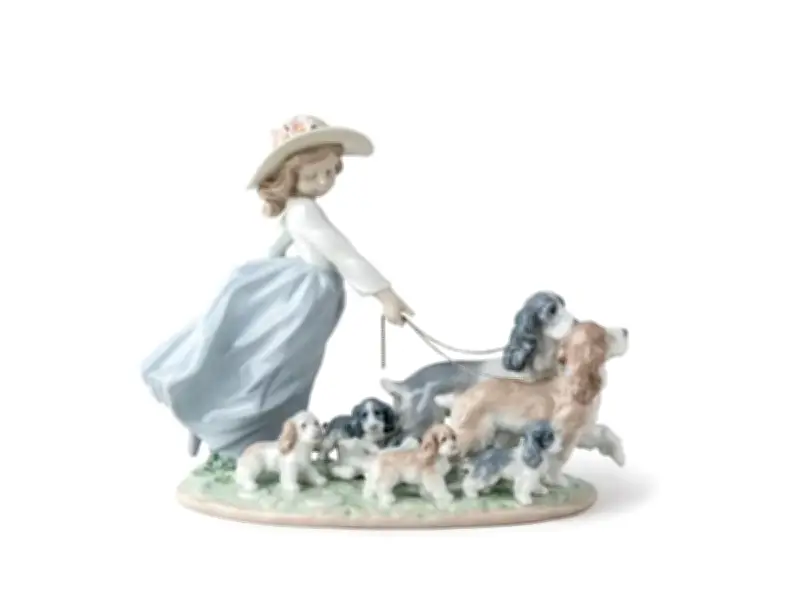
Some Lladró figurines have sold for as much as £48,215, but many common pieces are worth only a few pounds, according to recent market reports. The Spanish porcelain brand, founded in the 1950s, remains a household name in the UK, yet values vary widely depending on age, condition, rarity and edition.
From family hobby to global brand
Lladró was founded in the 1950s by brothers Juan, José and Vicente Lladró, who began making plates, vases and ceramic figurines from their home in the village of Almàssera. What started as a small family venture grew into an internationally recognised name, with the company developing its distinctive style and experimenting with new materials over the following decades.
By the 1980s, Lladró was expanding internationally, opening subsidiaries in Japan and China in 1986 and launching its first museum and gallery in New York in 1988. Its Collectors' Society, founded in 1985, eventually attracted more than 100,000 members.
As tastes changed, the company introduced more contemporary designs in the 2000s, moving beyond traditional porcelain figurines. Today, its collections include sculptures, lighting, tableware and jewellery, alongside collaborations with designers such as Paul Smith, Rolito and Gary Baseman.
What are Lladró figurines worth today?
The value of a Lladró figurine depends on its age, condition, rarity, size and whether it is part of a limited-edition collection. Prices can range from a few pounds for smaller, common pieces to tens of thousands for rare creations.
Typical estimated price ranges include small common figurines at £8 to £150, medium detailed figurines at £56 to £375, large single figurines at £150 to £1,501, and retired figurines at £75 to £3,752. Numbered limited editions can reach £375 to £11,256, while High Porcelain works have sold for £1,501 to £48,778. Multi-figure groups and dioramas range from £750 to £37,522, Gres collection pieces from £38 to £1,126, and Nao by Lladró pieces from £8 to £113.
Most valuable Lladró pieces
Some of the brand's most elaborate creations have achieved impressive prices. According to Lion and Unicorn, documented sales include A Grand Adventure (2002), a High Porcelain piece sculpted by Joan Coderch and D. Julio Ruiz, which reached approximately £48,215. The 18th Century Coach (1985), created by Francisco Catalá, reportedly sold for around £42,925.
Cinderella's Arrival (1994), a limited-edition piece by Francisco Polope, has reported sales ranging from approximately £30,017 to £38,272. Other notable pieces include Summertime Symphony (2014) by Marco Antonio Noguerón, valued at around £14,108, and The Fox Hunt (1986) by Salvador Furió, estimated at over £11,256. Tea in the Garden (1992) by José Puche sold for approximately £9,681, and several equestrian sculptures, including Spanish Pure Breed, Haute Ecole and Arabian Pure Breed, are valued at £6,581 to £9,493.
Collector demand has narrowed
One Reddit user shared how their mum believed a Lladró figurine inherited from her late father was worth £800 or more, but after researching, the user found it at £100. They asked: "My mum says this is worth £800+ from her (deceased) dad. I'm finding it at £100. Any ideas who is right?"
Responding, one user said: "Collectible porcelain has a very narrow collector field nowadays." Another added: "As someone with a basement full of grandparents' Lladró figurines, I find £800 to be a real stretch." A third commented: "25 years ago it wasn’t insane to price around £800… Early-boomer 60+ retirees with expendable income buying the pieces they wanted from their early collecting days. Now 95% of the people paying that much have died, or are too old to concern themselves with figurines."
While some pieces have fallen in value as collecting trends have changed, rare figurines continue to fetch thousands at auction, meaning the most valuable pieces remain sought after.