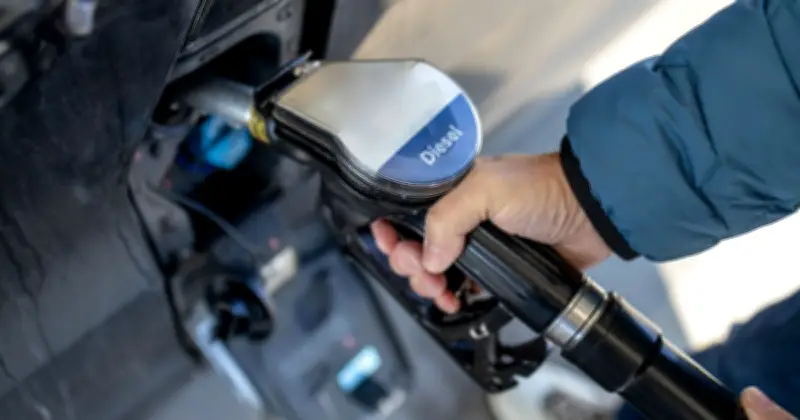
From December 1, new HM Revenue and Customs (HMRC) advisory fuel rates will increase the amount diesel company car drivers can claim back per business mile, with the most common engine size range rising from 16p to 18p per mile.
Advisory fuel rates are updated by the tax office four times a year, with new charges taking effect on the first day of each quarter in March, June, September and December. These rates apply only to drivers using a company car for business travel and are used to reimburse travel costs or to repay the cost of fuel used for private travel.
New rates for diesel engines
From December 1, diesel drivers with engine sizes between 1601cc and 2000cc – the most common size diesel engine in the UK, according to UK Motoring – will receive an extra 2p per mile, with rates increasing from 16p to 18p per mile.
Drivers of company cars with smaller diesel engines of 1600cc or less will also get more back per mile, as rates rise from 15p to 16p per mile. Drivers of larger diesel engines over 2000cc will see the biggest increase, with rates going up by 3p from December, from 22p to 25p per mile.
Reaction and how rates are set
Beth Fountain, fuel expert at Interfuels, said: “With fuel prices continuing to put pressure on motorists, any increase in the amount drivers can claim back for business journeys will be welcome.
“Many people regularly use their own vehicles for work, whether that's visiting clients, travelling between sites or attending meetings, and those fuel costs can quickly add up.
“It's important that drivers understand what they're entitled to and make sure they're keeping accurate records of the miles they're travelling.”
To set the new rates from December 1, 2026 until March 1, 2027, HMRC takes the latest petrol and diesel prices from the Department for Energy Security and Net Zero (DESNZ). HMRC said the rates per mile are rounded to one decimal place, but the final advisory fuel rates are rounded to the nearest whole penny. Rates per mile ending in 0.5 are rounded down to the nearest whole penny when the underlying unrounded figure ends in a number less than 0.5, and rounded up when it ends in a number greater than 0.5.
How reimbursement works
Explaining how drivers can be reimbursed for company car business travel using the mileage rates, HMRC said: “If the mileage rate you pay is no higher than the advisory fuel rates for the engine size and fuel type of the company car, there will be no taxable profit and no Class 1A National Insurance to pay.
“If your cars are more fuel efficient, or if the cost of business travel is higher than the guideline rates, you can use your own rates to reflect your situation.
“If you pay rates that are higher than the advisory rates but cannot show that the fuel cost per mile is higher, there will be no fuel benefit charge if the mileage payments are only for business travel. Instead, you’ll have to treat any excess as taxable profit and as earnings for Class 1 National Insurance purposes.”
HMRC’s new advisory fuel rates for diesel company cars from December 1 are: engines up to 1600cc or less at 16p per mile (up from 15p), engines between 1601cc and 2000cc at 18p per mile (up from 16p), and engines over 2000cc at 25p per mile (up from 22p).