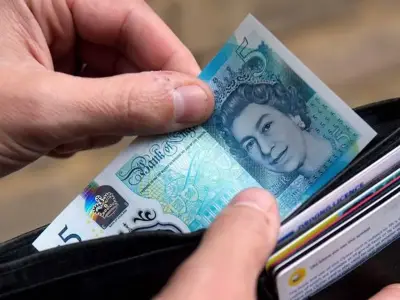
Britons have been urged to review their savings rates, as funds could be steadily eroded in real terms. If a savings provider is not delivering at least the current inflation figure of 2.9%, the value of cash is being reduced, according to financial experts.
Numerous easy access accounts offer interest rates of up to 5%, yet research has revealed that millions of people have their money sitting in accounts generating virtually no return. Savers with approximately £8,000 tucked away have been issued an urgent warning following the findings.
Inflation climbs to 2.9%
The Office for National Statistics (ONS) confirmed that Consumer Prices Index (CPI) inflation climbed to 2.9% in July, up from a 15-month low of 2.6% in June. This follows a 13% rise in Ofgem's energy price cap last month, which pushed the average gas and electricity bill up by £221 to £1,862 per year.

The typical account earning below 2.5% holds a balance of £8,099. In total, adult savings held in accounts earning 2.5% or under amount to £502 billion, according to fresh analysis of CACI data by savings app Spring.
£502 billion failing to keep pace
The research revealed a staggering £502 billion is currently languishing in adult savings accounts earning 2.5% or less, meaning those funds are failing to keep pace with inflation, which currently stands at 2.9%.
Harriet Guevara, chief savings officer at Nottingham Building Society, said: "This is a reminder that inflation still matters. Even small increases can erode the spending power of cash over time, so it is worth checking that savings are held in an account paying a competitive rate and that the account still matches the level of access needed."
"Splitting savings across different goals can help balance flexibility and certainty. Easy-access accounts may suit an emergency fund or short-term plans, while fixed-rate accounts can provide more reassurance for money you will not need straight away - and are particularly competitive at the moment for those able to lock money away."
A staggering 62 million savings accounts are currently earning 2.5% or below, leaving vast numbers of people effectively watching their money lose value in real terms. Remarkably, £155.8 billion is sitting in 735,000 accounts with balances exceeding £100,000, yet earning just 2.5% or less in interest.
Large balances also affected
With the Consumer Price Index (CPI) inflation rate standing at 2.6%, the 62 million savings accounts earning 2.5% or less are essentially shrinking in real terms, as their returns fail to keep pace with rising prices. The findings further highlight that significant sums are languishing in poorly performing accounts, even amongst those with considerable nest eggs.
Spring uncovered £437.2 billion stored in accounts holding more than £10,000, while £155.8 billion remains in accounts with over £100,000, despite all generating 2.5% or below in interest. In total, 10.3 million accounts contain more than £10,000 and 735,000 accounts have over £100,000 in balances while earning 2.5% or less.
On average, savings accounts containing more than £10,000 but generating less than 2.5% interest pay merely 1.43%. Across all accounts with balances exceeding £10,000, the average interest rate remains only 2.91%.
Derek Sprawling, Head of Money at Spring, commented: "Today's figures are a timely reminder of a growing challenge for savers. More than 10 million savings accounts with balances of over £10,000 are earning less than the rate of inflation, paying an average return of just 1.43%. That excludes money sitting in current accounts, which often pays no interest at all. For many people, the real value of their hard-earned savings is being steadily eroded by rising prices."
"A competitive interest rate is important, but it should not be the only consideration. Savers should also think about how easily they can access their money when an unexpected bill or important life moment arises. The right account should offer a strong return while giving people the flexibility and reassurance that their savings are there when they need them."

Energy prices and inflation outlook
Fears are mounting that inflation will continue climbing as the conflict drives energy costs still higher throughout the winter months, while the sweltering weather damages harvests and places food prices under strain.
Ofgem will reveal the next price cap level for October to December on August 26, with the most recent projections on Wednesday from specialists at Cornwall Insight indicating a 4% increase is anticipated, bringing the average tariff to £1,941.
The ONS said the sharp increase in the July to September energy cap, which follows a surge in wholesale gas prices, was only partially counterbalanced by last month's lower crude oil costs, which had dropped substantially month-on-month in July amid expectations of a resolution to the Middle East conflict.
Crude oil has subsequently soared back above 90 US dollars a barrel as the war displays no indication of concluding and the vital Strait of Hormuz shipping route – through which a fifth of the world's oil and gas supplies is typically transported – remains shut.
Mike Hardie, deputy director for prices at the ONS, added: "Other upward pressures included furniture prices falling by less than usual for this time of year, and also a smaller fall for clothing prices due to reduced discounting."
The latest figures also revealed Retail Prices Index (RPI) inflation climbed to 3.2% last month from 3% in June, a crucial figure, with the July rate used to determine next year's train fare rise. Last November, then-chancellor Rachel Reeves announced that rail fares in England would be frozen in 2026, the first such freeze in 30 years, though it remains uncertain whether the Government will extend this for a second consecutive year.
Shadow chancellor Sir Mel Stride argued that the Iran war was not solely responsible for rising inflation. He said: "Labour's tax rises and business bashing have driven the cost of living higher and higher, yet Andy Burnham refuses to rule out yet more tax hikes at the Budget."
"Labour's economic mismanagement has left us unprepared for global shocks, with the UK having the highest inflation in the G7 at the start of the Iran crisis. It is ordinary people who are left paying the price."
The latest ONS figures also revealed that inflation including housing costs, CPIH, climbed to 3.1% in July from 2.8% in June. Economists noted the inflation increase would be scrutinised closely by the Bank of England, though it was widely expected to maintain interest rates when it convenes again in September.
James Smith at ING predicts CPI to reach a peak of 3.2% over the winter, but noted the "bar for a Bank of England rate hike remains high". "We continue to see the Bank of England keeping rates on hold this year, before resuming rate cuts next spring," he said.