
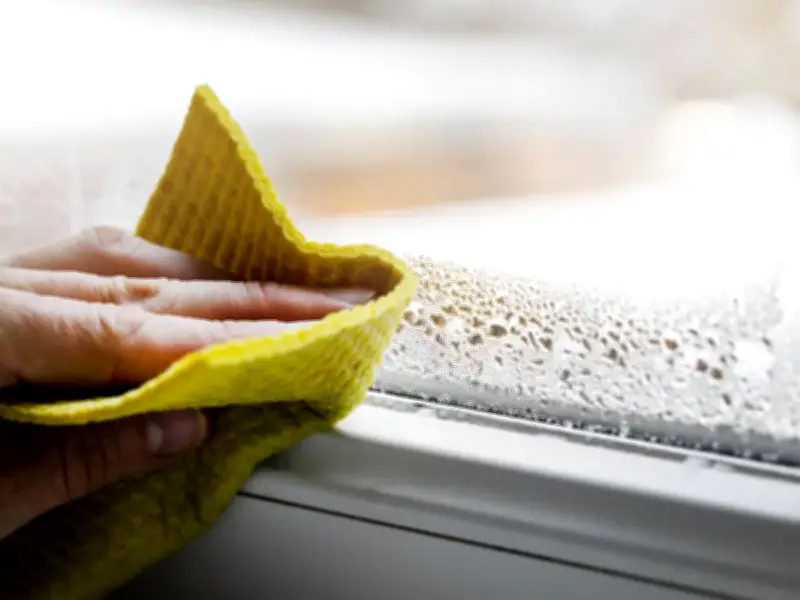
A simple 62p household item could help homeowners tackle condensation on windows and reduce the risk of mould as temperatures drop. Social media users are sharing a trick that involves rubbing a small amount of washing-up liquid into window glass to create an invisible barrier that stops water droplets from forming.
Instagram user Lily (@Lilymayjeanx) claims that a drop of washing-up liquid worked into the glass will "create a film" that "keeps condensation away". In the caption accompanying her video, she wrote: "How to keep condensation away!" She also hangs a dehumidifier on her curtain pole and opens her windows "first thing in the morning".
Washing-up liquid is available at most supermarkets at a very low cost. Aldi shoppers, for example, can buy a bottle of Power Force Washing Up Liquid for just 62p. Since only a small drop is needed each time, the cost of keeping condensation at bay works out at mere pennies, reports Wales Online.
How Does the Hack Work?
Washing-up liquid prevents visible condensation from forming fog or droplets because it contains surfactants that reduce the surface tension of water. Water molecules are normally drawn to one another and create distinct droplets or foggy beads on a cold windowpane, but surfactants interfere with this attraction.
Instead of forming beads, the moisture spreads evenly into a microscopic, flat and transparent film. Because the water forms a smooth layer rather than scattered droplets, the glass remains clear. However, this trick will not completely eliminate moisture. Even if windows appear clear, without tackling the root cause, the actual humidity in the room remains and can migrate to walls, ceilings or other cold surfaces.
Is the Hack Recommended?
No official bodies, government agencies or window manufacturers endorse using washing-up liquid to prevent condensation, as it could lead to problems. While the hack may prevent visible water droplets by spreading moisture into a thin film, window fitters and glazing specialists warn that the chemicals in soap can degrade rubber window seals over time, leading to failed double glazing and permanently misted glass.
This method does nothing to eliminate moisture from the air; it merely masks the issue. If the root of the problem is not stopped, trapped dampness will simply settle on other cold surfaces such as walls and ceilings, where it can trigger mould growth. Official housing and industry guidelines make clear that the only reliable, safe solution to tackling condensation is adequate ventilation, extractor fans, or dehumidifiers.
Other Ways to Prevent Condensation and Mould
Mould can also pose a considerable threat to health. Breathing in mould spores can trigger respiratory problems, aggravate conditions such as asthma and allergies, and lead to skin irritation and a persistent cough, posing serious health risks to children and adults alike.
As temperatures drop, homes become increasingly vulnerable to creating the ideal conditions for mould to flourish. Experts from Which? have set out several measures homeowners can take to stop mould from gaining a foothold in rooms and causing damage. Some simply require minor changes to daily habits, such as opening windows more frequently or ensuring your heating is set correctly to prevent sudden drops in temperature.




