
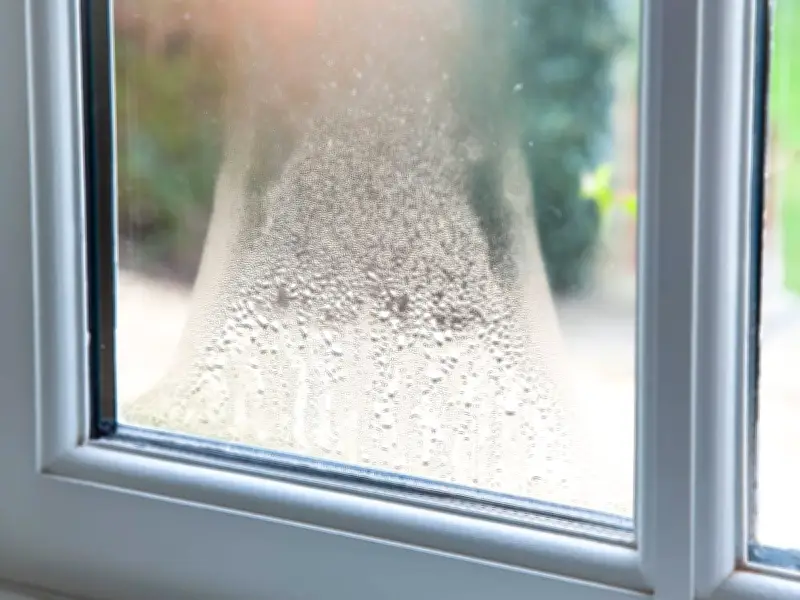
A viral social media hack claims that rubbing a small amount of washing-up liquid onto windows can stop condensation from forming, but experts warn the method may cause long-term damage and does not address the underlying moisture problem.
Instagram user Lily (@Lilymayjeanx) says a drop of washing-up liquid buffed into window glass will “create a film” that “keeps condensation away”. In the video caption, she wrote: “How to keep condensation away!” The video also shows her placing a hanging dehumidifier on her curtain pole and opening her windows “first thing in the morning”.
How the hack works
Washing-up liquid contains surfactants that lower the surface tension of water. Normally, water molecules attract each other and form distinct droplets or foggy beads on a cold windowpane, but surfactants disrupt this attraction. Instead of beading up, the moisture spreads evenly into a microscopic, flat, transparent film, keeping the glass clear.
The hack is often shared online when temperatures drop, and washing-up liquid is inexpensive. For example, Aldi shoppers can buy a bottle of Power Force Washing Up Liquid for 62p. Using just a small drop each time costs pennies.
Expert warnings
No official bodies, government agencies, or window manufacturers recommend using washing-up liquid to prevent condensation. Window fitters and glazing experts warn that the chemicals in soap can degrade rubber window seals over time, leading to failed double glazing and permanently fogged glass.
The method also does not remove humidity from the air. It simply hides the problem, allowing trapped moisture to settle on other cold surfaces like walls and ceilings, where it can cause mould. Official housing and industry guidelines state that the only effective, safe way to tackle condensation is to address the root cause through proper ventilation, extractor fans, or dehumidifiers.
Health risks and prevention
Mould can pose a significant health risk. Inhaling mould spores can trigger breathing difficulties, worsen conditions like asthma and allergies, and cause skin irritation and persistent coughing, affecting both children and adults.
With colder weather, homes become more at risk of creating conditions for mould to thrive. Experts from Which? have outlined several ways homeowners can prevent mould, including simple habit changes such as opening windows more often and setting heating correctly to avoid temperature drops.




