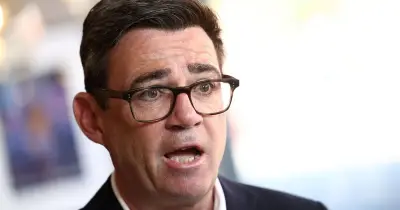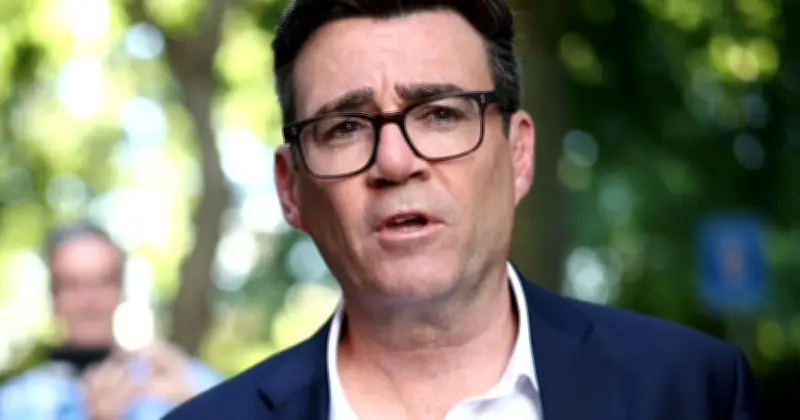
State pensioners are set for a boosted £12,861 tax-free Personal Allowance under Prime Minister Andy Burnham. The new PM, only weeks into the job after taking over from Sir Keir Starmer, alongside his new Chancellor, John Healey, who replaces Rachel Reeves, has made key promises shaping pensioners' finances in 2027.
Commitments to pensioners
Mr Burnham has promised to stand by Rachel Reeves' tax pledge for state pensioners, which is that they will not pay Income Tax if they solely rely on the state pension. He has also promised to honour Labour's manifesto pledge to keep the triple lock on pensions.
Taken together, it means the tax-free Personal Allowance effectively rises to £12,861 from April 2027 for a new state pensioner with a full National Insurance record – and possibly even higher.

Triple lock and tax exemption confirmed
Before taking the keys to No 10, Mr Burnham confirmed he would not scrap the triple lock, the increasingly costly instrument guaranteeing state pensioners big boosts to their pension payments every April, despite pressures from the Office for Budget Responsibility and the Tony Blair Institute to remove it.
In June, Mr Burnham's Treasury also confirmed that state pensioners will not pay income tax on their state pension payments, as long as they have no other income.
Background to the policy
Before her departure as Chancellor, Rachel Reeves announced via the Martin Lewis Money Show Live on ITV1 that state pensioners with no other income would not be made to pay income tax. She had initially reported in her Budget speech that pensioners would not pay 'small amounts of tax via self-assessment', but the next day clarified that this meant pensioners would pay no tax at all, as long as they had no other income.
Now, PM Andy Burnham and Chancellor John Healey have, via HM Treasury, confirmed they are committed to this policy and will ensure state pensioners are not dragged into paying tax.
Impact on pensioners
Next April is when the issue would have become a problem, as the triple lock increase – also a policy Andy Burnham has committed to – would increase post-2016 state pension payments beyond the frozen £12,570 threshold, pushing state pensioners who had never paid tax before into paying tax on their DWP benefit payments for the first time.
State pensioners have always been liable to pay tax, but those with no other income have never collected enough from the state pension to exceed the threshold. This will change in April 2027. Triple lock increases have pushed pension payments higher – this past April, state pensions rose 4.8% – while the tax-free Personal Allowance has been frozen at £12,570 since 2021.
This will reach a tipping point in April 2027 when even the minimum 2.5% increase would push pension payments to more than an estimated £12,861 for a new, post-2016 state pensioner with a full National Insurance record. If state pensioners were to pay tax on this at 20%, then approximately £291 would have been taxable, resulting in a bill of £58.20. If the triple lock rose by a larger amount, the bill would be higher still.
State pensioners with no other income, such as a private pension, earnings, savings interest or rental income, will not be made to pay this bill and will be exempted.
Some older state pensioners are already paying tax. Now-defunct schemes such as the Second State Pension (SERPs) already boost basic state pensioners' income beyond the tax threshold today. HM Treasury confirmed to the Express earlier this year that older state pensioners' 'incremental payments' such as SERPs would not be exempted from tax.
Possible alternative
Andy Burnham could solve two issues at once if he instead raised the tax-free Personal Allowance. A £500 increase would move the threshold above new full state pension payments and also hand relief to workers and other households battling the cost of living and higher tax bills through fiscal drag.

Tom Selby, director of public policy at AJ Bell, said that raising the tax-free allowance would help taxpayers "across the spectrum". He said: "Increasing the personal allowance would help everyone by handing taxpayers across the spectrum the same tax saving. But for the lowest earners, the financial boost will be larger as a proportion of their total income, meaning it would make a big financial difference to those with the least financial strength."
But he cautioned that sticking with the triple lock has "serious" implications for the nation's finances. He added: "But the policy of ratchetting up the state pension through the triple lock has serious long-term fiscal implications. The Chancellor should be honest about the trade-offs and set out a sustainable policy for the state pension that gives pensioners certainty while recognising pressure on the public finances."
An HM Treasury spokesperson said: "Anyone whose only income is the full new or basic State Pension without any increments will not pay income tax, and we are committed to that over this Parliament. By keeping the Triple Lock, 12 million pensioners will see their income rise by up to £470 this year, and they continue to benefit from the highest Personal Allowance in the G7."