
Newly released parliamentary data reveals that over the past two and a half years, approximately 18 million people have used the State Pension forecast tool, and of those, around 170,000 discovered gaps in their National Insurance (NI) record. In the same period, 115,321 people went on to make voluntary payments to address those gaps.
The matter was brought into focus this week when a DWP and Treasury minister released new details after being asked if there was an estimate of the number of people who could increase their State Pension entitlement by making voluntary National Insurance contributions.
Minister's statement on NI contributions
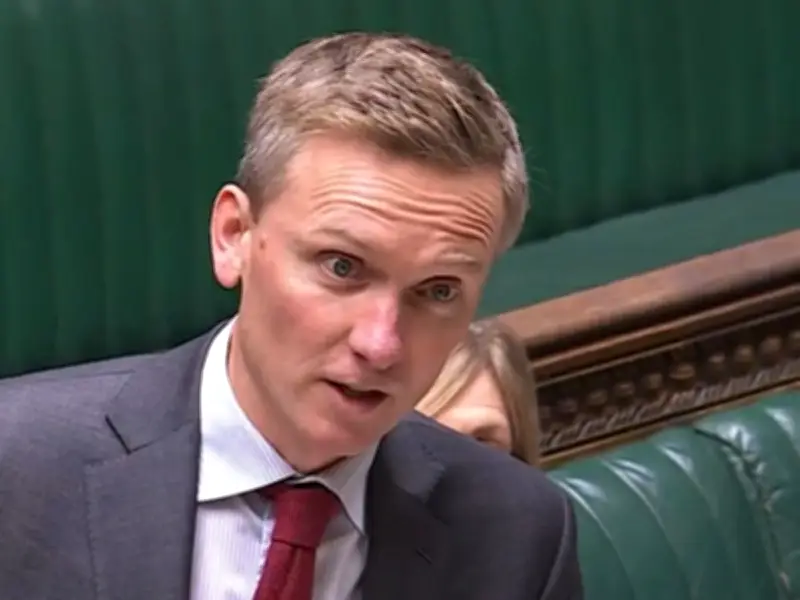
Torsten Bell, Parliamentary Secretary at Treasury, which speaks for the HMRC in Parliament, said on Monday: "NI contributions and credits can be built up throughout a person's working life. Their State Pension entitlement will therefore depend on their contribution history, credited years and any future qualifying years they may accrue before reaching State Pension age."
He added: "HMRC cannot forecast an individual's future income or NI contributions to determine whether they could increase their State Pension by making voluntary contributions. HMRC holds information on customers who made voluntary NI contributions online after checking their State Pension forecast online."
The Swansea West MP then explained the figures: "These figures relate only to customers who paid voluntary NI contributions online after checking their forecast through the online Check your State Pension forecast service. They do not include customers who checked their forecast and then paid outside the service, or customers who obtained a forecast through DWP and then paid outside the online service."
HMRC advice and Martin Lewis's guidance
HMRC encourages customers who are able to do so to check their State Pension forecast online or through the HMRC app. It recognises that digital services are not suitable for everyone, and customers who cannot use the online service can contact the DWP Future Pension Centre to request a forecast.
A letter is dispatched to customers as they approach State Pension age, informing them how to claim their State Pension, that they are able to view their State Pension forecast and make top-up payments where appropriate. In addition, since 2025, DWP has been writing to people with a State Pension age of 67, and this letter also encourages people to check their State Pension forecast.
In Britain, you must have at least 10 qualifying years on your National Insurance (NI) record to receive any new State Pension. To claim the full amount, you need approximately 35 years. A qualifying year can be secured by working and paying National Insurance contributions, or through alternative methods such as receiving National Insurance credits if you were unemployed, ill, or a parent or carer.
Martin Lewis spoke recently on his podcast about NI contributions. He was asked by a woman who was considering paying to cover two years in order to increase her total number of qualifying years to 10. She asked: "I am currently 36. Is it worth paying the two now or would it be considered a waste of money as I am likely to reach the 35 years needed for a full state pension anyway?"
He echoed the minister's advice and told her to check the forecast, saying: "The first thing I'd do is I'd go and look at your pension projection. On your pension projection, your state pension projection, which is on gov.uk, are you predicted to be able to get that you will have the full state pension when you retire, which is a very long time away?"
He then explained the figures above and added: "If you are, I think this is probably overkill, because it's not like once you get to the full state pension, you earn more NI years, you get even bigger than the full state pension. It doesn't work like that."
He added: "The only time I would make an exception on that is if you could buy these years really, really cheaply. If any of these are part years - so a part year is where you have almost got all the contributions you need to get a year but you are not quite and it's binary. I know people who have been able to buy a part year for £15."
"Normally it's going to cost you, a full year, in the 900ish pounds. But if you could buy a part year for 15, 20, hey maybe 50 quid, even at your age, just in case something happens in future, as you can only buy back a certain amount - 6 years - I'd be tempted to go, you know what, it's 50 quid, I'm just going to do it, just on the off-chance that I might need it at some point in the future."
Why gaps occur and what to do
The government's dedicated webpage on the matter explains that gaps in your National Insurance record could be due to receiving National Insurance credits for less than a full tax year, being self-employed without paying contributions owing to modest profits, living or working abroad, being in low-paid employment, or being out of work without claiming benefits.
Should you have gaps in your National Insurance record, it is worth checking whether you are eligible for National Insurance credits before opting to pay voluntary contributions. There are certain circumstances in which voluntary contributions cannot be made, including if you are a married woman or widow paying a reduced rate of National Insurance, if you have missed the deadline for paying contributions for periods containing gaps, or if you have no gaps in your National Insurance record - unless you are receiving Class 3 credits and are eligible to pay Class 2 contributions.
Contact HM Revenue and Customs (HMRC) if you believe your National Insurance record contains an error. Yet be aware that voluntary contributions do not always increase your State Pension, for example if you were contracted out. If you are below State Pension age, check your State Pension forecast to establish whether you would benefit from paying voluntary contributions. You can also get in touch with the Future Pension Centre. If you have reached State Pension age, contact the Pension Service to find out whether voluntary contributions would be of benefit. If you are living or working abroad and you are over, or within 6 months of reaching State Pension age, contact the International Pension Centre for guidance.




