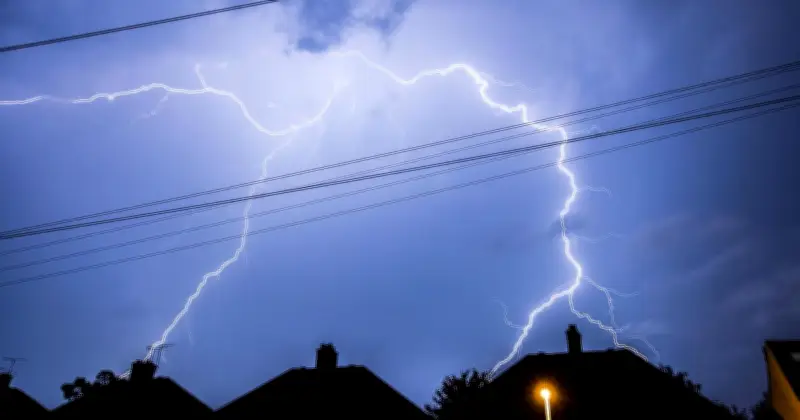
A weather expert has urged households to take seven simple steps to protect their homes from potentially stormier conditions this autumn and winter as a developing El Niño threatens to bring more unsettled weather. This comes as new research has found that eight in 10 UK homeowners have failed to take steps to protect their homes from extreme weather despite almost half admitting they are worried about the impact it could have.
Despite growing concern about extreme weather, relatively few homeowners are taking action to protect their properties, according to new research from Compare the Market. The findings come as experts warn that the developing El Niño could be the strongest for more than 70 years, bringing an increased risk of extreme weather around the world.
What is El Niño?
The Met Office says El Niño is a naturally-occurring climate phenomenon that develops in the tropical Pacific Ocean. It occurs when sea-surface temperatures across the central and eastern equatorial Pacific become significantly warmer than average. These changes alter atmospheric circulation patterns and can influence weather around the globe.
Although El Niño is only one of many factors influencing the UK's weather, its growing influence may increase the chances of a more unsettled period during the coming months. Later in the season, El Niño is associated with increased risk of cold snaps, the Met Office added.
Professor Adam Scaife, Head of Long Range Prediction at the Met Office, said El Niño will be an "unprecedented event."
Homeowners' concerns and experiences
This summer's extreme weather with several successive heatwaves has already heightened homeowners' concerns about what could lie ahead. Over half (52%) say extreme weather in the UK and overseas this summer has made them more concerned about the impact on their own home, while two out of three (66%) are more concerned now than they were five years ago.
Looking ahead, almost one in four (23%) think their home is likely to be damaged by extreme weather in the next five years. Strong winds and storms are the biggest extreme weather concern (55%), followed by heavy rainfall (38%), extreme heat or heatwaves (33%), flooding (31%), wildfires (25%), freezing temperatures (22%), and snow or ice (14%).
For some homeowners, these risks have already become a reality. While most (53%) have not experienced extreme weather damage to their home, others have experienced damage from strong winds or storms (23%), heavy rainfall (17%), flooding (8%), extreme heat or heatwaves (8%), freezing temperatures (7%), snow or ice (6%), and wildfires (4%).
Financial preparedness and prevention
Flooding already poses a risk to millions of properties across England, with that number expected to grow as the climate changes. The Environment Agency estimates around 6.3 million properties are currently in areas at risk of flooding from rivers, the sea, or surface water, rising to around 8 million – equivalent to one in four properties in England – by mid-century.
Despite rising concerns, relatively few homeowners have taken financial action specifically in response to extreme weather. 16% had reviewed their home insurance policy, while 15% had created a savings pot for unforeseen costs. 15% compared insurance policies, 13% took steps to prevent extreme weather damage, 9% increased or added to their cover, 7% switched home insurance provider, and 6% reduced their insurance excess.
There is, however, greater willingness to invest in prevention. Nearly two out of three (63%) would spend money now to make their home more resilient if it could reduce the risk of costly damage later, while 28% regretted cutting costs on home repairs or maintenance because it ended up costing them more in the long run.
Seven steps to protect your home
Abbie Dewhurst, weather presenter and sustainability expert, told the Express: "I would never want to instil fear in people, particularly here in the UK where the impact won't be anywhere near as severe as they will elsewhere in the world." However, she said previous El Niño events had been associated with a greater risk of stormy conditions in the UK during autumn and early winter.
She added: "We will see increased risk of wetter conditions, increase risk of stronger winds, and just generally stormy conditions over the next few months particularly from November onwards. There are many other influences that impact our weather here in the UK, but with that increased risk, it probably is just worth being more aware."
1. Check the weather forecast and warnings – One of the simplest things homeowners can do is keep a closer eye on the weather forecast. Ms Dewhurst advised people to make checking the forecast part of their routine, particularly as the UK moves into the wetter and windier months. "You can also sign up to and be notified by any alerts by the government," she said, referring to flood and Environment Agency alerts. The expert added that getting information from official sources could prevent people from being caught off guard when severe weather arrives.
2. Secure garden furniture, bins and trampolines – Strong winds can quickly turn loose objects around the garden into hazards. Ms Dewhurst suggested homeowners use the current dry weather to walk around their property and identify anything that could be blown around during a storm. She advised: "Go outside your house, have a look, see if there's anything that's maybe loose, whether that be garden furniture, bins, trampolines. I feel like we've all had that one neighbour whose trampoline has blown over the fence in recent years." Outdoor furniture can be stored away where possible, while larger items should be secured properly.
3. Check the roof for damaged or missing tiles – Homeowners should also take the opportunity to inspect their roof before stronger winds arrive. Ms Dewhurst advised checking whether any tiles appear damaged or out of place and roof gutters. Any suspected problems should be dealt with before severe weather arrives, using a qualified professional where necessary.
4. Clear gutters and make sure drains are working – Blocked gutters and drainage systems can become a serious problem during periods of heavy rainfall. The expert urged homeowners to clear their gutters and check that drainage around the property is working correctly. The Compare the Market research found that clearing or maintaining gutters and drains was already the most common protective measure taken by homeowners, with 51% of those who had taken action doing so.
5. Protect pipes before cold weather arrives – Homeowners should not only prepare for wind and rain. Ms Dewhurst also recommended insulating exposed pipes and external drains ahead of colder conditions. The research found that 38% of homeowners who had taken action had insulated pipes against freezing.
6. Check trees and branches around your property – Strong winds can make trees and loose branches a potential danger to homes, cars and people. Homeowners should check trees on or close to their property and look for damaged or potentially dangerous branches. The research found that 34% of homeowners who had taken protective action had maintained potentially dangerous trees or branches.
7. Check your home insurance before you need it – Ms Dewhurst also urged homeowners to make sure they understand exactly what their home insurance covers. More than one in three homeowners (35%) said they were not confident they understood what types of extreme weather damage their policy covered. She recommended checking who the policy is with, what is covered and whether any changes made to the property need to be declared.
Expert advice and outlook
Despite the warnings, Ms Dewhurst stressed that El Niño does not mean Britain is guaranteed to experience a particular storm or flood. Explaining the phenomenon, she said it is a "very normal" climate pattern which occurs every two to seven years. Its effects are much stronger in some parts of the world than others, and Dewhurst stressed that it is only one of many factors affecting the UK's weather.
El Niño involves changes to trade winds and the movement of warmer water across the Pacific, which can influence weather patterns around the world. For UK households, however, she believes the possibility of more unsettled conditions is a good reason to get basic home maintenance jobs out of the way. She said: "You'd be kicking yourself if it gets to mid-December and you're busy wrapping the Christmas presents and a storm comes and you think, 'Oh, if only I had just done those things in the run-ups."
Amy Rootham, Home Insurance Expert at Compare the Market also said: "Extreme weather may cause significant and unexpected damage to a home, so it's concerning that more than a third of homeowners aren't confident they understand what types of extreme weather damage their home insurance covers. With winter approaching and long-range forecasts pointing to an increased risk of disruptive weather, now may be one of the most cost-effective times in recent years to review cover, compare policies, and check whether existing protection remains suitable. Average home insurance premiums have lowered in price over the past two years, so if your policy is coming up for renewal soon, it's worthwhile checking whether you could save money by switching. Make sure to choose the right deal for you and don't focus on price alone when comparing policies – check the cover limits, excesses and exclusions carefully."
The research was carried out among 2,001 UK homeowners aged 18 and over between August 24 and 26, 2026.