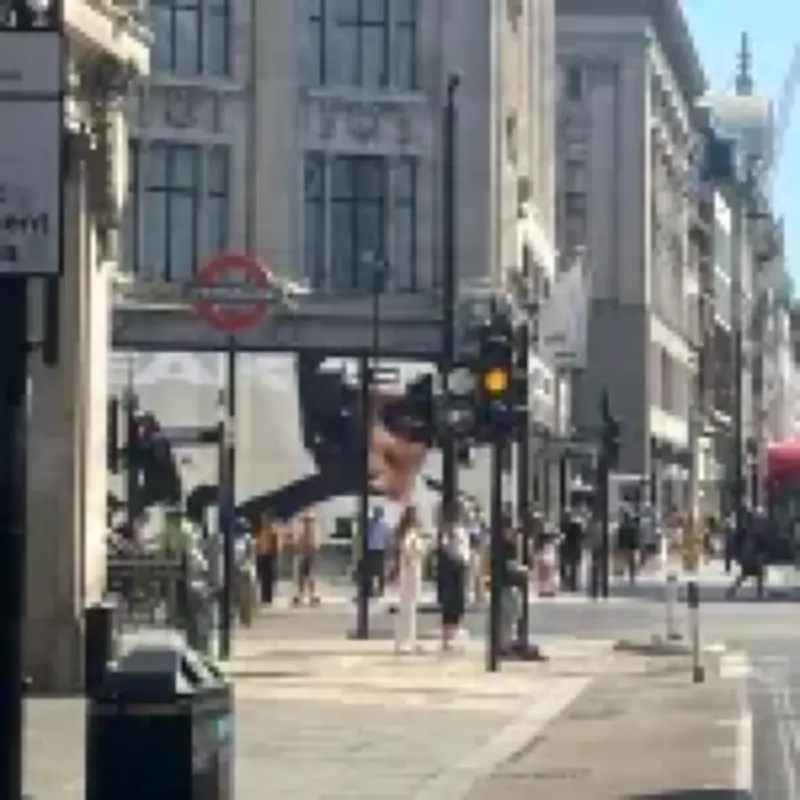
Plans to deploy permanent live facial recognition cameras on Oxford Street have triggered claims from civil liberties groups that the move would be a step too far and a lurch towards a surveillance society. The technology analyses faces and can in an instant determine if they match mugshots on the national crime database.
Mixed reactions from shoppers and tourists
Norwegian tourist Knud Lies, 69, said civil liberties were too important to sacrifice even if the intention of the cameras was to lower crime. He told Metro: 'It's a difficult question as fighting crime is obviously important. But I think civil liberties and protecting those are more important in this case. If this plan (for LFR cameras) was suggested in Norway I would be against it. I think the intrusion is too great.'
Chloe Marshall, 28, from Northampton, said: 'I don't like the idea of this in case the technology makes a mistake and in general it seems intrusive. I think there are too many cameras already. It seems like we are always being watched, I would like to be sure that these cameras could not be hacked or something like that. It makes me uneasy.'

Kasper Moller, a tourist from Germany, said: 'It's a difficult debate as everyone wants less crime. But civil liberties are very important and who knows if the technology is 100% accurate? I think as a tourist walking down Oxford Street I would not like to have my face analysed and what if I am wrongly identified as a bad guy. It's a step too far I think.'
Businesses and some shoppers back the cameras
Security guards patrolling the street and businesses were overwhelmingly in favour of the introduction of LFR technology. A member of staff at a major retail chain told Metro: 'We are fighting an uphill battle against criminals who are stealing from us and our customers. The police can't keep up with it and it's not their fault as they just don't have the resources. If the facial recognition can help them then I think we have to back the decision. I know businesses are in favour and I think the public will get used to it. Just like they have got used to CCTV.'
A security guard at a nearby flagship tech store said: 'If people saw the things we see here every day I think they would back having the cameras. The criminals know this is an area where people are carrying valuables and because they are on holiday are a bit distracted so easy targets. We see people we know are bad guys because of their body language and sometimes because they have been arrested in the past. The cameras would catch them.'
Some shoppers also backed the cameras. Mark Culley, 52, said: 'I think the streets of London have become plagued by phone thieves and shoplifters. We have to do something to tackle them and this will help law and order, I'm in favour.' Peter, 41, a Hungarian national who regularly visits London for work, told Metro: 'In the past few years things have got so much worse. The crime is terrible and the law is too soft here. Yes bring in the cameras or anything that can stop this crime.'
Mayor's plan and civil liberties concerns
London Mayor Sadiq Khan has indicated that the newly pedestrianised Oxford Street will be among six areas in the West End to be fitted with permanent cameras next year. The cameras could be fitted to lampposts or other permanent features in a move away from the current system of rigging the tech to vans which move around the capital. They are aimed to pick up those on police wanted lists and persistent offenders in a bid to tackle the likes of shoplifters and phone thieves circling the West End.
Ruth Ehrlich, of the human rights organisation Liberty, said: 'This technology scans the faces of everyone who passes by, regardless of whether they are suspected of any wrongdoing. If live facial recognition is to be deployed in one of the country's busiest shopping and tourist destinations, there must be full transparency about how it will be used, what safeguards are in place and how its impact on people's rights will be monitored. The government has promised a legal framework for live facial recognition. The Met should not be rolling out any more of this technology before the framework is in place. Permanent cameras on Oxford Street would be a significant escalation in our nation's capital.'

A spokesperson for the Mayor said: 'The Mayor is committed to transforming Oxford Street into a world class pedestrian-friendly and safe destination. As part of delivering that the Mayor is working with the Met, West End task force and Oxford Street Development Corporation on making best use of technology. Backed by record funding from City Hall the Met are leading the way in using the latest technology including E-bikes, drones and Live Facial Recognition to arrest dangerous criminals and tackle and prevent violence in the capital.'
They said in Westminster there had been 14,000 fewer offences in the past year since facial recognition cameras were introduced. The spokesperson added: 'The mayor is committed to ensuring the Met is open and transparent around where, when and how facial recognition technology is used.'
The Metropolitan Police insists the technology is key to crime fighting in the future as shown by its successful trial in Croydon where crime was reduced by 10% and 173 arrests made in six months. A statement said: 'It is important to note that static systems are only turned in when officers are present on the ground and signs will make it clear that deployment is taking place. The public would rightly expect us to look at technology to keep the busiest parts of our capital safe.' They added that the exact location of cameras was yet to be decided.