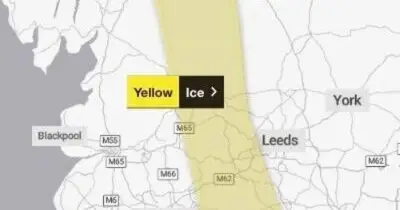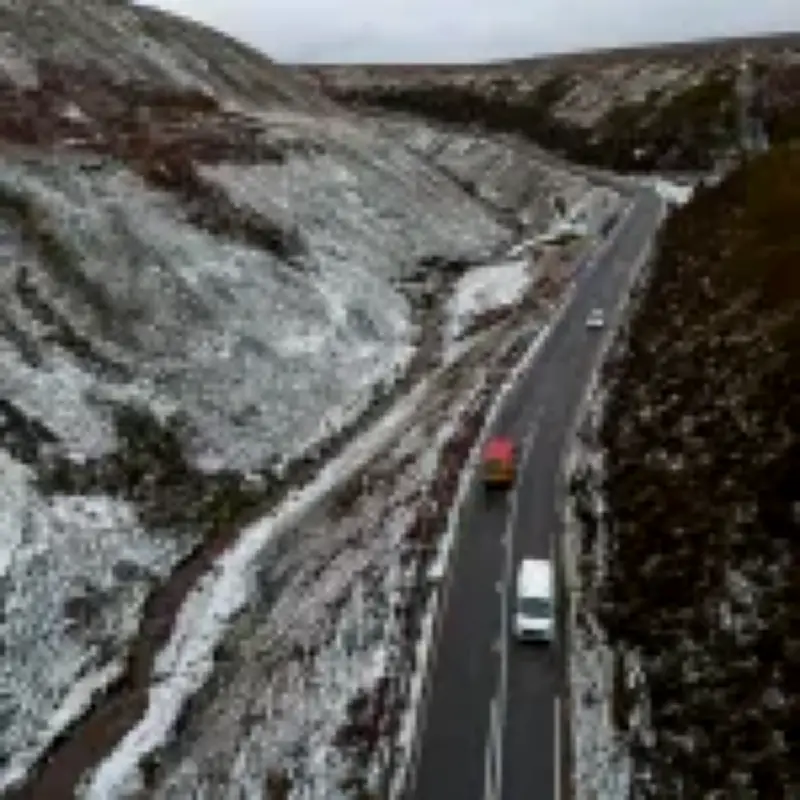
The Met Office has issued a yellow weather warning for ice across parts of England, with rare freezing rain possible over the morning and afternoon. The warning covers Derbyshire, Northumberland, Greater Manchester, Lancashire, Cumbria, Staffordshire, Yorkshire and other areas.
The forecaster said there could be a small chance of freezing rain, and warned that stretches of roads, pavements and cycle paths could become impassable due to the cold weather. Damp conditions could also lead to bus and train delays and cancellations, road closures, and a small chance of injuries from slips and falls on icy surfaces.
Warning in place until 2pm
The yellow weather warning is only in place until 2pm as the band of freezing rain moves eastwards. Further showers are predicted for the north, while the south will remain dry but cloudy and largely unaffected by the ice warning.
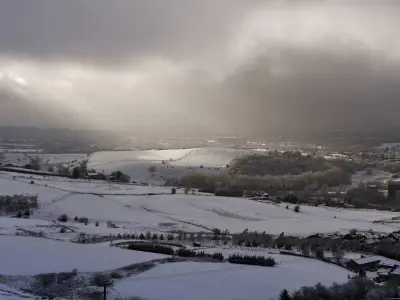
The Met Office had earlier forecast that a band of rain moving into the west of the UK through Thursday evening into Friday morning would fall as snow, with some freezing rain across higher ground in Scotland and northern England, leading to hazardous conditions.
Weekend forecast and what freezing rain means
The Met Office has forecast rain for Saturday across England and Wales, with strong winds developing along the coast. Sunday will be milder, with blustery showers predicted and windy weather expected to continue into the working week.
Freezing rain consists of water droplets that have dropped below the freezing point. When these droplets hit cold surfaces, they instantly freeze and create what is known as glaze, a smooth coating of clear ice. This layer of ice can make surfaces like roads and pathways slippery.
The Met Office also warns that if freezing rain continues for long enough, it can lead to the accumulation of heavy ice that could, in exceptional circumstances, bring down trees and power lines. Freezing rain is relatively rare in the UK, and it is more likely to affect other parts of the world, like the United States.