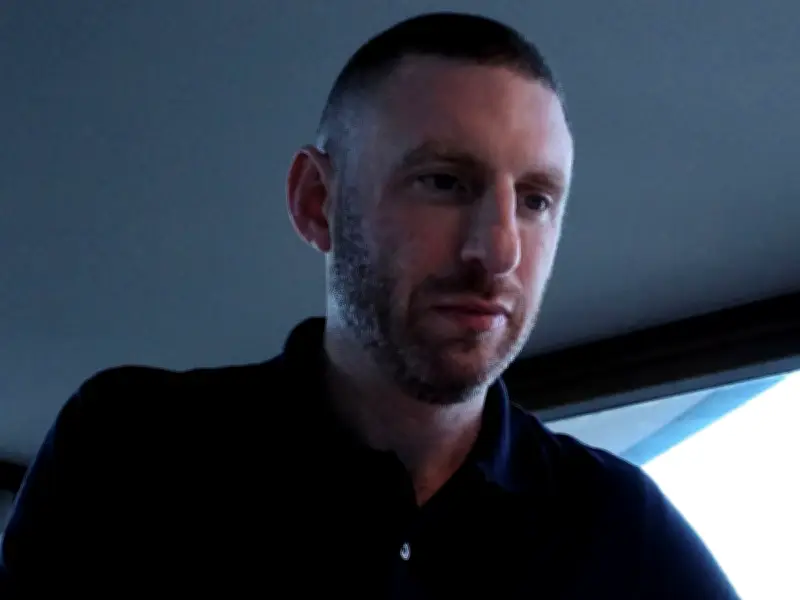
ADHD UK has urged its members to complain to Ofcom about Channel 4's The Great ADHD Myth?, with the charity's chief executive Henry Shelford describing the programme as “sensationalist nonsense”.
Shelford believes “more than 10,000” members will register their dismay with the regulator over the “one-sided” claims presented by NHS psychiatrist Dr Max Pemberton. “We’ll make it easy [for them] to respond and to complain,” he said, explaining that a questionnaire and form would be made immediately available on the website.
Charity's complaints and concerns
Henry has already written to Channel 4 to ask for corrections to be made – including a title change – and received a reply that he felt did not address his concerns. “I wish Channel 4 had done what they did for the menopause with Davina McCall, or for dyslexia with Jamie Oliver,” he told the Mirror. “They did shows which were trying to demolish the myths, whereas this show is trying to exacerbate myths. It’s a shame they didn’t do what they are often so good at which is getting a deeper understanding of the reality of an issue using experts who are leaders in their field. We wouldn’t have The Menopause Myth or The Dyslexia Myth or The Migraine Myth, so why this? It shows the prejudice and the stigma around ADHD.”

In the programme, Dr Pemberton argued that ADHD was a “social construct” rather than a medical condition, and that schools should adapt to better support those children with symptoms rather than medicating them so that they fit in. But the programme used just one child to show the advantages of coming off the ADHD medication for six weeks – an experiment which ultimately failed. Henry says that around 80% of people have a positive impact from ADHD medication – which wasn’t reflected at all. “It made me so angry, I nearly fell off my chair at the end when the experiment hadn’t worked.”
Criticism of the documentary's approach
Calling it “a complete sham”, he added: “It pretends to be science-led but compares a sample size of one (10-year-old Mason) to those of millions and it obfuscates the truth by spending an hour building a story of a child not needing medication by doing yoga and forest walks and having less screen time and then at the end, through epilogue text, admits that the child struggled in school. So the actual conclusion is that the child did need ADHD medication after all and that their interventions didn’t work. If this was science-led that would have been the story – but it isn’t, because this isn’t science.”
Mason was volunteered for the experiment – conducted by Dr Sarah Worley, who calls the medication a “chemical cosh” – by his worried mum Shauna. She explains in the documentary that he was put on medication after falling behind at school but she felt he’d lost his personality, or “sparkle”, as a result. “Since starting medication this is the first school report where he is achieving what he is supposed to be,” Shauna says. But Mason isn’t a fan. “Sometimes I really don’t want to take it,” he tells the camera. “It takes my fun-ness away. But I have to, and it works.”
Reactions and broader implications
Pointing out that ADHD is recognised by the World Health Organization, the NHS and NICE, Henry feels that Dr Pemberton – who specialises in addiction issues rather than ADHD drugs or children – set out with a clear agenda, having already set out his feelings in an article for The Spectator in December 2024. In it, he wrote that ADHD was “now wildly overdiagnosed” and said that “it’s easier to whack a label on a child – to medicalise their behaviour – than it is to confront parents with the idea that they might be at least in part to blame”. He declared: “The solution isn’t Ritalin, it’s better parenting with less screen time.”
Explaining why he made the film, Dr Pemberton said it was because of the explosion in ADHD diagnoses being made. “I wanted to understand why,” he said. “There's no doubt that the people seeking these diagnoses are genuinely struggling; that isn't in question. What the film asks is whether ADHD is really the best explanation for that struggle – my hope is that we come away with permission to ask better questions about what modern life is doing to all of us.”

But Henry says ADHD is not a modern phenomenon. “Physicians described it in 1798 – two centuries before the smartphone and 150 years before ultra-processed food. If modern life invented ADHD, it managed to do so remarkably far in advance.”
In the open letter to Channel 4, he also argued that asking whether a medically recognised neurodevelopmental condition was a myth was a “dangerous” starting point which caused widespread harm. “A question mark is not a get-out-of-harm-free card. The last time Channel 4 reached for this style of title it gave us The Great Global Warming Swindle – a programme Ofcom found breached the Broadcasting Code. Twenty years on, global warming is not a myth, and neither is ADHD. The damage of a title like this is done in the listings, in the commentary, before a single frame is broadcast.”
“ADHD is not a myth and positioning it as such is sensationalist nonsense,” he told the Mirror yesterday. “This programme is extraordinarily invalidating of a lifelong condition and it’s giving medical misinformation.”
In the programme, only medical experts who agreed that ADHD was a “myth” were featured. One child psychiatrist, Dr Sami Timimi, compared ADHD medication to hitting children with a cane. “One of the things you could argue, on a sociological level, is that we’ve replaced corporal punishment with a new way of disciplining kids – giving them a pill,” he said.
Dr Chris Begley, of University College London, claimed that kids were being treated “like objects into which you can put various different substances to make them comply with the environment that isn’t working for them”. And Dr Iona Heath, former president of the Royal College of General Practitioners, said she’d like to ban both the term ADHD and the medication. Instead she would “overhaul the education system” and give kids more sporting and creative classes which she says would “reveal an untapped reservoir of talent that we are currently drugging out of existence”.
But Henry said most of those with ADHD, 20% of whom attempted suicide at some point in their lives according to recent research from Ireland, would not voluntarily come off their medication. “Having ADHD is tough. Undermining the condition just makes it tougher. When a national broadcaster invites millions to file all of this under “myth”, people cancel assessments, parents doubt their children, employers doubt their staff, and lives are put at risk,” he said.
As a charity, a huge amount of their income comes from the parents of children who have taken their own life. “That’s why I find this show reprehensible,” he said. “Just talk to the parents who have lost their child to ADHD.”