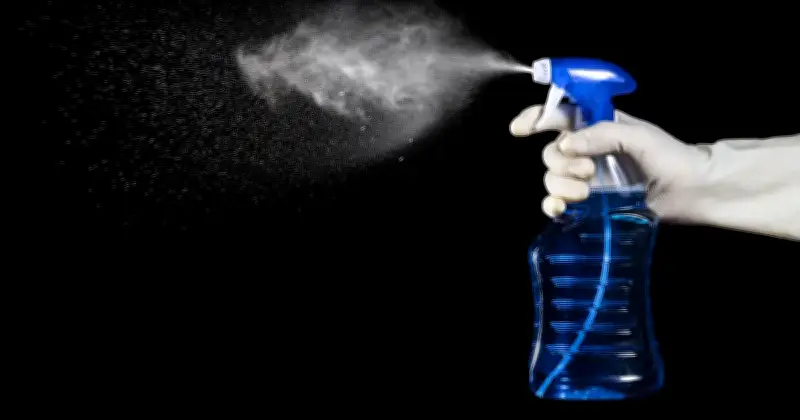
Adding a teaspoon of washing-up liquid to a homemade spider repellent made with peppermint oil and water could make it more effective, according to an Instagram user.
Homemade repellent recipe
Spider season in the UK typically runs from late August through October, when adult male spiders leave their webs to search for females. The peak usually winds down by mid-to-late October, though mild weather can occasionally extend activity into November.
Instagram user Ally (@A_house_by_the_fairway) shared a method she calls "the peppermint hack." It involves mixing 20 drops of peppermint essential oil with 500ml of water in a spray bottle. She adds that a teaspoon of washing-up liquid enhances the mixture.
She said: "Oil and water don’t naturally mix, so the washing-up liquid helps disperse the peppermint oil throughout the water instead of it just sitting on top."
Application and pet safety
Ally sprays the solution around window openings, doors, drains, and other potential entry points. She said: "I’ve been spraying it around window openings, doors, drains and anywhere else I think they might be getting in. I’m basically keeping the bottle close by and dousing things as I think of them."
She warned that the method "can be harmful to pets," advising: "Be careful where you spray it, and keep it away from anywhere dogs or other pets could lick or come into direct contact with it."
As a pet-friendly alternative, homeowners can rub leftover lemon, lime, or orange peels along windowsills, skirting boards, and doors. Spiders strongly dislike citrus aromas, and this natural version is entirely pet-friendly.
Why the method works
Spiders smell and taste through sensory organs on their legs. Strong scents like peppermint oil are overwhelming to them, acting as a natural chemical barrier that causes them to turn away.
The soap acts as an emulsifier, dispersing the oil evenly throughout the water so every spray delivers a consistent concentration. Many common dish soaps contain limonene, a citrus compound spiders dislike, creating a double-strength barrier. If the soapy spray contacts cobwebs or egg sacs, the surfactants in the soap break them down.