Capel Celyn, a Welsh village submerged in 1965 to supply water to Liverpool, may resurface during the current heatwave as water levels drop. The village's flooding remains a deeply sensitive subject, with visitors describing the site as "beautiful but sad".
The flooding of Capel Celyn
In 1965, the village of Capel Celyn, in the Tryweryn Valley in North Wales, disappeared without trace when its buildings were allowed to sink to the bed of an enormous reservoir. It was a deeply contentious decision, orchestrated by the Liverpool Corporation, to provide water supplies to Liverpool and the Wirral.
While for some it might appear merely a straightforward infrastructural alteration, for the majority, this represented a shift far more profound. The upheaval inflicted upon this locality and the broader Welsh population subsequently had enormous political ramifications, triggering increased backing for the Welsh nationalist party Plaid Cymru.

The fight for the village
It was in 1955 that the inhabitants of Capel Celyn initially discovered their homes had been earmarked for a new development destined to become a reservoir, marking the start of a decade-long struggle. Before long, the residents established an alliance, known as the Capel Celyn Defense Committee, which campaigned, demonstrated and condemned the proposal across the nation and into Liverpool.
On multiple occasions, this led them to march to Liverpool to voice their opposition loudly and clearly. Despite their endeavours, Liverpool councillors voted decisively to push ahead with the scheme, and in 1957, a private bill sponsored by Liverpool City Council was presented to Parliament.
All 35 Welsh Members of Parliament who voted rejected the bill, yet it was still approved in 1962. Three years later, the village and its structures, including residents' homes, were submerged. In total, approximately 800 acres of land were claimed by the water, comprising the school, the post office, the chapel and the cemetery.
There were 48 people who lost their homes out of 67 who lived in the valley, with many forced to move to completely new areas and begin new lives. What rendered this decision so contentious was the total destruction of this traditional Welsh culture, as the village represented a symbol of authentic Welsh heritage and its declining language.
The site today
Visitors continue to travel to the location. One TripAdvisor reviewer described the place as "beautiful but sad". They wrote: "This wasn't my first visit to this beautiful area, but after researching the flooding of the village and being Welsh, we spent more time around where the village once stood."
"There is no doubt the scenery is outstanding, but I also found it to be quite sad; people's lives were completely upturned, and their entire village was drowned. Well worth a visit, especially if you read the history of the village."
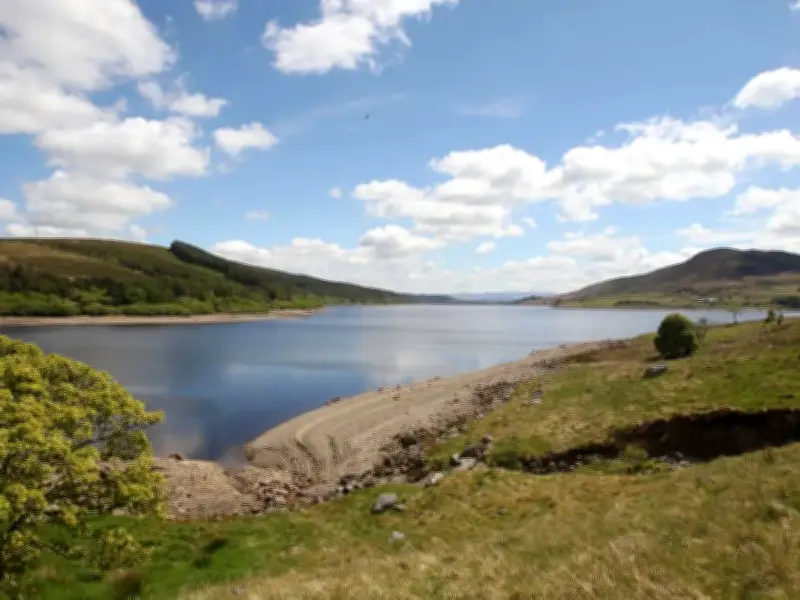
The reservoir offers a stunning landscape, set against the sweeping hills of the valley, and many visitors opt to take a stroll around the location. In tribute to the village that once stood there, a memorial chapel has been erected as a place where people can reflect on its history.
Another visitor added: "Poignant and stunning. The heartbreaking history of this reservoir should never be forgotten." There's a strong possibility the village will emerge this year, as it only rises above the water's surface during spells of extreme heat. The ongoing heatwave could cause water levels to drop sufficiently, as occurred back in 2018.