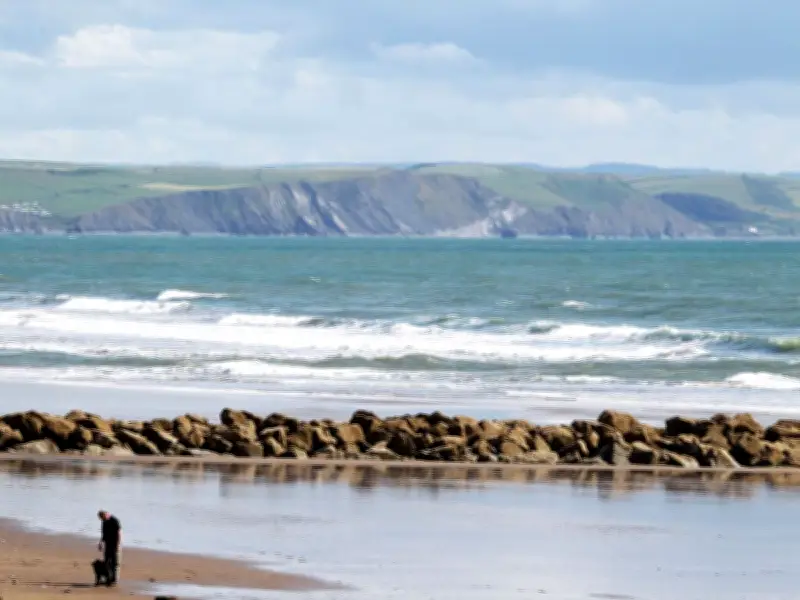
Multiple children were rescued from treacherous rip currents at Tywyn beach in Gwynedd, Wales, last week, sparking renewed calls for lifeguard services and improved safety signage. Three local men intervened to pull youngsters from the water after they were swept away on Saturday, June 27.
Incident Details
A regular beachgoer reported that "four or five" children were pulled to safety in separate episodes during the final days of a heatwave. Residents said that without the swift response of those who carried out the rescues, "we would be looking at another drowning." One woman commented on social media: "Parents need to keep an eye on their children... sitting on the beach and oblivious to the danger their children were actually in." Another added: "Things could have gone very differently today!"
History of Tragedies
Tywyn's rip currents have led to several tragedies over the years. In July 2015, 74-year-old Richard Guest, a former bank manager from Bethel, died while trying to rescue two girls caught in a rip current. He clung onto one girl until a lifeboat arrived but did not survive. His daughter has since campaigned for the beach to be "properly lifeguarded." In 2018, three teenagers were airlifted to hospital after getting into difficulty, prompting a petition demanding lifeguards. That petition referenced a 2014 RNLI study highlighting the hazard of a rip current linked to a rock breakwater at the location.
Rip Current Dangers
Rip currents are powerful seaward flows that can quickly sweep swimmers from shallow water into deeper areas. The RNLI states: "They tend to flow at 1–2mph but can reach 4–5mph, which is faster than an Olympic swimmer." Conditions at Tywyn last Saturday were relatively calm, with moderate tides, surf, and wind, yet the rescues still occurred.
Call for Better Signage and Lifeguards
The incidents have reignited demands for improved signage on the beach. One woman said on social media: "It's a disgrace that children's lives are being put at risk to save the cost of a couple of signs." While the beach has a small sign warning of rip currents, residents want more visible warnings. Red flags are also displayed to indicate danger, but residents say they are often ignored because they are rarely removed. RNLI lifeguards operate on over 30 Welsh beaches, mostly in South Wales, but also in Ceredigion and Denbighshire. Tywyn currently has no lifeguard service.
Council Response
A Cyngor Gwynedd spokesperson said: "An annual and specific risk assessment is carried out for individual beaches which identifies relevant hazards as well as associated mitigation measures. The identified measures then form the basis of the beach management and safety arrangements along the coast." The council employs 35-40 seasonal beach wardens who perform various roles but not lifeguard duties, a practice consistent with other local authorities in northwest Wales. The spokesperson added: "Cyngor Gwynedd continues to work closely with the RNLI and other agencies to promote safety on our beaches... This involves raising awareness of the inherent hazards that exist at seaside locations and encouraging visitors to our beaches to respect the environment, respect other beach users and take notice of relevant guidance and safety signage."
RNLI Advice on Rip Currents
The RNLI advises that rip currents can be hard to spot but often appear as a channel of turbulent, choppy water. They recommend: don't try to swim against the current; if you can stand, wade rather than swim; swim parallel to the shore until free of the rip, then head for shore; and raise your hand and shout for help.