Olympic champion Dani Rowe believes that serious investment by a broadcaster can transform a sport, and she points to women's cycling as the perfect example. Her comments come amid recent criticism that BBC Sport is reducing the visibility of Olympic sports to focus more on Premier League football.
This weekend, Demi Vollering followed her Tour de France Femmes win by being crowned world champion on the road in Montréal, after an almighty battle in Canada. Both events drew huge crowds, both on the ground and on television, with TNT Sports covering the race in the UK. It was the latest example of how quickly women's cycling is growing.
Rowe's view from the broadcaster's seat
Rowe, who won team pursuit gold for Team GB at London 2012 alongside Dame Laura Kenny and Joanna Rowsell, also enjoyed success on the road, including a Commonwealth bronze medal in the road race in 2018. In her new role as a broadcaster with TNT, she explained that the sport has been transformed since she retired the same year, and cites it as proof that initial investment can make all the difference.
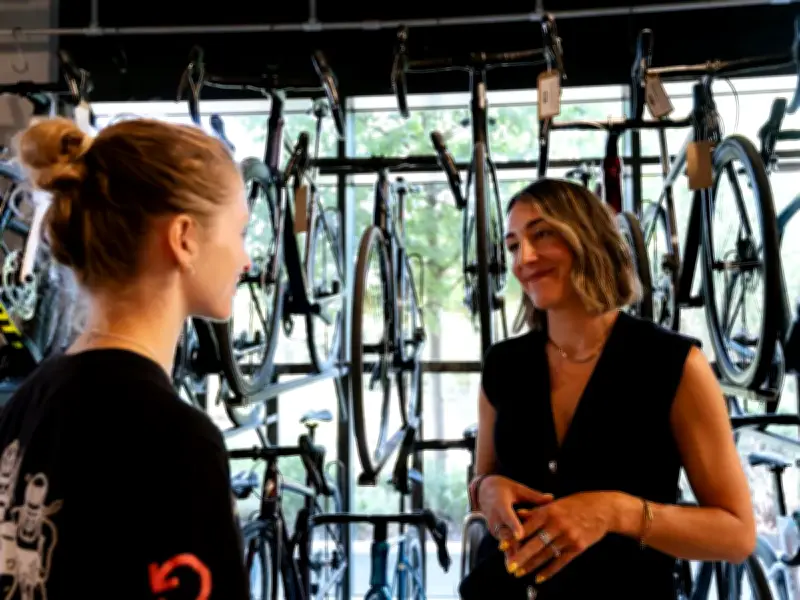
“I think I can see both sides of the argument because I really understand that it's an industry and, the money in the sport is determined by bums on seats and eyes on the TV,” said Rowe, speaking at the Cycle Exchange in Kingston, the destination for buying, selling or exchanging premium used bikes.
Coverage drives growth
“But I also understand how influential the growth of a sport is with the coverage, and that has been so obvious within women's cycling. It's unrecognisable from where it was when I stopped racing, and that's purely down to the coverage that we've got now.
“For other sports, I wouldn't be able to tell you exactly what TNT is showing compared to the BBC. But of course it's going to have a detrimental effect on the sport because ultimately it's a snowball effect, right? If it's not on the TV, it's not going to have the investment, so the sport's not going to grow, not going to have the professionalism.”
The transformation in women's cycling has been dramatic, with the Tour de France Femmes having only come into existence in 2022 – previously there was a one or two-day race known as La Course. Huge investment has followed, allowing an increasingly large professional peloton, and while Rowe would have loved for it to happen sooner so she could have competed in front of such crowds, she is thrilled to see how far the sport has come.
A long time coming
She added: “Look at it now. You know, we've got £10,000 contracts. The strength in depth of the peloton now is massive. We're having races that weren't on the calendar. Like the fact that there's now a Tour de France for women and the viewing figures that they've got for it as well. It's just further proof that this racing is worth being shown.
“This has been a long time coming, yeah. There was always this potential. And it just took someone to say let's go. It is brilliant. And it's nice. I'm still very much within the sport to be able to enjoy that too and see the changes.
“It just meant I could never earn as much money, but that's life, isn't it? That's the way it is. And I'm really glad that these women now have got these opportunities to showcase how good they are because they're absolutely elite.”