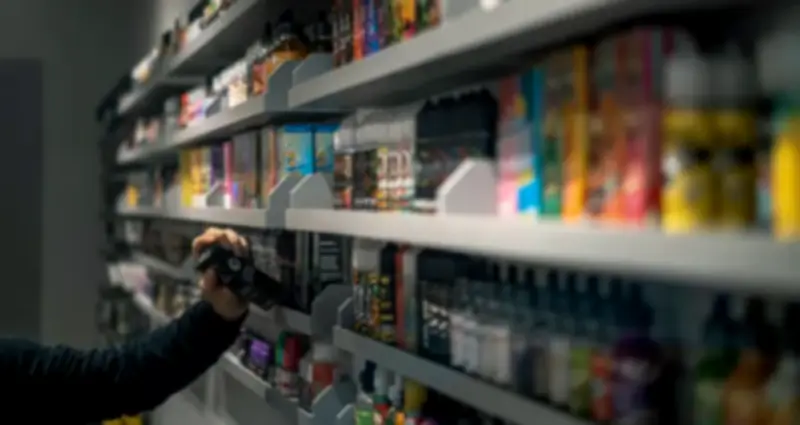
Every vape device on the shelf, and every used one handed back over the counter, contains a lithium battery – small stores can store and handle them safely without expensive equipment.
Most retailers think about vapes in terms of age checks, duty and compliance. There is a quieter issue that sits on the shelves and in the stockroom every day: lithium batteries. Every vape device contains one, and many convenience stores hold dozens, sometimes hundreds, of devices, often packed in cardboard and stored close to other stock. Since shops that sell vapes must also take used ones back for recycling, there is a second stream of returned devices and parts whose condition nobody really knows.
Treat stock as a fire load
Lithium batteries are reliable when they are intact and handled properly. Fire services point to the same few triggers again and again: overcharging, short circuits, water, physical damage (crushing or puncturing) and very high temperatures. A shop cannot remove those risks completely, but it can make sure that one faulty device does not turn into a stockroom fire.
New stock is the lower risk, but quantity matters. Keep boxed vapes away from heaters, radiators, sunny windows and the area behind the till where chargers and other electrics are plugged in. Avoid stacking them directly against piles of cardboard, crisp boxes or paper bags, which give a small battery fire something to grow into. Stockrooms are often where the fridge compressors, routers and spare chargers live as well, so a short look at what is plugged in next to the vape stock is worthwhile.
In England and Wales, the Regulatory Reform (Fire Safety) Order 2005 requires the responsible person for a shop to carry out a fire risk assessment and keep it under review; Scotland and Northern Ireland have equivalent duties under their own fire safety law. If yours was written before you started selling vapes or collecting used ones, it is worth updating it to cover where batteries are kept and who checks them.
The take-back bin is the bigger risk
Vape retailers are excluded from the Distributor Takeback Scheme, so every shop that sells vapes must run its own free take-back service. At a minimum, it must accept a used vape when a customer buys an equivalent product. The Association of Convenience Stores’ guidance for retailers recommends keeping collected vapes in a separate container, in a cool, dry place away from windows and direct sunlight, away from other electrical waste and loose batteries, and only temporarily, generally for no longer than three months. Government guidance is blunt: unsafe storage of vapes is a fire risk, and they should go in vape bins only and be collected regularly.
A few simple rules for returned devices work in any small store:
- Check each device briefly when it is handed in. Swelling, a bulging or split casing, leaking liquid, scorch marks, an unusual smell or a device that feels warm are warning signs.
- Put anything that looks damaged into a separate metal container with a loose-fitting lid, ideally part-filled with sand, away from anything that burns – not into the general collection tube – and tell your collection provider, as damaged batteries need special handling.
- Never put it in the general waste bin.
- Do not try to open, repair or “test” returned devices by charging them. The London Fire Brigade advises against removing the casing of a swelling battery or tampering with the equipment.
- Book collections regularly instead of letting the container fill up over months. Count the units before each collection and keep the paperwork your collection provider gives you. ACS notes that take-back records must be kept for four years.
When a device heats up or smokes
Staff should know in advance what to do, because there is no time to look it up. If a device on the counter or in the bin starts to hiss, smoke or get hot, do not touch or try to move it. Keep customers and staff well away. If it smokes or flames, get everyone out, close the door behind you and call 999. Lithium battery fires can flare up suddenly and re-ignite. Staff should not try to tackle a battery fire that has taken hold.
A two-minute briefing during the next shift handover, covering where the damaged-device container is, what the warning signs look like and who calls the fire service, costs nothing and makes a real difference.
Small changes, low cost
None of this requires specialist equipment. A metal container, a clear spot for vape stock away from heat and cardboard, an updated fire risk assessment and a short staff briefing cover most of the risk. With battery-powered products now part of almost every convenience range, these habits are worth building in now rather than after the first incident.