A documentary maker has warned that TikTok has become a competitor to the dark web, hosting a thriving marketplace for counterfeit cash, drugs and prescription medication openly advertised on the platform. The warning comes as Ofcom launches a formal investigation into whether TikTok is doing enough to protect children from harmful content.
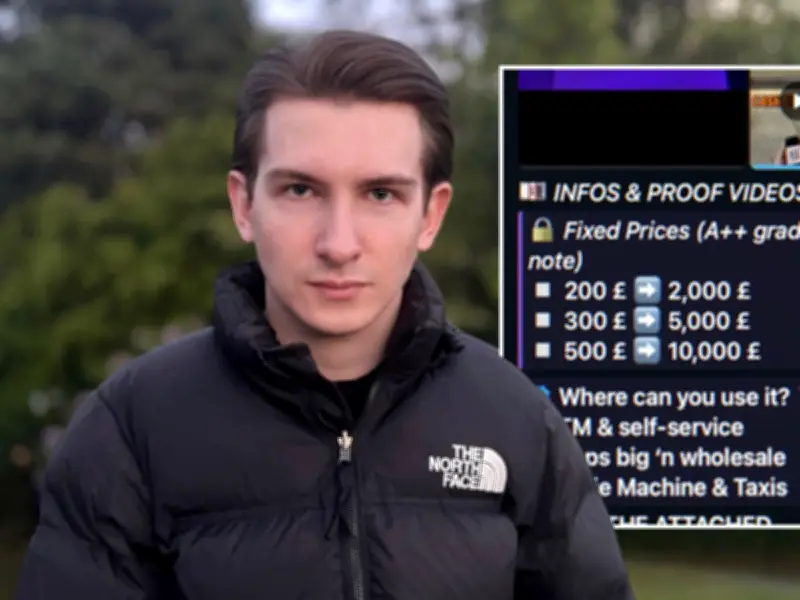
Sam Tullen, 23, stumbled across the illegal adverts while scrolling through his For You Page and decided to investigate them for his YouTube documentary series Disclosed. Alongside counterfeit currency, he found adverts for prescription medication, LSD and cannabis-infused brownies and gummies.
Speaking to the Mirror, Tullen said he initially assumed the adverts were scams. 'I thought it was someone preying on vulnerable people who had money troubles or addiction,' he said. 'So when it turned out to be legit it was shocking and sickening to know it's rife on the app.'
Scale of the illegal trade
The Liverpool filmmaker said the videos appeared so frequently they became impossible to ignore. 'I had a screen recording where every two or three videos an advert for counterfeit money or drugs came up,' he said. 'I questioned whether they were real, so I clicked through and started digging deeper.'
His investigation uncovered TikTok videos directing users to Telegram channels where counterfeit banknotes, prescription medication, illegal drugs and cannabis edibles were allegedly being sold. The counterfeit notes were marketed as 'A++ grade' copies, with sellers claiming they were virtually indistinguishable from genuine cash.
Packages advertised included £2,000 of fake notes for £200, £5,000 for £300 and £10,000 for £500. One Telegram group alone had more than 10,000 members, while videos promoting the products had amassed thousands of views.
Moderation challenges
Though TikTok banned the accounts Tullen found, he noted that new profiles quickly appeared under different usernames. 'The fact they're still being served to me is insane,' he said. 'They're taking action when people come forward, but these accounts can just get back on the app under discreet names.'
He believes sellers deliberately disguise their content to evade moderation. 'They'll show a disguised envelope with money sticking out, but the prescription drug videos were showing full boxes,' he said. 'It's insane to think these are allowed to serve as adverts.'
Perhaps most disturbing, Tullen said, was discovering the illegal trade was genuine. 'Knowing that if someone followed it through like I did and bought the stuff, they would actually receive it. That's what's scary - just how accessible it is.'
Organised crime network
The investigation revealed what appeared to be a sophisticated criminal network operating across Britain. Videos inside the Telegram groups showed printing machinery and stacks of partially produced banknotes. When Tullen posed as a potential buyer, sellers claimed counterfeit cash could be delivered the same day.
'They said they had multiple couriers across the UK,' he said. 'I think the evidence showed it was organised crime rather than individuals.' Buyers were allegedly instructed to collect counterfeit cash from hidden locations including unlocked cars and bushes.
Tullen tracked down one repeat customer who admitted purchasing more than £30,000 worth of fake notes to pay off gambling debts. 'He didn't come across like he felt what he was doing was wrong,' Tullen said. 'It felt very victimless to him. He only used machines - gambling slot machines or self-checkouts - because he believed they were less likely to detect the counterfeit notes.'
Young audience engagement
Tullen was equally concerned by how many young people appeared to engage with the content. 'A lot of the accounts commenting looked like late teens or people in their early twenties,' he said. 'Some were anonymous, but there were a good number that appeared to be genuine people.'
'The dark web has its competitor now, which is the For You Page,' he said. 'Clearly these people know there are no real consequences. They might be banned, but they can just start again. They're reaching new audiences every day.'
Regulatory response
His findings come as Ofcom investigates whether TikTok has breached its duties under the Online Safety Act by failing to adequately protect children from harmful content through effective age assurance measures. The regulator could impose significant fines if it concludes the platform has fallen short of its legal obligations.
For Tullen, 'moderation is key' in preventing these illegal ads. He added: 'People shouldn't be able to pay to target others with adverts for illegal services.'
Following enquiries made during the documentary, TikTok removed the accounts identified by Tullen. However, new profiles quickly appeared advertising the same illegal products under different usernames.
A spokesperson for Telegram said: 'While any platform can and will be used for the sale of counterfeit goods and money, Telegram's terms of service expressly forbid such content and it is routinely removed by moderators. Moderators empowered with custom AI tools proactively monitor public parts of the platform and accept reports in order to remove millions of pieces of harmful content each day, including the sale of counterfeits. The fact that abusers must depend on evasion tactics like using other platforms to lead people to their groups is testimony to the effectiveness of Telegram's moderation.'
According to TikTok, they have banned all the accounts shared and relevant hashtags, with their community guidelines making it clear they do not allow trading, marketing or providing access to regulated, prohibited, or high-risk goods or services on the platform.
An Ofcom spokesperson said: 'We are working at speed to develop new rules for paid-for fraudulent ads - including those that encourage or assist fraud - for the most widely used social media and search services, and our consultation on these is currently open. And platforms already have existing duties to tackle illegal content where it isn’t part of a paid-for advert. More broadly, we’ve already opened investigations into more than 100 services under the Online Safety Act - including into Telegram – and sites and apps that fall short of their duties can expect to face the consequences.'