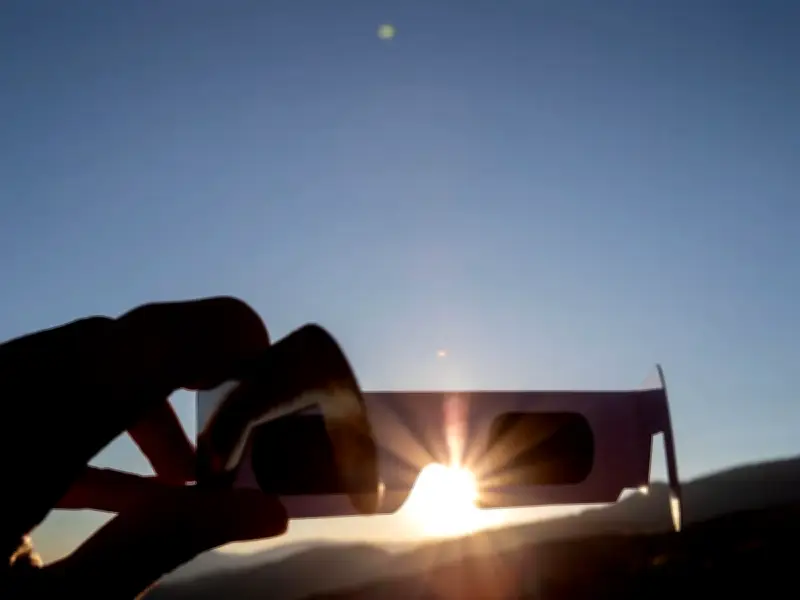
A poll of 2,000 adults has revealed that 45% of Brits have no idea how solar eclipses occur, with some even believing the Moon 'switches the Sun off' like a lightbulb.
Misconceptions about solar eclipses
The research found 18% mistakenly think the Moon gets closer to the Earth during a solar eclipse, while two in ten incorrectly believe an eclipse somehow creates its own light. A further 16% think the Sun moves behind the Moon – when it's the other way around – and 11% believe it physically changes colour during the celestial event.
The study forms part of VELO's exploration of the Moon and the public fascination that surrounds it, highlighting how one of the most visible objects in our sky remains widely misunderstood.
Public knowledge ahead of partial eclipse
It comes ahead of the partial solar eclipse set to take place today [Wednesday August 12], as 68% admitted they know 'next to nothing' about the celestial body.
A spokesperson for the brand said: "We're always looking for ways to spark curiosity and conversation around unexpected topics. The Moon is something we all recognise, yet these findings show there's still a huge amount of mystery and misunderstanding surrounding it."
Beliefs about the Moon's influence
The research found 9% even think the Moon controls human behaviour, with some convinced full moons cause more crime (6%) and more sleepwalking (3%). Some even believe this causes a surge in babies being born (3%).
If these effects aren't enough, 11% suspect their Wi-Fi gets worse during solar eclipses and 13% are certain their phone signal becomes less reliable too. More than half of people (55%) had no idea this week's astronomical event was happening prior to taking part in the poll.
Interest in space and other myths
The study also found 27% would like to visit the Moon, with 59% describing themselves as interested in space, astronomy and celestial events. Although the vast majority (70%) are not confident in their understanding of this.
Further beliefs some respondents have about the Earth's only natural satellite include the dark side of the Moon never receives sunlight (20%) and it affects luck (4%). A further 14% are convinced animals "always" behave strangely during a full moon.
Carried out through OnePoll, the research found anyone hoping to safely enjoy the eclipse may want to get to the shops quickly - as it emerged nine in 10 people don't own a pair of solar eclipse glasses.
VELO's spokesperson added: "With today's eclipse putting the Moon firmly in the spotlight, we wanted to explore what people really know about it and uncover some of the myths that continue to capture the public imagination."