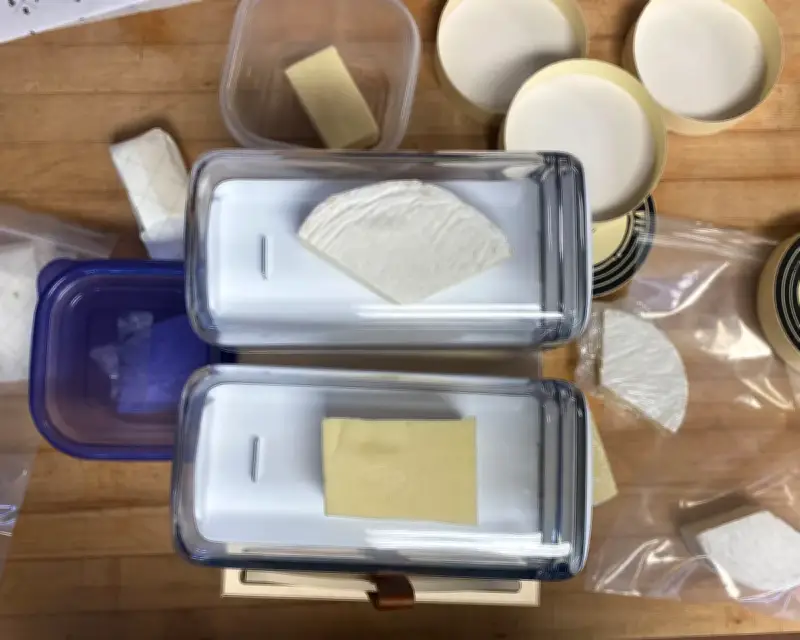
Lab tests of nine cheese storage methods found that specialty cheese paper is the most effective way to preserve cheese, doubling the shelf life of cheddar and allowing brie to regrow its natural rind. For those on a budget, wrapping cheese in a paper towel inside a resealable plastic bag proved a reliable alternative.
Why cheese storage matters
Fine cheeses can cost more per pound than steak, so improper storage can ruin an expensive treat. Storing cheese incorrectly can negatively affect taste and texture and hasten the growth of bad mold. Proper storage can preserve the product for weeks and even encourage good, naturally occurring mold to grow back.
Experts emphasize two key factors: breathability and humidity. Emilia D'Albero, ACS CCP, a member of Guilde Internationale des Fromagers and Meilleure Fromagère du Monde 2025, said: "The two key elements are breathability and humidity ... It allows the cheese to breathe because, remember, cheese is a living product. It needs oxygen … so [proper storage] allows the cheese to breathe but also maintains the right amount of humidity in the package." D'Albero is also the sales and marketing manager at Formaticum, one of the brands tested.
Michael Tunick, PhD, an adjunct professor of food science at Drexel University and author of The Science of Cheese, explained that cheese is a living object. If stored in plastic, "eventually microbes will die out so you are not getting more flavor development. If you are going to keep it for a while … then it ages better when there is some sort of ventilation." He noted that microbes change over time, with one English cheese containing over a thousand species.
Not all microbes are beneficial. While molds are purposely introduced in some cheeses, such as blue cheese, Tunick warned that green or pink mold on the outside should be treated with caution. On hard cheese, the mold can be cut off and the rest eaten. With soft cheeses like camembert, the mold can grow deep inside, so it is safer to discard the cheese.
How the tests were conducted
Over two months, brie and cheddar were tested in nine different storage methods. Samples came from the same wheel and block, respectively, and were stored in a consumer-grade KitchenAid refrigerator in the Dietz & Watson Food Technology Lab in the Drexel Food Lab. The refrigerator was regularly opened to simulate normal household use.
Water activity, pH and taste testing showed little measurable difference between methods. Significant differences appeared in appearance, texture and time to spoilage.
The best storage methods
The best performance came from Formaticum's Two-Ply Cheese Storage Paper Sheets, priced at $18.50 for 15 sheets. The multi-layered wrap, made of polyethylene, creates a humid but oxygenated environment. The cheese stayed fresh without drying out; the brie saw regrowth of its natural rind on cut faces, and cheddar showed no unwanted growth for almost two months.
An eco-friendly option, Zero by Formaticum Cheese Storage Paper, is a plastic-free reusable alternative. While it did not form mold at the eight-week mark, the cheese dried out more than most other options over a longer period. If cheese is consumed quickly, the reduced environmental impact may outweigh this concern.
For daily consumption, the Cheese Grotto Fresco, priced at $250, offers a niche solution. It can bring cheese to room temperature from the fridge or serve as dedicated refrigerator storage. A porous clay brick, soaked in water, maintains humidity. The brick can dry out in a few days, requiring regular re-soaking. The Fresco measures 9.5x7x8 inches and holds two to three blocks of cheese. Tunick noted that traditionally, caves were used to maintain constant temperature and humidity, and the Cheese Grotto works by keeping cheese at particular temperatures and humidities. The product is currently sold out, but restock notifications are available.
The easiest and cheapest method tested was wrapping cheese in a paper towel and placing it in a resealable plastic bag. The sealed bag traps moisture, creating a humid environment, while the paper towel absorbs excess moisture, keeping the cheese humid but not wet. However, if the bag is completely sealed and rarely opened, condensation can form on the cheese, leading to unwanted microbes and spoilage. The bag should be large enough to hold plenty of air, and regular opening provides sufficient circulation. This method cost $6.99 for three rolls of paper towels and $18.75 for a pack of 72 bags.
Other methods tested
Formaticum Reusable Cheese Storage Bags ($19.50 for a pack of 10) worked about as well as the flagship paper, but the paper was stiffer and tricky to keep wrapped around the cheese.
The Chef'n Cheese Storage Slice'n Store ($19.99) works well for brick cheese, with a built-in slicer effective for cheddar but less convenient for soft cheese like brie. It saw some condensation due to lack of ventilation, but the cheese lasted three weeks longer than in other plastic methods.
A resealable plastic bag without the paper towel produced the most extreme condensation, with water gathering on the sides and dripping onto the cheese, causing surface spoilage and faster mold growth. A plastic storage container also saw significant moisture buildup, but its rigidity kept water off the cheese, staving off spoilage for a little longer, though the cheeses still molded within a few days of those in the plastic bag.
Plastic wrap helped prevent molding, but repeated wrapping and unwrapping caused it to lose stickiness, leading to a poor seal and too much air flow, drying the cheese out slightly. D'Albero suggested avoiding this method, as plastic products directly touching the cheese surface, like plastic wrap or vacuum-seal bags, can impart an unpleasant chemical flavor.